


(Listen & Subscribe on Apple Podcasts, Stitcher, Spotify, iHeart or TuneIn)
You can eat clean, move your body, and still feel exhausted, inflamed, and stuck in your own skin. That’s not a willpower problem. It’s usually a habits problem, and most of us have never been taught which habits actually matter.
This week I’m back with Dr. Will Bulsiewicz, gastroenterologist, gut health expert, and New York Times bestselling author, to talk about his new book Plant Power Plus. We get into the everyday habits quietly driving inflammation, why so many “healthy” routines backfire, and how to build a body and a life that support you instead of draining you. This episode isn’t about another health plan you’ll abandon in three weeks. It’s about becoming someone for whom health is just who you are.
About Dr. Will Bulsiewicz
Dr. Will Bulsiewicz (Dr. B) is a board-certified gastroenterologist and internationally recognised gut health expert. After years treating chronic disease in clinical practice, he shifted his focus to nutrition and lifestyle medicine, helping people prevent illness and reclaim their health from the inside out. He’s the author of Fiber Fueled, The Fiber Fueled Cookbook, and his newest book, Plant Power Plus, and co-founder of 38TERA, a science-backed health company making personalised gut health accessible. His work centres on the connection between the gut microbiome, inflammation, and long-term wellbeing.
In this episode we chat about:
- Why Plant Power Plus almost didn’t get written, and what changed Will’s mind (5:44)
- The real reason so many people feel unwell right now, and it’s not what you think (9:57)
- The “healthy” habits that are secretly keeping you stuck (14:00)
- Why willpower always runs out, and what actually creates change that lasts (17:02)
- The nervous system reset almost nobody is doing, and how it changes everything (22:30)
- How to stop trying to be healthy and just become someone who is (33:07)
- The one health reset that works even when your life is a mess (36:41)
- What to actually do with your body when the pressure is on (39:20)
- The story behind Will’s new company, and why he walked away from the old model to build it (49:32)
- The one book Will thinks every child should read, and the reason will stop you in your tracks (55:21)
Episode resources:
- Book your 1:1 Strategy Session with me (book here)
- Mastering Your Mean Girl by Melissa Ambrosini (book)
- Open Wide by Melissa Ambrosini (book)
- Comparisonitis by Melissa Ambrosini (book)
- Time Magic by Melissa Ambrosini and Nick Broadhurst (book)
- The Guthealth (website)
- 38TERA (website)
- Dr Will Bulsiewicz (Instagram)
- The FASTEST Way To Heal Your Gut with Dr Will Bulsiewicz (Dr B) (podcast)
- Is High Carb or Low Carb Better For Weight Loss? with Simon Hill (podcast)
- How To Become ‘Plant Proof’ & Transform Your Health with Simon Hill (podcast)
- Holy Bible (book)
- Feeling Spiritually Lost? Here’s the REAL Reason (& How to Find Clarity) with Michael Beckwith (podcast)
Prefer To Read?
The following transcript has been automatically generated and not checked for accuracy.
Melissa: [00:00:00] The Melissa Ambrosini Show. Welcome to the Melissa Ambrosini Show. I’m your host, Melissa,
best-selling author of Mastering Your Mean Girl, Open Wide, Comparisonitis, and Time Magic.
And I’m here to remind you
The Melissa Ambrosini Show. Welcome to the Melissa Ambrosini Show. I’m your host, Melissa, best-selling author of Mastering Your Mean Girl, Open Wide, Comparisonitis, and Time Magic. And I’m here to remind you that love is sexy, healthy is liberating, and wealthy isn’t a dirty word. Each week, I’ll be getting up close and personal with thought leaders from around the globe, as well as your weekly dose of motivation so that you can create epic change in your own life and become the best version of yourself possible.
Are you ready, beautiful? Hello, my friend, and welcome back to the show. I’m so excited about this episode because I have the incredible Dr. [00:01:00] B back on the show. He was last here for episode 337, a very long time ago, and that episode was all about healing your gut health. It was titled The Fastest Way to Heal Your Gut.
So if you have any gut issues, go and listen to that episode. It is incredible. But today’s conversation is for anyone doing all the right things but still feels off. Maybe you are experiencing low energy, cravings, bloating, restless sleep, whatever it is, and you’re also feeling that quiet frustration of why isn’t this working?
So if that is you, you’re gonna love this episode. We’re gonna be talking about the high-functioning health trap, the habits that look healthy but backfire, and the identity shift that makes healthy choices feel simple and automatic. That would be lovely. And for those of you that have never heard of Dr. B, he is an [00:02:00] award-winning gastroenterologist and a leading authority on gut health.
He is the New York Times best-selling author of Fiber Fueled and The Fiber Fueled Cookbook, and the founder of the gut health supplement company 38Terra. He has presented to Congress and the USDA and instructed over 10,000 students on optimizing gut health. His mission to educate on the importance of gut health has seen him sit down with thought leaders such as Rich Roll, who’s also been on the podcast, Diary of a CEO, and The Proof with Simon Hill, who has also been on the podcast.
So if you are feeling like something is off with your health, you’re going to love this episode. And for everything that we mention in today’s episode, you can check out in the show notes, and that’s over at melissaambrosini.com/702. Now let’s dive in with the incredible Dr. B.
Will, welcome back to the show. [00:03:00] I am so excited to have you here. It’s been a long time since you were on the show. You were back on episode 337, and that was called The Fastest Way to Heal Your Gut. Now before we dive in, can you tell us what you had for breakfast this morning? Oh my goodness, you put me on the spot, Melissa.
Dr Will Bulsiewicz: What’s up with this? I wasn’t prepped for that question. All right, here’s the honest truth. So I am not really a breakfast person, and there’s a little bit of a problem with that because what I preach publicly is that if you could, you would shift your meals to being earlier in the day. So… And that doesn’t mean that breakfast is required for everyone, but I actually do think that there’s advantages towards getting things started for our body earlier as opposed to waiting until later That being said, most days of the week, coffee only for me until I get to, like, roughly 12 noon or 1:00.
Then I break my fast, and I [00:04:00] typically try to get everything done by about 7:00 in the evening, so it’s like a six-hour eating window for me. So that’s the way that I’m typically approaching my day. Now, on the weekend, I’ll, I’ll have breakfast and, like, I love… You know, it depends, like, what I’m going for, but if I wanna go high protein and something that’s very satiating, then I’ll go with a yogurt.
There’s many different types. If you’re a plant-based person, you go with a plant-based yogurt, and if not, you go with, like, a Greek yogurt. And go with a yogurt and throw in, you know, different berries, seeds, nuts, and cacao nibs, and then I’m a very happy camper. Mm. Delicious. So good. And I think it’s really important that we talk about here how different people can eat to support their body.
Melissa: So there is absolutely no way I would be fasting right now. Like, I’m a mom of two kids. I am still breastfeeding, so for me, that is completely out of the [00:05:00] picture. But it has a lot of benefits. And, like, I don’t ever want anyone to kind of listen to my show and think, “I have to do exactly that.” Like, “I have to fast until lunchtime and only have coffee,” because like I said, for me, that is not the season of life that I’m in.
Breastfeeding a lot throughout the day and two little kids and running a business, I need fuel. I need lots of fuel, I feel like, at the moment. So yeah, I think we should really highlight that is not for everyone with what season they’re in. 100%, and that could change, right? Like, for the individual person, our diet is constantly changing.
Dr Will Bulsiewicz: My diet today is not the same diet that I had, you know, 10 years ago, and it was not the same… certainly not the same one I had 15 years ago when I was on a junk food diet. So, you know, we are all a work in progress, and we should accept and celebrate that. And what you hear on the show, take it with a grain of salt, and then listen to your body too.
Melissa: Mm-hmm. So since we last spoke, [00:06:00] you have another book out, and you’ve started a company. Tell us about your latest book. So my latest book is called Plant-Powered+, which even for me, I was like, “I should have thought ahead of time, what if I’m on a show with Melissa Ambrosini and I can barely get it out?” All right?
Dr Will Bulsiewicz: But Plant-Powered+ is to me the story of inflammation because I was in a position where my first two books were successful. They were both New York Times bestselling books. And as an author, I was given, you know, basically the privilege to define, like, what do I wanna write about? What do I wanna talk about?
And as a medical doctor, I immediately said, “I wanna talk about inflammation,” because that’s the problem. That’s the problem of our time. You know, as I look out across the globe, whether it’s Australia, New Zealand, the US, Europe, we’re dealing with a lot of the same problems even though we’re not exactly the same people.
We’re dealing with a lot of the same problems. And when you start to look under the hood, you [00:07:00] discover these issues, they have inflammatory origins. So my goal with this book was to shine a light on the role that inflammation plays in our health, and also to present an opportunity where through diet, through lifestyle, the choices that we make on a daily basis, nothing that’s crazy, nothing that’s too complicated, and everything that fits well within your own life, we have an opportunity to make choices that can change the trajectory of our health during our lifetime by reducing inflammation.
So you could call that an anti-inflammatory approach. And so why would I call it Plant-Powered Plus? Why didn’t I call it the Inflammation, you know, Protocol or something like this? I mean, I could have. But what I found is, as I was researching this topic, the diets that have the science to reduce inflammation, they’re all powered by plants.
They’re not necessarily a vegan diet, but it could be a vegan, it could be vegetarian, it could be pescatarian with fish, it could be a [00:08:00] Mediterranean diet, it could be a mostly plants paleo diet. Like, there’s lots of choices. So I think it’s important for us to embrace the fact that there’s not one size fits all And that there’s this broad choice where you get to find, and I really want people to do this.
Like, don’t try to eat the way that I eat. I want you to find what works for you, which makes you happy and satisfied, but also guides you towards thriving health. So that’s really what this book is about. Mm-hmm. I love that so much. And I really don’t think we can debate anymore that plants aren’t good for you.
Melissa: Can we just, like, put that to bed? Fruits and vegetables are so good for you, and let’s just put that to bed once and for all. And like you said, it’s that 10% if you wanna have eggs or fish or whatever it is, like, you do you. But a majority of your plate should be from real food, from nature, [00:09:00] plants, and all that goodness that is available at our fingertips.
Dr Will Bulsiewicz: 100%. And there’s a reason why every single supermarket, whether you’re in the States or you’re on the other side of the world in Australia, every single supermarket sets it up the same way. You walk in the door and there’s the colors, right? Popping. That’s so true. That is so true. When you walk straight into, like, the big supermarkets, you go straight into the fruits and vegetables.
Melissa: I’ve never thought about that, ’cause I don’t shop there. I go to my local farmers market, so I’ve never thought about that. Well, across the globe, you know what? Your farmers market too, like, they, they’re presenting to you choices that are inherently attractive. You walk in and you see things that, oh man, that’s easy…
Dr Will Bulsiewicz: Not only easy on the eyes, but they’re things that you’re naturally attracted to. It’s the colors of these plant-based foods, and there’s actually something there that’s wired inside of us that’s instinctual. That the colors of these foods that provide unique, distinct [00:10:00] nutrients that we would naturally seek out that variety and those different colors that are providing our body with what it really needs.
There’s something natural there. Mm-hmm. So what are the biggest things that are causing this inflammation that, whether it’s seen or unseen, like, what are the biggest things besides diet, or is that, is that number one? Well, I think diet is probably number one, but there’s a bigger story here that is not just about diet.
And for some people who are listening to this show right now, the number one opportunity for healing will not be with a fork. I’ve seen this many times. Look, we’re all unique individuals. We all have a story. That story is your life that leads you up to this moment as we sit here right now. And believe it or not, the entirety of that story, in a brutally honest fashion- [00:11:00] Is found in your gut microbiome.
Your life experience basically ends up in that place where there is like this, you know, this pattern. It’s a fingerprint. It’s unique to you, and it’s everything that we’re talking about from before birth, through birth, early days, childhood, adulthood, the food that you eat, how you move your body, time spent outdoors.
Do you have pets? There’s so many different things, right? So in a way, I’m painting a picture that the entirety of your life, not just your food, but including, like, your daily patterns, which we could call circadian rhythm, including your relationships, that these things end up reflected deep down inside you in your gut microbiome.
And so it brings me to one of the core themes that is discussed in my new [00:12:00] book, which is that the world has changed faster than our biology has the ability to adapt. So if we think about, you know, you and I, we’re kind of OGs, Melissa. Like, we kinda– We are a generation that we remember the world before the internet, and we know this new world too, right?
And it’s kinda crazy to imagine that, like, we’re one of the last generations that remembers the world before the internet, and think about our grandparents that barely got to see the internet at all during their lifetime, right? And, and the way that their life was as a child, which was just very different.
Whether that be walking to school, playing outdoors most of the day. There were basically no electronics. Television barely existed, and when it did, it was like this thing that you sat around with your family all together at eight o’clock at night for one hour. That was it, [00:13:00] right? It wasn’t like six hours a day.
And the food, the food has changed so much. And you know, here in the States, the average person, sixty percent of their calories comes from ultra-processed food. And our kids, I have four of them, the average percent of calories from ultra-processed foods in our children in the US is seventy percent.
Australia is not quite as bad, but many of these same issues do exist in Australia, just on a slightly toned down scale So I, I think that like the, the picture that I would paint is that the world has so radically changed, and here’s this, you know, there’s food technology, and there’s definitely benefits to it on some level, but it’s also creating some problems for us.
And there’s, you know, technology that has, like, infiltrated how we spend our day and what we give our time to, where our mind is, where our focus is, [00:14:00] and all of these different sort of elements have created a, an environment where the way that we were wired as humans is not being sufficiently fed. Hmm. So interesting.
Melissa: So let’s talk about for a lot of women and men listening to this show, they are high achievers. They have big goals and big dreams, and I wanna know what you think are the most common habits that look healthy that are quietly backfiring for these people. What are they? Oh, this is a good question, and, and once again, you’re putting me in a position to get creative.
Dr Will Bulsiewicz: So, all right, a few things. I, I think that, you know, we live in this new world where information is shared like, “Hey, here’s this hack for this. Here’s this hack for that,” and it’s trying to give you [00:15:00] solutions that are freaking sexy, and we’re all attracted to sexy. Like, that’s who we are. And so we see these things being presented on the internet, and we tend to gravitate towards that, and I actually think that on some level we have to be sober enough to see that it’s the tried and true boring stuff That actually makes the biggest difference.
So, like, I think getting back to the, the basics, getting back to, like, leaning into sleep, making sure that you’re taking care of it, having a pattern for how we approach that, making sure that we’re spending time outdoors. We could get into circadian rhythm and the ways in which I now view sunlight as, like, literally a nutrient that your body is starving for, right?
And, you know, eating nourishing food and spending time with people that you love and feeling very connected to them. Like, these are sort of, like, basic elements of healthy humans that we’re kind of missing. Yeah, the low-hanging fruit. This [00:16:00] is what Nick and I talk about in Time Magic. These low-hanging fruits are the keys to health, vitality, and longevity.
Yeah, and let’s not, like, let’s not move towards the, like, sexy supplement that the hottest wellness influencer told us we’re supposed to take for longevity. When you actually dig into the research, and, and in some cases it’s also a medication, like, you know, microdosing some medication you’re supposed to take for longevity or whatever the health outcome you’re trying to achieve, and then you dig into the evidence and you’re like, “Gosh, there’s not much there.”
But on the basic stuff that most of us are not, like, doing enough of, there’s a ton there, and it’s just a matter of us trying to find a way. It’s not easy, obviously. If it was easy, we’d already be doing it. So it’s a matter of, like, figuring out how to fit this into our lives, acknowledging the complexities of, like, for you, being a mom, having these wonderful children that you care deeply [00:17:00] about, yet simultaneously having your business and, you know, and having a podcast.
Or, like for me, being spread thin with my businesses and trying to write books and all these other things that I’m trying to accomplish, but still be a great present dad, a great present husband as well. Yeah. We wear many hats, and it is really sexy. Like you said, all of these different trends, and I’ve got to do this, but there’s so many low-hanging fruits that we need to address first.
Melissa: Like, you mentioned all of them. And we can get enticed by the others, but we’ve really got to pull it back. But why don’t we do it? Like, if we know, if we know that sleep is good for us, and it’s important, and we know we gotta eat nourishing food and get sunlight and spend, spend time with people we love, and do work that is meaningful to us, like, we know all of these things.
Why do we not do it? Why does willpower fail, even for disciplined people, like high-achieving people who really care about their [00:18:00] health? I think, now this is me venturing my best guess to your question. I think it’s that we all are inherently addicted To many of the elements of the modern lifestyle that have created convenience and comfort.
Dr Will Bulsiewicz: And because we’ve been, become so addicted to these things, dopamine hits by, like how many times do we look at our phone on a daily basis? Trust me, I’m guilty, right? Or why do people reach, why do our kids reach for ultra-processed foods when they could, they could choose otherwise? Because there’s something there that in the super, super short term makes you feel like this little bump of good.
And the problem is that these other things that we’re talking about, the less– the, the things that are like the tried and true basics, the foundational elements, they don’t give you that dopamine hit. And leaning into them requires effort. It’s not necessarily so comfortable. It’s [00:19:00] not necessarily so convenient.
And that effort takes time actually to receive the reward. You will feel better. You will feel the difference, but it doesn’t happen like that second. And so I think that that’s like the, the challenge. And, you know, I’m making this comparison to like two generations ago and our grandparents and the life that they li- that, that they lived But gosh, it’s complicated today.
Gosh, it’s so much more complicated than it used to be. People are juggling way more stuff than they used to. And there’s a reason why we’re opting… This is not, like, I’m not shaming on anyone. I’m guilty. But there’s a reason why we opt for the convenience stuff, because we’re just trying to get some time.
So that’s what I would say. What do you think, Melissa? I wanna hear your thoughts. Yeah. Nick and I talk about this in Time Magic, which is all about reclaiming your time and reclaiming your life. And we say it’s the little things that add up to big results or big [00:20:00] consequences. And when I say little things, I’m meaning it’s the choosing to move your body every day, choosing to go outside, choosing to eat nourishing food, choosing to go to bed earlier, choosing to get off your phone.
Melissa: Like, those little decisions are what add up to big results or big consequences. And like you said, you don’t often see the results from going to bed early straight away. Well, I definitely feel it, but it compounds, and it compounds and compounds. And when you were talking, it was making me emotional because I just feel like we are wearing so many hats, and we are holding so much.
Our relationships, our marriage, our children, our work. And one of my dear mentors, he says to me, “There’s so much output, Melissa. Like, you’re doing this, you’re working, and you’ve got your children, and there’s so much output. You need to make [00:21:00] sure that you’re inputting. And inputting, like, with nourishing food, and movement for yourself, and sunlight,” all of those good things that we’ve mentioned.
But I also feel like on the flip side, there is so much stimulation. We know this more than ever in the world, and I feel like right now, and I don’t know if you’re seeing this or it’s just I’m seeing it amongst my peers, amongst my clients, amongst my family, my friends, it’s becoming too much. It’s an overwhelm.
I don’t know. Are you seeing that? You just struck a nerve right there because that’s exactly the conversation I was having with my wife. It is. It’s becoming a little too much. It’s too much stimulation, and like, so for me, I’ve been like, “Okay, what do I need to do?” Like, like literally things like turn off all the notifications on your phone.
Put your phone on silent. Like, be very discerning with, like, how much [00:22:00] you are taking in stimulation-wise. Podcasts, books, all of these things are great, but it’s like more, more, more, more, more, more, more, and what’s happening is it’s like burnout, burnout, burnout, burnout, overwhelm, overwhelm, overwhelm, over- and then you’re just, like, desperate for that little dopamine hit of release of like, “Ah, I can exhale.”
And we just- Yeah … go, go, go, go, go, go, go, and that’s what’s creating the burnout and creating us to reach for those- Quick junk food or the dopamine hit of the scroll or all of those things. Many coffees, rushing our food, overeating, undereating, constant productivity, the doom scrolling at nighttime, all those things.
And I really feel like there is a recalibration happening right now. I don’t know if you’re witnessing it, but I feel like it is happening. Like, I open my podcast app, and I’m like, “Okay, cool, I feel like I need to, like, do a little clean-out here.” Like I… There’s just too much. Like, I get on Instagram, it’s, [00:23:00] like, too much, so, like, I’ve really had to limit my time, and that’s just what works for me, and I’m just speaking really honestly here because it’s all just a lot of input.
Dr Will Bulsiewicz: Yeah. So th- you’ve raised many interesting points, and, you know, a few things that sort of struck a nerve for me. Number one, I have over 650,000 followers on Instagram, and I don’t enjoy the platform. So it’s very hard for me because I do look around, and I see people that are, like, popping off around me and growing their account, and what I’ve had to come to is accept the fact that I gotta be me, and I gotta take care of myself, right?
And so there’s other places for me to have th- where I do feel, like, much more comfortable and, and myself, like on a podcast or on YouTube or things like this. So I think that’s number one. But, like, truly, like, there’s this pressure that I certainly feel of, “Dude, you got 650,000. You need to, you need to be pushing yourself more.
You need to get to a million,” blah, blah, blah, blah, blah, [00:24:00] right? Number two, I actually think that taking… Like, disconnecting from these things is one of the best things that you can do, and establishing boundaries and taking a break for a while. So what you don’t know what the most recent political debate is, right?
Where people are mad at each other over something that you have zero control over, right? So what that you don’t know what’s the most recent news cycle. You’re a happier person. You will notice that. So I think that’s important to acknowledge. And then the last thing is that what you’re kind of getting at is something that I discussed in chapter eight of my new book, which is about…
This chapter is about the brain-gut connection. But really, it’s about our basic needs as humans, which include connection to each other Include a sense of purpose, understanding this world that we’re surrounded by from a spiritual perspective, [00:25:00] and seeing that we live in this, like, modern industrial world on sympathetic overdrive.
We’re like, basically we’re pushing our body go, go, go all day every day, and we’re never creating the space. This is kind of what you were describing about creating space for yourself. We’re not creating the space to actually put our foot on the brake, slow down, and get into a parasympathetic mode, which is the vagus mode That allows us to rest and digest and recover our bodies.
So, and I think that is like, to me, that’s me being super nerdy and talking about the physiology of like the, you know, sort of very real day-to-day stuff that you were just describing a moment ago. These are the things that we need to do every day, though, those parasympathetic things. If you’re going to keep going in this fast-paced way, and you’re gonna keep taking in all of this stimulation [00:26:00] and go, go, go, go, go, you do need to counteract it with the parasympathetic nervous system regulating things if you’re gonna do it.
Melissa: And I know for me, like as a mom of two little kids and working and trying to be the best wife that I can be and, and all the things, like there are things that I do every day that I almost feel like I have to do them in order for me to function like I have to do them. So for example, like waking up, meditating, doing some nervous system breathwork, and then I pray, and that starts my day.
Those three little things start my day. And then I go into mothering, and I’m making breakfast and all those things. And then during the day, I’m either working or I’m mumming, right? And so during the day, I’ll just try and catch myself and make sure I can take in a couple of deep breaths. Like my mom is visiting at the moment, and she had a nap yesterday and I was like, “I would love to just nap,” right?
And she’s [00:27:00] like, “I just had an hour nap.” And I was like, “Mom, I love that for you so much.” And I was like, “Can you do my work so I can go have a nap?” But no, like I’m not napping in the day, right? Okay. So I need to do these other things. So it’s like deep breathing whilst I’m driving to pick my daughter up, like just taking some really deep breaths.
And then I bookend my day with either like an Epsom salt and lavender bath for 20 minutes. That’s once the kids are in bed. Then I do legs up the wall with a hydrogen breathing machine, and I do another nervous system breathwork for like five minutes or 10 minutes or however long. And those are the things that are working for me right now.
I also then try and do like acupuncture once a week or a massage, and I find that especially for me, massage really helps me drop into that parasympathetic. So you’ve got to do what feels right for you. [00:28:00] Oh, also the other thing I do after I have my shower or a bath is massage oil all over my feet with lavender and essential oils and just a beautiful oil.
And again, that’s another nervous system regulating thing. But there’s so many things that you could be doing. It doesn’t really matter what you do. It’s just that you do something that is going to help you get into that parasympathetic. Otherwise, you’ll just burn out I mean, I am listening to you describe this, and I– there’s a few things that are resonating for me.
Dr Will Bulsiewicz: One is you’re saying that you have non-negotiables, and the reason you have these non-negotiables is because you have found such tremendous value that you need them in order to be a high-achieving person the way that you are. And that is exactly the way that I feel as well. But what’s different, ’cause we’re all individual, is that my list of non-negotiables is unique to me.
[00:29:00] So people need to find what’s ultimately working for them. And I love that you have– Like, I, one of the things that I heard from you is that breathwork works well because it, it works so well be- that you’ve basically introduced this into multiple aspects of your life. It’s morning, it’s midday, and it’s in the evening before you go to bed.
I also heard you like lavender, which is don’t we all? So it smells so nice. It’s so relaxing. But anyway, for me, you know, part of this is just me, who I am. I think part of this sometimes too, like guys and girls, we’re not exactly the same, and I mean, maybe that was the understatement of the year. But I have found my morning routine, I need my morning routine Because it powers the rest of my day.
And the number one thing that I’ve discovered in the last five years is I have to get outside and get natural sunlight, glasses off. So if you’re watching on YouTube, [00:30:00] I just took off my glasses, and if you aren’t watching on YouTube, then you can flip over whenever you’re ready. But glasses off so that you allow those rays to basically get straight into the back of your eye, and that basically turns on your body.
That activates your circadian rhythm, and it flips you from nighttime mode into daytime mode. And we get all of that through this simple thing that most of us don’t do because we live in the twenty-first century where we have air-conditioned or temperature-controlled houses and windows, and we look outside through the window, but we don’t step outside.
We need to step outside to, like, get the full capture on that. And so, so for me, like, I’ve found that I have more energy, I have more focus, I get more done, I have more cognitive endurance. This is all day of, by getting the outdoor light that day, that morning. And then that night, I sleep so much better. So that’s number one.
And then the other one for me that [00:31:00] has become a non-negotiable is exercise, and specifically resistance exercise, like strength-based exercise. So, you know, here I am, I’m in my mid-forties, and actually I’m loving the challenge of trying to be the best version of myself in the gym at this age because I’m way stronger than the twenty-something version of myself.
That’s fun. I like that. And it also makes me feel so much better when I get those workouts in. So… But the point, you know, you mentioned a moment ago something that you discussed in your, in your book of small choices add up to big results when you do them with consistency, and it’s easy for me to remember that you said that because I basically said the same thing.
Great minds. I said the same thing in my new book because this really is, this is to me the secret to life that’s not discussed enough, is the opportunity where we find something that works for us, [00:32:00] we install a pattern, we do it with consistency, and then every single day you reap the reward that comes from that.
And so for you– Like, I need, I need more breathwork in my life Right? And I don’t know if you need the sunlight or the exercise part. You may not, but, like, I’m just saying, like, for each, each of us, we need our own stuff. Mm-hmm. Absolutely. And I don’t want to add more to anyone’s plate. Like I said, we’ve already got so much on, and it’s just about fitting in what you can when you can.
Melissa: And, like, there was a time in my life, you just reminded me, where every morning, the first thing I would do with Nick, this was pre-kids, we would go outside, feet on the grass, and we would do oil pulling with organic coconut oil, and we would look up at the sky to get that sunlight in our eyes. And that was the first thing that we did.
And I was like, “Oh, that was a season where we did that.” And I loved that part of my morning routine. I’m like, “Oh, how did we lose that?” But now I’m like, [00:33:00] “We’ve got kids, and it’s different.” But you have reminded me to try and get out there as quickly as I can and just get that into my eyes. I do get out, but it’s probably, like, around 9:00, but it’d be good to do it soon as I wake up.
These are just little things that, like we said, add up to big results or big consequences. But something that I hear a lot is people say to me, like, “How can I just make this automatic?” Like, “How are you so healthy?” Literally yesterday, in our local organic shop, this lady said, “Oh, hi, Melissa, I follow you, and so nice to meet you.
I followed you, and I’ve listened to your podcast and read your books,” and it was so nice. And she goes, “Can I just ask you something?” And I was like, “Yes.” And she said, “How are you so healthy?” And, like, I was thinking about it on reflection as I was driving home, and I’m like, it’s so automatic for me now.
It’s not forced. I don’t have to think about it. So what are the identity shifts that [00:34:00] makes healthy choices feel authentic and not forced? Like, how does someone move from trying to be healthy to this is just who I am? Hmm. I love that. Well, I think that part of it is actually embracing that identity because when you do, when you see yourself that way, you behave that way.
Dr Will Bulsiewicz: And if you don’t authentically believe in yourself, then it’s hard to actually fulfill that. Because then you kind of feel like you’re faking it, and you’re not actually being who you are. So I think that’s part of it, is like having a healthy view of who you really are, seeing that person in the mirror and knowing that you deserve it.
And I think that the other thing too that, like, I, I’ll just speak for myself, that this is a build. This is a build. This wasn’t like I woke up one day and flipped a switch and all of these things started happening for me. It started so humble [00:35:00] in the worst spot, and I was the guy, if you went back to that time, you know, 2012-ish, I was the guy who needed to hear the podcast, who needed to…
Who needed that book that was gonna reorient me and give me some sense of direction. And, and I didn’t change everything all at once. I started one thing at a time, and I would do it for a period of time and be like, “Gosh, that feels good. I’m gonna keep doing that. Cool. Add another thing. Here’s another change.
Oh, I feel so much better. I’m gonna keep doing that.” And sometimes it’s the stuff that you don’t think that you can do, and sometimes it’s the stuff that you’re not necessarily excited to give up, and then you… But you do it for a period of time, and you feel so much better and different. So, like, there was a period of time in my life where I, I ate fast food, like, I mean, this is the truth, twice a day, right?
I was a medical doctor. I had no money, working 100 hours a week in the hospital, didn’t have time to cook, lived by myself, single. Fast food twice a [00:36:00] day, it fits easily, and I love the food. It tastes great. And now here we are today, and it’s like I won’t go and get that food because I feel like such trash after I do that it’s not worth it.
Melissa: And it’s almost like you know too much. Yeah, but it’s not even, like, a rational thing. I know how my body feels, and the way that my body feels when I eat that food is so much worse and different than the way it feels right now without eating that food. I’m not willing to go there, ’cause it’s too big of a sacrifice.
Dr Will Bulsiewicz: So but it took me a while to get to that place. That like now it’s not… My point is that now it’s not like a, a me, like, identifying food as something I don’t wanna eat because the health consequences. It’s not like a rational thing. It’s very simple. I don’t like the way I feel, I’m not gonna eat it.
That’s all there is. So but your body needs an, an opportunity to adapt before you get there. Absolutely. If someone is feeling tired, puffy, [00:37:00] inflamed, craving sugar, like, what’s the first move? Is it a gut-healing protocol? Is it removing the inflammatory diet and lifestyle things? What is it? What’s the simplest reset that works in real life?
All right. So step one is to understand what’s happening with your body. So these symptoms that you just described, and we could expand it and talk about migraine headaches, and other headaches, and a congested nose, and sinus issues, and, uh, seasonal allergies and rashes, skin breakouts, joint pains, muscle aches, difficulty recovering from exercise, gut symptoms including bloating, diarrhea, constipation, acid reflux, okay, that these are common symptoms that result from inflammation.
And so step one is understanding inflammation is [00:38:00] the activation of your immune system. And in most cases, unless you’re fighting an infection, it’s unnecessary. Your body doesn’t actually need that. But what’s actually happening deep inside is that, and this is what I discovered in researching my new book, your gut and your immune system Are so intertwined and connected that you cannot separate them.
So when the immune system is flipped on and inflamed, the gut microbiome is struggling. So the opportunity is that the opposite of what I just said is also true. If you rebuild the gut, which we have the ability to do, you will suppress inflammation. A healthy gut microbiome is itself inherently anti-inflammatory.
So your question to me was, what do we do? Okay, now that we’ve established that you wanna build a healthier gut, [00:39:00] on some level, it depends on the individual person. If you are on a junk food diet, changing your diet, that’s gonna be the most powerful lever that you can pull. If you’re eating a clean diet, but you don’t have consistency and patterns within your day, building a circadian rhythm, that might be the most powerful lever, lever that you can pull.
And for some of the listeners, if you are in a, a season of stress, if you have a history of trauma, if your relationships are not where you want them to be, those may be the opportunities for actually the biggest healing of your lifetime Stress is such a huge contributing factor to inflammation, to gut health, like you mentioned.
Melissa: But it’s almost like fixing your diet is so much easier, I feel, than fixing the stress. So if someone is in a season of high stress, whether that is, like you said, relationships or [00:40:00] finances, health, whatever it is, besides some of the things that, you know, I mentioned for my nervous system, some of the things that you do, what else can we do to really start to decrease that stress bucket?
Dr Will Bulsiewicz: Okay, so it’s a bit of a personal question, right? Because ultimately, it’s the unique individual and their story. That said, to me, number one is understanding this connection between stress or trauma, your gut, and then inflammation, because there’s a clear pathway that exists there, and this– Like, we used to call it mind-body.
We still do call it mind-body, but the nerdy scientist in me is like, “Okay, we didn’t give enough credit to this idea of mind-body. We sort of dismissed that, at least in allopathic [00:41:00] medicine.” And now here comes the physiology that explains exactly what’s happening. So a, a quick, you know, sort of like brain-gut-immune story is that during times of stress, your brain releases a hormone called CRH, corticotropin-releasing hormone.
Spreads throughout the entire body, activates your stress response. And your gut, your gut barrier, your immune system all has CRH receptors. So that thing that’s coming from your brain to activate your stress response is actually impacting those places, your gut barrier, your immune system, and it’s disruptive.
This is how you end up going and creating, creating… You know, moment of stress, you’re gonna go and do public speaking. You feel it in your gut, right? And we, we also know increased stress in your life associated with increased inflammatory markers, [00:42:00] very firmly established. This is the pathway of how that happens.
So how do we address it? So to me, you start with, okay, do we have opportunities to address the root of the issue? Because if we do, we should do that. And for many people, so take trauma, for example. Trauma, sometimes I feel like this word gets overused in today’s world. But trauma is an event that occurs that overwhelms our body’s coping ability, and the result of that is that it sticks like an open wound that may be in the non-conscious parts of our mind.
So in other words, you’re not thinking about it, but you haven’t healed that wound, and it’s still there. And what it does is it activates the stress response that I just described. And our instinct as human– as humans is to [00:43:00] say, like, “That thing, I, I know it’s there. It sucks. I don’t wanna deal with that, so I’m just going to, like, tuck that in the corner, pretend I don’t see it,” even though out of the corner of my eye, like a child, I st- I still know it’s there.
I see it, but I’m pretending I’m not, I’m not gonna make eye contact, and I’m gonna pretend it’s not there. And it’s still haunting you and causing trouble. So the solution for that person is to understand it’s the trauma that’s basically fueling and powering their health issues, and you gotta turn towards that And I’m not a, a psychologist or, like, I’m not a person who treats trauma directly.
That’s not what I do. But I can help you to see that this is the source of that gut issue, that inflammatory issue, that you’re eating right, you’re sleeping, you’re exercising, you’re not sure why it’s not getting better. This is it. Because [00:44:00] it’s overpowering everything that you’re doing with your diet, your sleep, your exercise.
It’s overpowering it. So I th- I would say that’s number one. Now, sometimes it’s things that aren’t so easy, right? It’s a relationship. It’s not so easy to just… Like, I’m not telling everyone to just break up with whoever the person is that’s stressing you out, right? That, that’s a more complex thing. But we must acknowledge that during these moments of stress, what I just described, this release of CRH by the brain activating your stress response, is the same as saying activation of your sympathetic nervous system.
So these things that you were describing earlier for you, breathwork, prayer, taking a quiet moment to yourself. You described rubbing essential oils on your feet, taking a nice hot bath. These are all examples of things that allow us to activate our parasympathetic nervous system. So when we’re m- going through a time of stress, we must see and [00:45:00] understand that stress is like too much foot on the gas, and we must create space for ourselves to put our foot on the brake through these parasympathetic a- activations.
Melissa: And honor yourself enough to put yourself first. And, you know, I’m choosing to do those things instead of going out, or I’m choosing to do those things instead of scrolling on social media. I’m choosing to do those things instead of whatever it is for this season in my life, because I know that those things are going to nourish me, are going to empty that stress bucket, and I know for right now, that is so important for me.
So it’s about honoring yourself, loving yourself enough to make that choice for yourself, and putting yourself first. I know that so many people, especially [00:46:00] women, they really struggle with putting themselves first, and we just have to. We absolutely have to if we want to really thrive. I think that sometimes it gets back to that person you see in the mirror, and when you love that person Then you create those priorities for that person because you, you, you understand and accept that a person needs that and deserves that.
Dr Will Bulsiewicz: And when we… And I’ve been in this position for a large part, part of my life. If you don’t love that person, then you’re seeking some external indicator of worth. You’re allowing other people to determine what your value is. So you do those things. You go out because you’re a people pleaser. You’re trying to please these other people.
You’re trying to get their approval. You know, whatever it might be, there’s, like, different ways that that could manifest. But I think on some level, it starts with, like, finding that love for you, yourself, [00:47:00] which can give you the self-esteem that you need to build that space that you don’t feel that external pressure.
Melissa: Absolutely. And on top of that, like, not only loving yourself, like, I wanna be the best mother that I can be. And in order for me to be an amazing mom, because for me, that is so important. It’s so important. It makes me emotional just even saying it, but it’s such a priority for me in my life to be the best mother that I can be for my children.
And again, in order for me to show up, like, I need to be well– like, to show up the way that I want to show up, I, I am way better at it when I’m well-rested. I am way better at it when I’m regulated. I’m way better at it when I’m nourished. I’m way better at it when I’ve taken time for myself first in the day, and that doesn’t always happen as well.
Like, some mornings, I get woken up by them, and [00:48:00] that’s okay. But then I kind of have to just work out how I can get some time for me and, you know, tag team with my husband or work out how I can do that later. But I wanna do it for them as well. First of all, that’s a beautiful thing. I love that. I- That’s a legacy.
Dr Will Bulsiewicz: When you show up every day authentically serving your purpose, which is to give what you got to your kids, they feel that. They know that, and that will carry forward for the rest of their lives. It’s a beautiful thing. So that’s number one. Number two, I think that being the… You eloquently stated how being the best version of ourselves requires you to be selfish on some level.
Like, there’s such a thing as going too far, where your selfish choices are negatively impacting other people. But what you’re describing is actually being selfish enough to actually be able to serve in the best way. So I, I think that’s [00:49:00] totally important, and I think that in our, in our relationships, you know, with our partners, that’s actually one of the signs of a healthy relationship, where you make each other better and you support and lift one another up when you need each other.
So in that moment when I need the help, which I do all the time, my wife steps up, she helps me, and like, I think that that, that’s how… That’s what actually we are all searching for as humans, is that sort of emotional bond where when you need them, they’re there for you. This is the way that we’ve been since the time of, like, being nomadic tribes and living in caves, right?
That’s how we survived. With each other. Yeah. Absolutely. I wanna shift gears now, and I want to hear about your new company. It tastes amazing, ’cause I’ve tried it. You sent it to me. So tell us about that. Where did that birth from? What is it? [00:50:00] How long has it been available? Share everything with us. Oh my gosh.
Well, I am so proud of what we’re doing, because this was a dream that started after my first book came out in 2020. And many people… I had a chapter in the book where I discussed how I had seen thousands of patients improve their life with prebiotic supplements. Prebiotic basically means, like, fiber, resistant starch, things like this, polyphenols.
So I had so many people asking me, like, “Which one do you recommend?” And the problem for me, problem, because I don’t know enough about them to, like, put my name behind them. I don’t know if they’re clean, and I also don’t think that they’re good formulas. They’re… These are the formulas that were created when I was a kid in the ’80s So it was time for us to, like, rethink this idea of fiber supplements from my perspective.[00:51:00]
And so the cool thing was that Melissa, we have a mutual friend, Simon Hill, who’s Australian, of course, and he and I had sort of come up together, and we had developed this bond from our relationship of being on– like g- like me being on his podcast. So I reached out to him and I was like: “Hey, do you have any advice?”
And he came back and he was like: “What if we do it together?” And so that was early two thousand twenty-one, so that was five years ago. And we, we started this company Thirty-Eight Terra, so three eight T-E-R-A. Thirty-eight terra basically means thirty-eight trillion. Refers to the thirty-eight trillion mi-microbes, bacteria living inside of our intestines.
That’s our microbiome. And our orientation is to basically make the best gut health supplements that exist. So the cool thing is that we built this formula. It was based upon state-of-the-art science. It was everything that I wish that I could [00:52:00] have for patients as a gastroenterologist. So it’s got seven unique prebiotic ingredients, a combination of fiber and resistant starch and polyphenols.
It’s very unique. Specific ingredients and specific amounts that have human clinical trials. We launched it in January of twenty-four in Australia. By the way, we’re manufactured in, in Ballina in, in Australia. We launched it in January of twenty-four in Australia and the US, and we’ve continued to work at it.
And here we are, and we are NSF certified for sport, which basically this is a big thing in the United States because the supplement world is the Wild West, and people who are professional athletes wanna know which ones can I take safely and not fail a drug test. And so this company that, like, basically we pay them a lot to test the heck out of us They test our [00:53:00] ingredients, they audit our factory, they test our final product, confirming that what we say is actually in there and nothing more, and that it’s clean.
And we have, last but not least, a clinical study, which was a microbiome study, fifteen days of feeding the microbiome once a day with our product, which is called DMN, Daily Microbiome Nutrition. And suffice it to say that, like, in terms of impact on the microbiome, I know what’s happening ’cause we have the study to back it up, and it’s– to me, it was, like, such a great moment to, like, read the results of this study showing increased short-chain fatty acid levels, reducing gut toxins.
By day eight, your gut microbiome is rapidly shifting. By day fifteen, you have more of the superhero bacteria called Akkermansia, which is known to [00:54:00] be good for our metabolism, known to be good for our immune system. So I think the point is that here’s this product that basically we built. It wouldn’t exist if we didn’t build it, put it out into the world, backing it up with science, backing it up with exten- the most extensive testing program that exists And people are feeling the difference.
And we have a 30-day money-back guarantee where, like, if you don’t feel the difference, we’ll give you your money back, no problem. So I’m super proud of where we are today, but the other thing that’s cool is, like, I feel on some level like we’re just getting started because we’re gonna have new products for new problems.
Like, basically, I want to help people address their gut issues. So everything I’m personally formulating, and it’s gonna be new products coming in 2026 that are game changers. So I’m quite pumped. Again, I, [00:55:00] like, I don’t mean to be gushing, it’s just I’m very proud of, like, how far we’ve come, what we have, how it’s helping people across the globe, but also the future that’s so bright, and the other ways that we can continue to help.
Melissa: So awesome. So awesome. I’m so excited for what is to come. It’s incredible. I will link to it in the show notes. You can go to melissaambrosini.com/38tera if you wanna check it out. It’s amazing, and I just love the work that you guys are doing. So let’s now switch to books. You’ve got incredible books. They should all be in the school curriculum of every high school around the world.
But what is one other book you would choose if you could put one in the curriculum? One other book other than the ones, other than the three that I’ve written? Yes. Oh, that’s a great question. You know, you… This is so funny because when I [00:56:00] went on my first date with my wife, she asked me, “What is your favorite book?”
Dr Will Bulsiewicz: And I totally stumbled the answer. I did not have a good answer ’cause I didn’t wanna say Stephen King. So which is a problem. What did you say? I just, like, bumbled, like, “Ugh, I don’t know.” And I’m surprised that she went on a second date with me. So anyway, let me think. It could literally be any topic. It could be- Oh
Melissa: spirituality, health, anything. I mean, if I’m being totally honest, I would say the Bible, if that’s okay. And I think the, the reason why… I’ll just… Let me speak for myself, which is that there were many times in my life where if I was listening to a show and someone said that, said, “Hey, the Bible is, like, the book”, I, I just kind of pushed that away.
Dr Will Bulsiewicz: I didn’t wanna hear that. I wasn’t ready for that. And [00:57:00] part of that is that I grew up in the Catholic Church, and then I pushed it away and went in a different direction for many years. And then with the birth of my daughter, who is 11 now, something changed ‘Cause I couldn’t explain where she came from, and it was so special, that feeling.
And, like, that’s not sci- s- you know, I’m a scientist. Science can’t explain where does the soul come from? And so that opened my heart that was so closed. The door was closed, it was locked, it was bolted, and I unlocked it, pulled back the bolt, and I just cracked it open a little bit. Wasn’t like I didn’t fling it open.
And the years have passed, and the more that I’ve [00:58:00] opened up to this possibility of there being something bigger, the better that I have felt about myself and my relationships with other people, and the better that I’ve been able to handle stressful situations or sad moments and loss. It’s allowed me a framework that I was desperately searching for and I was actually pushing away.
And so I, you know, we have talked about our non-negotiables, and for me, this is, like, a relatively new thing to open up about this, even though it didn’t just happen in the last six months. But for me, this non-negotiable has been, like, to invest into a relationship with God And spending time in, in the book is one of the most powerful ways to [00:59:00] do that, and then reflecting on that.
And so I, I have found that to be so tremendously valuable in my life. And, you know, recently we’ve had some things happen in our family that were complex and sad, and everyone says to me, and I- I’ll just leave it at that, but everyone says, “How are you doing? Are you okay?” And when you go through something that’s, like, kind of brutally rough, to have a framework to guide you through that and to see some positives, not like purely positive, but some positives in something that could be very negative, helps so much, and it’s been the best thing.
So, so I apologize for it taking so long to spit that out, but– And it doesn’t… I, I should also say, my beliefs, I’m not trying to put my beliefs onto other people. You’re given– I’m offering you the opportunity to find what you believe. But what I’m saying is that I do believe, I [01:00:00] do feel that taking a moment to open up your heart to the possibility of something bigger, if you listen, you’ll hear something, and you will love what you discover if you start to explore that.
Melissa: Mm. Beautiful. Thank you so much for sharing that. I really, really loved that. And a similar thing happened to me. I grew up very Catholic, and went to church, and went to Catholic schools, and all of that. And then kind of, yeah, left it behind. And then it was actually a couple of years ago in a breathwork session, that I was having a one-on-one breathwork session, and I’ve shared this story on the podcast on my episode with Michael Beckwith And it was in this breathwork session that I was doing afterwards, I had such a profound experience afterwards.
The coach that I was working with said, “What came up for you?” And I said, “I have to go back to church.” And that was what came to me. And at the [01:01:00] time, I was pregnant with my son, and I didn’t know I was pregnant. I was probably, like, three weeks pregnant, like, really early pregnant. And I feel like it was him kind of giving me that, that sign, that nudge to go back to church.
And it’s so interesting because when you do have children, you want them to believe in something. Like, well, I, I did. I, I wanted them to believe in something, and it’s been so beautiful to open my heart back up to that as well. Very similar to you, it’s been really beautiful to open my heart back up to that, to open that dialogue up, you know, praying twice a day, to open that back up.
It’s been really beautiful, and it’s been really lovely to… You know, I pray over my children every night. And, like, I do a prayer over her as she’s going to sleep, and she now knows it, and she will [01:02:00] repeat it with me, which is so beautiful. But then once they’re both asleep, I stand over them and I pray over them.
And, you know, I ask God to protect them and all those beautiful things. And it’s honestly, it has opened my heart. It has, yeah, allowed me as well to deal with situations in a different way. It’s been really powerful and beautiful. So I get it. One of the things that I discussed in my new book is there’s actually quite overwhelming evidence That people who, you know, pray regularly, attend regular church services, they actually receive tons of health benefits, including they live longer.
Dr Will Bulsiewicz: And one of the things I said in the book is like, “Look, this is not the newest biohack. Like, don’t do this [01:03:00] because you’re trying to, like, achieve better health and live longer and these things. Do it because when you do, you will discover it is the most powerful, meaningful thing that you’ve ever opened yourself up to during the course of your lifetime.
You will discover something that is so much vastly bigger than things that kind of feel like minutia once you start to zoom out and see the bigger picture.” Mm-hmm. Yep. Oh, this has been so good. I have loved this conversation. I had no idea we would be talking about God and gut microbiome in the same episode, but we’ve gone everywhere.
Melissa: And to wrap up, I would love to do three rapid fire with you. Are you ready? I’m ready. Let’s go. It’d be interesting to go back and see what you said to these three questions last time, ’cause I ask these to all of my guests. What is one thing [01:04:00] that we can do today for our health? We, we can spend some time in meaningful connection and conversation with another person that you respect and you enjoy your time with.
Beautiful. I love that. What’s one thing we can do for more wealth in our life? See that wealth is not built in bank accounts and material things and houses. Seeing that true wealth is built in relationships and how you take care of yourself. Mm. Beautiful. And what’s one thing we can do for more love in our life?
Dr Will Bulsiewicz: Give love to others. Serve others And it’s a interesting thing that happens, ’cause when you do that, you receive it back multiple times over. [01:05:00] Mm-hmm. Absolutely. Will, I absolutely love and adore you and the work that you do. I’m going to link to everything that we’ve mentioned in the show notes, your books, your products, your Instagram, your website, everything.
Melissa: But is there anything else that you wanna share with us before we leave? Um, well, first of all, thank you. This was fun. This was a ton of fun, and, you know, we have, we’ll have to keep doing this and, you know, sharing how we’re evolving. ‘Cause that’s… I think if people… They should, they should go back and listen to the old episodes.
Dr Will Bulsiewicz: There’s stuff there, but I also think the conversation has shifted a bit since the last time. Yeah. Well, thank you so much. This has been so beautiful, and I’ve loved this conversation, and knowing you for so many years now and watching your journey has been such a delight. So thank you, and you are [01:06:00] helping, you are serving, you are supporting so many people with your work, with everything you do.
Melissa: So how can I and the listeners give back to you? You already have. I’m here. You’re listening. Your time is more than anything I could ask for. I ask for nothing more, and this is a beautiful thing. So thank you everyone for being here and a part of this conversation. Thank you for being here. I’m so grateful.
I hope you got a lot out of this episode. If it hit home, choose one tiny shift and commit for the next seven days. You don’t have to do a full overhaul, just one simple move that you can repeat. And if you wanna go deeper into the gut side of this conversation, Dr. B and I did a powerful deep dive in episode 337, I’ll link to it in the show notes, and that was called The Fastest Way to Heal Your Gut.
And please come and tell me on Instagram, @melissambrosini, what you got from this episode, what was your biggest key takeaway. I absolutely love connecting with you and [01:07:00] hearing from you. And before I go, I just wanted to say thank you so much for being here, truly, it means the absolute world to me, and for wanting to be the best, the healthiest, the happiest version of yourself, and for showing up today for you.
You are amazing. Give yourself a little pat on the back. Now, if there is someone in your life that you can think of that would really benefit from this episode, please share it with them right now. You can take a screenshot, share it on your social media, email it to them, text it to them, do whatever you’ve got to do to get this in their ears.
And until next time, don’t forget that love is sexy, healthy is liberating, and wealthy isn’t a dirty word.
that love is sexy, healthy is liberating, and wealthy isn’t a dirty word. Each week, I’ll be getting up close and personal with thought leaders from around the globe, as well as your weekly dose of motivation so that you can create epic change in your own life and become the [01:08:00] best version of yourself possible.
Are you ready, beautiful? Hello, my friend, and welcome back to the show. I’m so excited about this episode because I have the incredible Dr. B back on the show. He was last here for episode 337, a very long time ago, and that episode was all about healing your gut health. It was titled The Fastest Way to Heal Your Gut.
So if you have any gut issues, go and listen to that episode. It is incredible. But today’s conversation is for anyone doing all the right things but still feels off. Maybe you are experiencing low energy, cravings, bloating, restless sleep, whatever it is, and you’re also feeling that quiet frustration of why isn’t this working?
So if that is you, you’re gonna love this episode. We’re gonna be talking about the [01:09:00] high-functioning health trap, the habits that look healthy but backfire, and the identity shift that makes healthy choices feel simple and automatic. That would be lovely. And for those of you that have never heard of Dr. B, he is an award-winning gastroenterologist and a leading authority on gut health.
He is the New York Times best-selling author of Fiber Fueled and The Fiber Fueled Cookbook, and the founder of the gut health supplement company 38Terra. He has presented to Congress and the USDA and instructed over 10,000 students on optimizing gut health. His mission to educate on the importance of gut health has seen him sit down with thought leaders such as Rich Roll, who’s also been on the podcast, Diary of a CEO, and The Proof with Simon Hill, who has also been on the podcast.
So if you are feeling like something is off with your health, you’re going to love this episode. And for everything that we mention in today’s episode, you can check out in the show notes, and that’s over at [01:10:00] melissaambrosini.com/702. Now let’s dive in with the incredible Dr. B.
Will, welcome back to the show. I am so excited to have you here. It’s been a long time since you were on the show. You were back on episode 337, and that was called The Fastest Way to Heal Your Gut. Now before we dive in, can you tell us what you had for breakfast this morning? Oh my goodness, you put me on the spot, Melissa.
Dr Will Bulsiewicz: What’s up with this? I wasn’t prepped for that question. All right, here’s the honest truth. So I am not really a breakfast person, and there’s a little bit of a problem with that because what I preach publicly is that if you could, you would shift your meals to being earlier in the day. So… And that doesn’t mean that breakfast is required for everyone, but I actually do think that there’s advantages towards getting things started for our [01:11:00] body earlier as opposed to waiting until later That being said, most days of the week, coffee only for me until I get to, like, roughly 12 noon or 1:00.
Then I break my fast, and I typically try to get everything done by about 7:00 in the evening, so it’s like a six-hour eating window for me. So that’s the way that I’m typically approaching my day. Now, on the weekend, I’ll, I’ll have breakfast and, like, I love… You know, it depends, like, what I’m going for, but if I wanna go high protein and something that’s very satiating, then I’ll go with a yogurt.
There’s many different types. If you’re a plant-based person, you go with a plant-based yogurt, and if not, you go with, like, a Greek yogurt. And go with a yogurt and throw in, you know, different berries, seeds, nuts, and cacao nibs, and then I’m a very happy camper. Mm. Delicious. So good. And I think it’s really important that we talk about here how different people [01:12:00] can eat to support their body.
Melissa: So there is absolutely no way I would be fasting right now. Like, I’m a mom of two kids. I am still breastfeeding, so for me, that is completely out of the picture. But it has a lot of benefits. And, like, I don’t ever want anyone to kind of listen to my show and think, “I have to do exactly that.” Like, “I have to fast until lunchtime and only have coffee,” because like I said, for me, that is not the season of life that I’m in.
Breastfeeding a lot throughout the day and two little kids and running a business, I need fuel. I need lots of fuel, I feel like, at the moment. So yeah, I think we should really highlight that is not for everyone with what season they’re in. 100%, and that could change, right? Like, for the individual person, our diet is constantly changing.
Dr Will Bulsiewicz: My diet today is not the same diet that I had, you know, 10 years ago, and it was not the same… certainly not the same one I had 15 years ago when I was on a junk food diet. [01:13:00] So, you know, we are all a work in progress, and we should accept and celebrate that. And what you hear on the show, take it with a grain of salt, and then listen to your body too.
Melissa: Mm-hmm. So since we last spoke, you have another book out, and you’ve started a company. Tell us about your latest book. So my latest book is called Plant-Powered+, which even for me, I was like, “I should have thought ahead of time, what if I’m on a show with Melissa Ambrosini and I can barely get it out?” All right?
Dr Will Bulsiewicz: But Plant-Powered+ is to me the story of inflammation because I was in a position where my first two books were successful. They were both New York Times bestselling books. And as an author, I was given, you know, basically the privilege to define, like, what do I wanna write about? What do I wanna talk about?
And as a medical doctor, I immediately said, “I wanna talk about inflammation,” because that’s the problem. That’s the problem of our time. You know, as I look out across the globe, whether it’s [01:14:00] Australia, New Zealand, the US, Europe, we’re dealing with a lot of the same problems even though we’re not exactly the same people.
We’re dealing with a lot of the same problems. And when you start to look under the hood, you discover these issues, they have inflammatory origins. So my goal with this book was to shine a light on the role that inflammation plays in our health, and also to present an opportunity where through diet, through lifestyle, the choices that we make on a daily basis, nothing that’s crazy, nothing that’s too complicated, and everything that fits well within your own life, we have an opportunity to make choices that can change the trajectory of our health during our lifetime by reducing inflammation.
So you could call that an anti-inflammatory approach. And so why would I call it Plant-Powered Plus? Why didn’t I call it the Inflammation, you know, Protocol or something like this? I mean, I could have. But what I found is, as I was researching this topic, [01:15:00] the diets that have the science to reduce inflammation, they’re all powered by plants.
They’re not necessarily a vegan diet, but it could be a vegan, it could be vegetarian, it could be pescatarian with fish, it could be a Mediterranean diet, it could be a mostly plants paleo diet. Like, there’s lots of choices. So I think it’s important for us to embrace the fact that there’s not one size fits all And that there’s this broad choice where you get to find, and I really want people to do this.
Like, don’t try to eat the way that I eat. I want you to find what works for you, which makes you happy and satisfied, but also guides you towards thriving health. So that’s really what this book is about. Mm-hmm. I love that so much. And I really don’t think we can debate anymore that plants aren’t good for you.
Melissa: Can we just, like, put that to bed? Fruits and vegetables are so good for you, and let’s just put that to bed once and for all. And like you [01:16:00] said, it’s that 10% if you wanna have eggs or fish or whatever it is, like, you do you. But a majority of your plate should be from real food, from nature, plants, and all that goodness that is available at our fingertips.
Dr Will Bulsiewicz: 100%. And there’s a reason why every single supermarket, whether you’re in the States or you’re on the other side of the world in Australia, every single supermarket sets it up the same way. You walk in the door and there’s the colors, right? Popping. That’s so true. That is so true. When you walk straight into, like, the big supermarkets, you go straight into the fruits and vegetables.
Melissa: I’ve never thought about that, ’cause I don’t shop there. I go to my local farmers market, so I’ve never thought about that. Well, across the globe, you know what? Your farmers market too, like, they, they’re presenting to you choices that are inherently attractive. You walk in and you see things that, oh man, that’s easy…
Dr Will Bulsiewicz: Not only easy on the eyes, but they’re [01:17:00] things that you’re naturally attracted to. It’s the colors of these plant-based foods, and there’s actually something there that’s wired inside of us that’s instinctual. That the colors of these foods that provide unique, distinct nutrients that we would naturally seek out that variety and those different colors that are providing our body with what it really needs.
There’s something natural there. Mm-hmm. So what are the biggest things that are causing this inflammation that, whether it’s seen or unseen, like, what are the biggest things besides diet, or is that, is that number one? Well, I think diet is probably number one, but there’s a bigger story here that is not just about diet.
And for some people who are listening to this show right now, the number one opportunity for healing will not be with a fork. I’ve seen this many times. Look, we’re all unique individuals. We all [01:18:00] have a story. That story is your life that leads you up to this moment as we sit here right now. And believe it or not, the entirety of that story, in a brutally honest fashion- Is found in your gut microbiome.
Your life experience basically ends up in that place where there is like this, you know, this pattern. It’s a fingerprint. It’s unique to you, and it’s everything that we’re talking about from before birth, through birth, early days, childhood, adulthood, the food that you eat, how you move your body, time spent outdoors.
Do you have pets? There’s so many different things, right? So in a way, I’m painting a picture that the entirety of your life, not just your food, but including, like, your daily patterns, which we could call circadian rhythm, including your relationships, [01:19:00] that these things end up reflected deep down inside you in your gut microbiome.
And so it brings me to one of the core themes that is discussed in my new book, which is that the world has changed faster than our biology has the ability to adapt. So if we think about, you know, you and I, we’re kind of OGs, Melissa. Like, we kinda– We are a generation that we remember the world before the internet, and we know this new world too, right?
And it’s kinda crazy to imagine that, like, we’re one of the last generations that remembers the world before the internet, and think about our grandparents that barely got to see the internet at all during their lifetime, right? And, and the way that their life was as a child, which was just very different.
Whether that be [01:20:00] walking to school, playing outdoors most of the day. There were basically no electronics. Television barely existed, and when it did, it was like this thing that you sat around with your family all together at eight o’clock at night for one hour. That was it, right? It wasn’t like six hours a day.
And the food, the food has changed so much. And you know, here in the States, the average person, sixty percent of their calories comes from ultra-processed food. And our kids, I have four of them, the average percent of calories from ultra-processed foods in our children in the US is seventy percent.
Australia is not quite as bad, but many of these same issues do exist in Australia, just on a slightly toned down scale So I, I think that like the, the picture that I would paint is that the world has so radically changed, and here’s this, you know, there’s food technology, and there’s [01:21:00] definitely benefits to it on some level, but it’s also creating some problems for us.
And there’s, you know, technology that has, like, infiltrated how we spend our day and what we give our time to, where our mind is, where our focus is, and all of these different sort of elements have created a, an environment where the way that we were wired as humans is not being sufficiently fed. Hmm. So interesting.
Melissa: So let’s talk about for a lot of women and men listening to this show, they are high achievers. They have big goals and big dreams, and I wanna know what you think are the most common habits that look healthy that are quietly backfiring for these people. What are they? Oh, this is a good question, and, and once again, you’re putting me in a position to get [01:22:00] creative.
Dr Will Bulsiewicz: So, all right, a few things. I, I think that, you know, we live in this new world where information is shared like, “Hey, here’s this hack for this. Here’s this hack for that,” and it’s trying to give you solutions that are freaking sexy, and we’re all attracted to sexy. Like, that’s who we are. And so we see these things being presented on the internet, and we tend to gravitate towards that, and I actually think that on some level we have to be sober enough to see that it’s the tried and true boring stuff That actually makes the biggest difference.
So, like, I think getting back to the, the basics, getting back to, like, leaning into sleep, making sure that you’re taking care of it, having a pattern for how we approach that, making sure that we’re spending time outdoors. We could get into circadian rhythm and the ways in which I now view sunlight as, like, literally a nutrient that your body is starving for, [01:23:00] right?
And, you know, eating nourishing food and spending time with people that you love and feeling very connected to them. Like, these are sort of, like, basic elements of healthy humans that we’re kind of missing. Yeah, the low-hanging fruit. This is what Nick and I talk about in Time Magic. These low-hanging fruits are the keys to health, vitality, and longevity.
Yeah, and let’s not, like, let’s not move towards the, like, sexy supplement that the hottest wellness influencer told us we’re supposed to take for longevity. When you actually dig into the research, and, and in some cases it’s also a medication, like, you know, microdosing some medication you’re supposed to take for longevity or whatever the health outcome you’re trying to achieve, and then you dig into the evidence and you’re like, “Gosh, there’s not much there.”
But on the basic stuff that most of us are not, like, doing enough of, there’s a ton there, and it’s just a matter of us trying to find a way. It’s not easy, obviously. If it was [01:24:00] easy, we’d already be doing it. So it’s a matter of, like, figuring out how to fit this into our lives, acknowledging the complexities of, like, for you, being a mom, having these wonderful children that you care deeply about, yet simultaneously having your business and, you know, and having a podcast.
Or, like for me, being spread thin with my businesses and trying to write books and all these other things that I’m trying to accomplish, but still be a great present dad, a great present husband as well. Yeah. We wear many hats, and it is really sexy. Like you said, all of these different trends, and I’ve got to do this, but there’s so many low-hanging fruits that we need to address first.
Melissa: Like, you mentioned all of them. And we can get enticed by the others, but we’ve really got to pull it back. But why don’t we do it? Like, if we know, if we know that sleep is good for us, and it’s important, and we know we gotta eat nourishing food and get sunlight and spend, spend time with people we love, and do [01:25:00] work that is meaningful to us, like, we know all of these things.
Why do we not do it? Why does willpower fail, even for disciplined people, like high-achieving people who really care about their health? I think, now this is me venturing my best guess to your question. I think it’s that we all are inherently addicted To many of the elements of the modern lifestyle that have created convenience and comfort.
Dr Will Bulsiewicz: And because we’ve been, become so addicted to these things, dopamine hits by, like how many times do we look at our phone on a daily basis? Trust me, I’m guilty, right? Or why do people reach, why do our kids reach for ultra-processed foods when they could, they could choose otherwise? Because there’s something there that in the super, super short term makes you feel like this little bump of good.
And the problem is that these other things that we’re [01:26:00] talking about, the less– the, the things that are like the tried and true basics, the foundational elements, they don’t give you that dopamine hit. And leaning into them requires effort. It’s not necessarily so comfortable. It’s not necessarily so convenient.
And that effort takes time actually to receive the reward. You will feel better. You will feel the difference, but it doesn’t happen like that second. And so I think that that’s like the, the challenge. And, you know, I’m making this comparison to like two generations ago and our grandparents and the life that they li- that, that they lived But gosh, it’s complicated today.
Gosh, it’s so much more complicated than it used to be. People are juggling way more stuff than they used to. And there’s a reason why we’re opting… This is not, like, I’m not shaming on anyone. I’m guilty. But there’s a reason why we opt for the convenience stuff, because we’re just trying to get some time.
So that’s what I would say. What do you [01:27:00] think, Melissa? I wanna hear your thoughts. Yeah. Nick and I talk about this in Time Magic, which is all about reclaiming your time and reclaiming your life. And we say it’s the little things that add up to big results or big consequences. And when I say little things, I’m meaning it’s the choosing to move your body every day, choosing to go outside, choosing to eat nourishing food, choosing to go to bed earlier, choosing to get off your phone.
Melissa: Like, those little decisions are what add up to big results or big consequences. And like you said, you don’t often see the results from going to bed early straight away. Well, I definitely feel it, but it compounds, and it compounds and compounds. And when you were talking, it was making me emotional because I just feel like we are wearing so many hats, and we are holding so much.
Our relationships, our marriage, [01:28:00] our children, our work. And one of my dear mentors, he says to me, “There’s so much output, Melissa. Like, you’re doing this, you’re working, and you’ve got your children, and there’s so much output. You need to make sure that you’re inputting. And inputting, like, with nourishing food, and movement for yourself, and sunlight,” all of those good things that we’ve mentioned.
But I also feel like on the flip side, there is so much stimulation. We know this more than ever in the world, and I feel like right now, and I don’t know if you’re seeing this or it’s just I’m seeing it amongst my peers, amongst my clients, amongst my family, my friends, it’s becoming too much. It’s an overwhelm.
I don’t know. Are you seeing that? You just struck a nerve right there because that’s exactly the conversation I was having with my wife. It is. It’s becoming a little too much. It’s too much stimulation, and like, so for me, I’ve been [01:29:00] like, “Okay, what do I need to do?” Like, like literally things like turn off all the notifications on your phone.
Put your phone on silent. Like, be very discerning with, like, how much you are taking in stimulation-wise. Podcasts, books, all of these things are great, but it’s like more, more, more, more, more, more, more, and what’s happening is it’s like burnout, burnout, burnout, burnout, overwhelm, overwhelm, overwhelm, over- and then you’re just, like, desperate for that little dopamine hit of release of like, “Ah, I can exhale.”
And we just- Yeah … go, go, go, go, go, go, go, and that’s what’s creating the burnout and creating us to reach for those- Quick junk food or the dopamine hit of the scroll or all of those things. Many coffees, rushing our food, overeating, undereating, constant productivity, the doom scrolling at nighttime, all those things.
And I really feel like there [01:30:00] is a recalibration happening right now. I don’t know if you’re witnessing it, but I feel like it is happening. Like, I open my podcast app, and I’m like, “Okay, cool, I feel like I need to, like, do a little clean-out here.” Like I… There’s just too much. Like, I get on Instagram, it’s, like, too much, so, like, I’ve really had to limit my time, and that’s just what works for me, and I’m just speaking really honestly here because it’s all just a lot of input.
Dr Will Bulsiewicz: Yeah. So th- you’ve raised many interesting points, and, you know, a few things that sort of struck a nerve for me. Number one, I have over 650,000 followers on Instagram, and I don’t enjoy the platform. So it’s very hard for me because I do look around, and I see people that are, like, popping off around me and growing their account, and what I’ve had to come to is accept the fact that I gotta be me, and I gotta take care of myself, right?
And so there’s other places for me to have th- where I do feel, like, much more comfortable and, and myself, like on a podcast or on [01:31:00] YouTube or things like this. So I think that’s number one. But, like, truly, like, there’s this pressure that I certainly feel of, “Dude, you got 650,000. You need to, you need to be pushing yourself more.
You need to get to a million,” blah, blah, blah, blah, blah, right? Number two, I actually think that taking… Like, disconnecting from these things is one of the best things that you can do, and establishing boundaries and taking a break for a while. So what you don’t know what the most recent political debate is, right?
Where people are mad at each other over something that you have zero control over, right? So what that you don’t know what’s the most recent news cycle. You’re a happier person. You will notice that. So I think that’s important to acknowledge. And then the last thing is that what you’re kind of getting at is something that I discussed in chapter eight of my new book, which is about…
This chapter is about the brain-gut connection. But [01:32:00] really, it’s about our basic needs as humans, which include connection to each other Include a sense of purpose, understanding this world that we’re surrounded by from a spiritual perspective, and seeing that we live in this, like, modern industrial world on sympathetic overdrive.
We’re like, basically we’re pushing our body go, go, go all day every day, and we’re never creating the space. This is kind of what you were describing about creating space for yourself. We’re not creating the space to actually put our foot on the brake, slow down, and get into a parasympathetic mode, which is the vagus mode That allows us to rest and digest and recover our bodies.
So, and I think that is like, to me, that’s me being super nerdy and talking about the physiology of like the, you know, sort of very real day-to-day stuff that you were just [01:33:00] describing a moment ago. These are the things that we need to do every day, though, those parasympathetic things. If you’re going to keep going in this fast-paced way, and you’re gonna keep taking in all of this stimulation and go, go, go, go, go, you do need to counteract it with the parasympathetic nervous system regulating things if you’re gonna do it.
Melissa: And I know for me, like as a mom of two little kids and working and trying to be the best wife that I can be and, and all the things, like there are things that I do every day that I almost feel like I have to do them in order for me to function like I have to do them. So for example, like waking up, meditating, doing some nervous system breathwork, and then I pray, and that starts my day.
Those three little things start my day. And then I go into mothering, and I’m making breakfast and all those things. And then during the day, I’m either working or I’m mumming, [01:34:00] right? And so during the day, I’ll just try and catch myself and make sure I can take in a couple of deep breaths. Like my mom is visiting at the moment, and she had a nap yesterday and I was like, “I would love to just nap,” right?
And she’s like, “I just had an hour nap.” And I was like, “Mom, I love that for you so much.” And I was like, “Can you do my work so I can go have a nap?” But no, like I’m not napping in the day, right? Okay. So I need to do these other things. So it’s like deep breathing whilst I’m driving to pick my daughter up, like just taking some really deep breaths.
And then I bookend my day with either like an Epsom salt and lavender bath for 20 minutes. That’s once the kids are in bed. Then I do legs up the wall with a hydrogen breathing machine, and I do another nervous system breathwork for like five minutes or 10 minutes or however long. And those are the things that are working for me right now.
I also then try and do [01:35:00] like acupuncture once a week or a massage, and I find that especially for me, massage really helps me drop into that parasympathetic. So you’ve got to do what feels right for you. Oh, also the other thing I do after I have my shower or a bath is massage oil all over my feet with lavender and essential oils and just a beautiful oil.
And again, that’s another nervous system regulating thing. But there’s so many things that you could be doing. It doesn’t really matter what you do. It’s just that you do something that is going to help you get into that parasympathetic. Otherwise, you’ll just burn out I mean, I am listening to you describe this, and I– there’s a few things that are resonating for me.
Dr Will Bulsiewicz: One is you’re saying that you have non-negotiables, and the reason you have these non-negotiables is because you have found such tremendous value [01:36:00] that you need them in order to be a high-achieving person the way that you are. And that is exactly the way that I feel as well. But what’s different, ’cause we’re all individual, is that my list of non-negotiables is unique to me.
So people need to find what’s ultimately working for them. And I love that you have– Like, I, one of the things that I heard from you is that breathwork works well because it, it works so well be- that you’ve basically introduced this into multiple aspects of your life. It’s morning, it’s midday, and it’s in the evening before you go to bed.
I also heard you like lavender, which is don’t we all? So it smells so nice. It’s so relaxing. But anyway, for me, you know, part of this is just me, who I am. I think part of this sometimes too, like guys and girls, we’re not exactly the same, and I mean, maybe that was the understatement of the year. But I have found my morning routine, I need my morning routine [01:37:00] Because it powers the rest of my day.
And the number one thing that I’ve discovered in the last five years is I have to get outside and get natural sunlight, glasses off. So if you’re watching on YouTube, I just took off my glasses, and if you aren’t watching on YouTube, then you can flip over whenever you’re ready. But glasses off so that you allow those rays to basically get straight into the back of your eye, and that basically turns on your body.
That activates your circadian rhythm, and it flips you from nighttime mode into daytime mode. And we get all of that through this simple thing that most of us don’t do because we live in the twenty-first century where we have air-conditioned or temperature-controlled houses and windows, and we look outside through the window, but we don’t step outside.
We need to step outside to, like, get the full capture on that. And so, so for me, like, I’ve found that I have more energy, I have more focus, I get more [01:38:00] done, I have more cognitive endurance. This is all day of, by getting the outdoor light that day, that morning. And then that night, I sleep so much better. So that’s number one.
And then the other one for me that has become a non-negotiable is exercise, and specifically resistance exercise, like strength-based exercise. So, you know, here I am, I’m in my mid-forties, and actually I’m loving the challenge of trying to be the best version of myself in the gym at this age because I’m way stronger than the twenty-something version of myself.
That’s fun. I like that. And it also makes me feel so much better when I get those workouts in. So… But the point, you know, you mentioned a moment ago something that you discussed in your, in your book of small choices add up to big results when you do them with consistency, and it’s easy for me to remember that you [01:39:00] said that because I basically said the same thing.
Great minds. I said the same thing in my new book because this really is, this is to me the secret to life that’s not discussed enough, is the opportunity where we find something that works for us, we install a pattern, we do it with consistency, and then every single day you reap the reward that comes from that.
And so for you– Like, I need, I need more breathwork in my life Right? And I don’t know if you need the sunlight or the exercise part. You may not, but, like, I’m just saying, like, for each, each of us, we need our own stuff. Mm-hmm. Absolutely. And I don’t want to add more to anyone’s plate. Like I said, we’ve already got so much on, and it’s just about fitting in what you can when you can.
Melissa: And, like, there was a time in my life, you just reminded me, where every morning, the first thing I would do with Nick, this was pre-kids, we would go outside, feet on the grass, and we would do oil pulling with organic coconut oil, [01:40:00] and we would look up at the sky to get that sunlight in our eyes. And that was the first thing that we did.
And I was like, “Oh, that was a season where we did that.” And I loved that part of my morning routine. I’m like, “Oh, how did we lose that?” But now I’m like, “We’ve got kids, and it’s different.” But you have reminded me to try and get out there as quickly as I can and just get that into my eyes. I do get out, but it’s probably, like, around 9:00, but it’d be good to do it soon as I wake up.
These are just little things that, like we said, add up to big results or big consequences. But something that I hear a lot is people say to me, like, “How can I just make this automatic?” Like, “How are you so healthy?” Literally yesterday, in our local organic shop, this lady said, “Oh, hi, Melissa, I follow you, and so nice to meet you.
I followed you, and I’ve listened to your podcast and read your books,” and it was so nice. And she goes, “Can I just ask you something?” And I was like, “Yes.” And she said, “How are you [01:41:00] so healthy?” And, like, I was thinking about it on reflection as I was driving home, and I’m like, it’s so automatic for me now.
It’s not forced. I don’t have to think about it. So what are the identity shifts that makes healthy choices feel authentic and not forced? Like, how does someone move from trying to be healthy to this is just who I am? Hmm. I love that. Well, I think that part of it is actually embracing that identity because when you do, when you see yourself that way, you behave that way.
Dr Will Bulsiewicz: And if you don’t authentically believe in yourself, then it’s hard to actually fulfill that. Because then you kind of feel like you’re faking it, and you’re not actually being who you are. So I think that’s part of it, is like having a healthy view of who you really are, seeing that person in the mirror and knowing that you deserve it.
And I think that the other thing too [01:42:00] that, like, I, I’ll just speak for myself, that this is a build. This is a build. This wasn’t like I woke up one day and flipped a switch and all of these things started happening for me. It started so humble in the worst spot, and I was the guy, if you went back to that time, you know, 2012-ish, I was the guy who needed to hear the podcast, who needed to…
Who needed that book that was gonna reorient me and give me some sense of direction. And, and I didn’t change everything all at once. I started one thing at a time, and I would do it for a period of time and be like, “Gosh, that feels good. I’m gonna keep doing that. Cool. Add another thing. Here’s another change.
Oh, I feel so much better. I’m gonna keep doing that.” And sometimes it’s the stuff that you don’t think that you can do, and sometimes it’s the stuff that you’re not necessarily excited to give up, and then you… But you do it for a period of time, and you feel so much better and different. So, like, there was a period of time in my [01:43:00] life where I, I ate fast food, like, I mean, this is the truth, twice a day, right?
I was a medical doctor. I had no money, working 100 hours a week in the hospital, didn’t have time to cook, lived by myself, single. Fast food twice a day, it fits easily, and I love the food. It tastes great. And now here we are today, and it’s like I won’t go and get that food because I feel like such trash after I do that it’s not worth it.
Melissa: And it’s almost like you know too much. Yeah, but it’s not even, like, a rational thing. I know how my body feels, and the way that my body feels when I eat that food is so much worse and different than the way it feels right now without eating that food. I’m not willing to go there, ’cause it’s too big of a sacrifice.
Dr Will Bulsiewicz: So but it took me a while to get to that place. That like now it’s not… My point is that now it’s not like a, a me, like, identifying food as something I don’t wanna eat because the health consequences. It’s not like a rational thing. [01:44:00] It’s very simple. I don’t like the way I feel, I’m not gonna eat it.
That’s all there is. So but your body needs an, an opportunity to adapt before you get there. Absolutely. If someone is feeling tired, puffy, inflamed, craving sugar, like, what’s the first move? Is it a gut-healing protocol? Is it removing the inflammatory diet and lifestyle things? What is it? What’s the simplest reset that works in real life?
All right. So step one is to understand what’s happening with your body. So these symptoms that you just described, and we could expand it and talk about migraine headaches, and other headaches, and a congested nose, and sinus issues, and, uh, seasonal allergies and rashes, skin breakouts, joint pains, muscle aches, difficulty recovering from exercise, gut [01:45:00] symptoms including bloating, diarrhea, constipation, acid reflux, okay, that these are common symptoms that result from inflammation.
And so step one is understanding inflammation is the activation of your immune system. And in most cases, unless you’re fighting an infection, it’s unnecessary. Your body doesn’t actually need that. But what’s actually happening deep inside is that, and this is what I discovered in researching my new book, your gut and your immune system Are so intertwined and connected that you cannot separate them.
So when the immune system is flipped on and inflamed, the gut microbiome is struggling. So the opportunity is that the opposite of what I just said is also true. If you rebuild the gut, which we have the ability to do, [01:46:00] you will suppress inflammation. A healthy gut microbiome is itself inherently anti-inflammatory.
So your question to me was, what do we do? Okay, now that we’ve established that you wanna build a healthier gut, on some level, it depends on the individual person. If you are on a junk food diet, changing your diet, that’s gonna be the most powerful lever that you can pull. If you’re eating a clean diet, but you don’t have consistency and patterns within your day, building a circadian rhythm, that might be the most powerful lever, lever that you can pull.
And for some of the listeners, if you are in a, a season of stress, if you have a history of trauma, if your relationships are not where you want them to be, those may be the opportunities for actually the biggest healing of your lifetime Stress is such a huge contributing factor to inflammation, to gut health, like you mentioned.
Melissa: But it’s almost like fixing [01:47:00] your diet is so much easier, I feel, than fixing the stress. So if someone is in a season of high stress, whether that is, like you said, relationships or finances, health, whatever it is, besides some of the things that, you know, I mentioned for my nervous system, some of the things that you do, what else can we do to really start to decrease that stress bucket?
Dr Will Bulsiewicz: Okay, so it’s a bit of a personal question, right? Because ultimately, it’s the unique individual and their story. That said, to me, number one is understanding this connection between stress or trauma, your gut, and then inflammation, because there’s a clear pathway that exists there, and this– Like, we used to call it mind-body.[01:48:00]
We still do call it mind-body, but the nerdy scientist in me is like, “Okay, we didn’t give enough credit to this idea of mind-body. We sort of dismissed that, at least in allopathic medicine.” And now here comes the physiology that explains exactly what’s happening. So a, a quick, you know, sort of like brain-gut-immune story is that during times of stress, your brain releases a hormone called CRH, corticotropin-releasing hormone.
Spreads throughout the entire body, activates your stress response. And your gut, your gut barrier, your immune system all has CRH receptors. So that thing that’s coming from your brain to activate your stress response is actually impacting those places, your gut barrier, your immune system, and it’s disruptive.
This is how you end up going and creating, [01:49:00] creating… You know, moment of stress, you’re gonna go and do public speaking. You feel it in your gut, right? And we, we also know increased stress in your life associated with increased inflammatory markers, very firmly established. This is the pathway of how that happens.
So how do we address it? So to me, you start with, okay, do we have opportunities to address the root of the issue? Because if we do, we should do that. And for many people, so take trauma, for example. Trauma, sometimes I feel like this word gets overused in today’s world. But trauma is an event that occurs that overwhelms our body’s coping ability, and the result of that is that it sticks like an open wound that may be in the non-conscious parts of our mind.
So in other [01:50:00] words, you’re not thinking about it, but you haven’t healed that wound, and it’s still there. And what it does is it activates the stress response that I just described. And our instinct as human– as humans is to say, like, “That thing, I, I know it’s there. It sucks. I don’t wanna deal with that, so I’m just going to, like, tuck that in the corner, pretend I don’t see it,” even though out of the corner of my eye, like a child, I st- I still know it’s there.
I see it, but I’m pretending I’m not, I’m not gonna make eye contact, and I’m gonna pretend it’s not there. And it’s still haunting you and causing trouble. So the solution for that person is to understand it’s the trauma that’s basically fueling and powering their health issues, and you gotta turn towards that And I’m not a, a psychologist or, like, I’m not a person who treats trauma directly.
That’s not what I do. [01:51:00] But I can help you to see that this is the source of that gut issue, that inflammatory issue, that you’re eating right, you’re sleeping, you’re exercising, you’re not sure why it’s not getting better. This is it. Because it’s overpowering everything that you’re doing with your diet, your sleep, your exercise.
It’s overpowering it. So I th- I would say that’s number one. Now, sometimes it’s things that aren’t so easy, right? It’s a relationship. It’s not so easy to just… Like, I’m not telling everyone to just break up with whoever the person is that’s stressing you out, right? That, that’s a more complex thing. But we must acknowledge that during these moments of stress, what I just described, this release of CRH by the brain activating your stress response, is the same as saying activation of your sympathetic nervous system.
So these things that you were describing earlier for you, breathwork, prayer, taking a quiet moment to yourself. You described rubbing essential oils on your [01:52:00] feet, taking a nice hot bath. These are all examples of things that allow us to activate our parasympathetic nervous system. So when we’re m- going through a time of stress, we must see and understand that stress is like too much foot on the gas, and we must create space for ourselves to put our foot on the brake through these parasympathetic a- activations.
Melissa: And honor yourself enough to put yourself first. And, you know, I’m choosing to do those things instead of going out, or I’m choosing to do those things instead of scrolling on social media. I’m choosing to do those things instead of whatever it is for this season in my life, because I know that those things are going to nourish me, are going to empty that stress bucket, and I know for right now, that [01:53:00] is so important for me.
So it’s about honoring yourself, loving yourself enough to make that choice for yourself, and putting yourself first. I know that so many people, especially women, they really struggle with putting themselves first, and we just have to. We absolutely have to if we want to really thrive. I think that sometimes it gets back to that person you see in the mirror, and when you love that person Then you create those priorities for that person because you, you, you understand and accept that a person needs that and deserves that.
Dr Will Bulsiewicz: And when we… And I’ve been in this position for a large part, part of my life. If you don’t love that person, then you’re seeking some external indicator of worth. You’re allowing other people to determine what your value is. So you do those things. You go out because you’re a [01:54:00] people pleaser. You’re trying to please these other people.
You’re trying to get their approval. You know, whatever it might be, there’s, like, different ways that that could manifest. But I think on some level, it starts with, like, finding that love for you, yourself, which can give you the self-esteem that you need to build that space that you don’t feel that external pressure.
Melissa: Absolutely. And on top of that, like, not only loving yourself, like, I wanna be the best mother that I can be. And in order for me to be an amazing mom, because for me, that is so important. It’s so important. It makes me emotional just even saying it, but it’s such a priority for me in my life to be the best mother that I can be for my children.
And again, in order for me to show up, like, I need to be well– like, to show up the way that I want to show up, I, I am way better at it when I’m well-rested. I am way better at it when I’m regulated. [01:55:00] I’m way better at it when I’m nourished. I’m way better at it when I’ve taken time for myself first in the day, and that doesn’t always happen as well.
Like, some mornings, I get woken up by them, and that’s okay. But then I kind of have to just work out how I can get some time for me and, you know, tag team with my husband or work out how I can do that later. But I wanna do it for them as well. First of all, that’s a beautiful thing. I love that. I- That’s a legacy.
Dr Will Bulsiewicz: When you show up every day authentically serving your purpose, which is to give what you got to your kids, they feel that. They know that, and that will carry forward for the rest of their lives. It’s a beautiful thing. So that’s number one. Number two, I think that being the… You eloquently stated how being the best version of ourselves requires you to be selfish on some level.
[01:56:00] Like, there’s such a thing as going too far, where your selfish choices are negatively impacting other people. But what you’re describing is actually being selfish enough to actually be able to serve in the best way. So I, I think that’s totally important, and I think that in our, in our relationships, you know, with our partners, that’s actually one of the signs of a healthy relationship, where you make each other better and you support and lift one another up when you need each other.
So in that moment when I need the help, which I do all the time, my wife steps up, she helps me, and like, I think that that, that’s how… That’s what actually we are all searching for as humans, is that sort of emotional bond where when you need them, they’re there for you. This is the way that we’ve been since the time of, like, being nomadic tribes and living in caves, right?
That’s how we survived. With each other. Yeah. Absolutely. [01:57:00] I wanna shift gears now, and I want to hear about your new company. It tastes amazing, ’cause I’ve tried it. You sent it to me. So tell us about that. Where did that birth from? What is it? How long has it been available? Share everything with us. Oh my gosh.
Well, I am so proud of what we’re doing, because this was a dream that started after my first book came out in 2020. And many people… I had a chapter in the book where I discussed how I had seen thousands of patients improve their life with prebiotic supplements. Prebiotic basically means, like, fiber, resistant starch, things like this, polyphenols.
So I had so many people asking me, like, “Which one do you recommend?” And the problem for me, problem, because I don’t know enough about them to, like, put my name behind them. I don’t know [01:58:00] if they’re clean, and I also don’t think that they’re good formulas. They’re… These are the formulas that were created when I was a kid in the ’80s So it was time for us to, like, rethink this idea of fiber supplements from my perspective.
And so the cool thing was that Melissa, we have a mutual friend, Simon Hill, who’s Australian, of course, and he and I had sort of come up together, and we had developed this bond from our relationship of being on– like g- like me being on his podcast. So I reached out to him and I was like: “Hey, do you have any advice?”
And he came back and he was like: “What if we do it together?” And so that was early two thousand twenty-one, so that was five years ago. And we, we started this company Thirty-Eight Terra, so three eight T-E-R-A. Thirty-eight terra basically means thirty-eight trillion. Refers to the thirty-eight trillion mi-microbes, bacteria living inside of our [01:59:00] intestines.
That’s our microbiome. And our orientation is to basically make the best gut health supplements that exist. So the cool thing is that we built this formula. It was based upon state-of-the-art science. It was everything that I wish that I could have for patients as a gastroenterologist. So it’s got seven unique prebiotic ingredients, a combination of fiber and resistant starch and polyphenols.
It’s very unique. Specific ingredients and specific amounts that have human clinical trials. We launched it in January of twenty-four in Australia. By the way, we’re manufactured in, in Ballina in, in Australia. We launched it in January of twenty-four in Australia and the US, and we’ve continued to work at it.
And here we are, and we are NSF certified for sport, which basically this is a big thing in the United States because the supplement world is the Wild West, and people who are professional athletes wanna know [02:00:00] which ones can I take safely and not fail a drug test. And so this company that, like, basically we pay them a lot to test the heck out of us They test our ingredients, they audit our factory, they test our final product, confirming that what we say is actually in there and nothing more, and that it’s clean.
And we have, last but not least, a clinical study, which was a microbiome study, fifteen days of feeding the microbiome once a day with our product, which is called DMN, Daily Microbiome Nutrition. And suffice it to say that, like, in terms of impact on the microbiome, I know what’s happening ’cause we have the study to back it up, and it’s– to me, it was, like, such a great moment to, like, read the results of this study showing [02:01:00] increased short-chain fatty acid levels, reducing gut toxins.
By day eight, your gut microbiome is rapidly shifting. By day fifteen, you have more of the superhero bacteria called Akkermansia, which is known to be good for our metabolism, known to be good for our immune system. So I think the point is that here’s this product that basically we built. It wouldn’t exist if we didn’t build it, put it out into the world, backing it up with science, backing it up with exten- the most extensive testing program that exists And people are feeling the difference.
And we have a 30-day money-back guarantee where, like, if you don’t feel the difference, we’ll give you your money back, no problem. So I’m super proud of where we are today, but the other thing that’s cool is, like, I feel on some level like we’re just getting started because we’re gonna have new products for new problems.
Like, basically, I want to [02:02:00] help people address their gut issues. So everything I’m personally formulating, and it’s gonna be new products coming in 2026 that are game changers. So I’m quite pumped. Again, I, like, I don’t mean to be gushing, it’s just I’m very proud of, like, how far we’ve come, what we have, how it’s helping people across the globe, but also the future that’s so bright, and the other ways that we can continue to help.
Melissa: So awesome. So awesome. I’m so excited for what is to come. It’s incredible. I will link to it in the show notes. You can go to melissaambrosini.com/38tera if you wanna check it out. It’s amazing, and I just love the work that you guys are doing. So let’s now switch to books. You’ve got incredible books. They should all be in the school curriculum of every high school around the world.
But what is one [02:03:00] other book you would choose if you could put one in the curriculum? One other book other than the ones, other than the three that I’ve written? Yes. Oh, that’s a great question. You know, you… This is so funny because when I went on my first date with my wife, she asked me, “What is your favorite book?”
Dr Will Bulsiewicz: And I totally stumbled the answer. I did not have a good answer ’cause I didn’t wanna say Stephen King. So which is a problem. What did you say? I just, like, bumbled, like, “Ugh, I don’t know.” And I’m surprised that she went on a second date with me. So anyway, let me think. It could literally be any topic. It could be- Oh
Melissa: spirituality, health, anything. I mean, if I’m being totally honest, I would say the Bible, if that’s okay. And I think the, the reason why… I’ll just… Let me speak for myself, which is that there were many [02:04:00] times in my life where if I was listening to a show and someone said that, said, “Hey, the Bible is, like, the book”, I, I just kind of pushed that away.
Dr Will Bulsiewicz: I didn’t wanna hear that. I wasn’t ready for that. And part of that is that I grew up in the Catholic Church, and then I pushed it away and went in a different direction for many years. And then with the birth of my daughter, who is 11 now, something changed ‘Cause I couldn’t explain where she came from, and it was so special, that feeling.
And, like, that’s not sci- s- you know, I’m a scientist. Science can’t explain where does the soul come from? And so that opened my heart that was so closed. The door was closed, it was locked, it was bolted, and I unlocked [02:05:00] it, pulled back the bolt, and I just cracked it open a little bit. Wasn’t like I didn’t fling it open.
And the years have passed, and the more that I’ve opened up to this possibility of there being something bigger, the better that I have felt about myself and my relationships with other people, and the better that I’ve been able to handle stressful situations or sad moments and loss. It’s allowed me a framework that I was desperately searching for and I was actually pushing away.
And so I, you know, we have talked about our non-negotiables, and for me, this is, like, a relatively new thing to open up about this, even though it didn’t just happen in the last six months. But for me, this non-negotiable has [02:06:00] been, like, to invest into a relationship with God And spending time in, in the book is one of the most powerful ways to do that, and then reflecting on that.
And so I, I have found that to be so tremendously valuable in my life. And, you know, recently we’ve had some things happen in our family that were complex and sad, and everyone says to me, and I- I’ll just leave it at that, but everyone says, “How are you doing? Are you okay?” And when you go through something that’s, like, kind of brutally rough, to have a framework to guide you through that and to see some positives, not like purely positive, but some positives in something that could be very negative, helps so much, and it’s been the best thing.
So, so I apologize for it taking so long to [02:07:00] spit that out, but– And it doesn’t… I, I should also say, my beliefs, I’m not trying to put my beliefs onto other people. You’re given– I’m offering you the opportunity to find what you believe. But what I’m saying is that I do believe, I do feel that taking a moment to open up your heart to the possibility of something bigger, if you listen, you’ll hear something, and you will love what you discover if you start to explore that.
Melissa: Mm. Beautiful. Thank you so much for sharing that. I really, really loved that. And a similar thing happened to me. I grew up very Catholic, and went to church, and went to Catholic schools, and all of that. And then kind of, yeah, left it behind. And then it was actually a couple of years ago in a breathwork session, that I was having a one-on-one breathwork session, and I’ve shared this story on the podcast on my episode with Michael Beckwith And it was in this breathwork [02:08:00] session that I was doing afterwards, I had such a profound experience afterwards.
The coach that I was working with said, “What came up for you?” And I said, “I have to go back to church.” And that was what came to me. And at the time, I was pregnant with my son, and I didn’t know I was pregnant. I was probably, like, three weeks pregnant, like, really early pregnant. And I feel like it was him kind of giving me that, that sign, that nudge to go back to church.
And it’s so interesting because when you do have children, you want them to believe in something. Like, well, I, I did. I, I wanted them to believe in something, and it’s been so beautiful to open my heart back up to that as well. Very similar to you, it’s been really beautiful to open my heart back up to that, to open that dialogue up, you know, praying twice a [02:09:00] day, to open that back up.
It’s been really beautiful, and it’s been really lovely to… You know, I pray over my children every night. And, like, I do a prayer over her as she’s going to sleep, and she now knows it, and she will repeat it with me, which is so beautiful. But then once they’re both asleep, I stand over them and I pray over them.
And, you know, I ask God to protect them and all those beautiful things. And it’s honestly, it has opened my heart. It has, yeah, allowed me as well to deal with situations in a different way. It’s been really powerful and beautiful. So I get it. One of the things that I discussed in my new book is there’s actually quite overwhelming evidence That people who, you know, pray regularly, attend regular church services, they actually receive [02:10:00] tons of health benefits, including they live longer.
Dr Will Bulsiewicz: And one of the things I said in the book is like, “Look, this is not the newest biohack. Like, don’t do this because you’re trying to, like, achieve better health and live longer and these things. Do it because when you do, you will discover it is the most powerful, meaningful thing that you’ve ever opened yourself up to during the course of your lifetime.
You will discover something that is so much vastly bigger than things that kind of feel like minutia once you start to zoom out and see the bigger picture.” Mm-hmm. Yep. Oh, this has been so good. I have loved this conversation. I had no idea we would be talking about God and gut microbiome in the same episode, but we’ve gone everywhere.
Melissa: And to wrap up, I [02:11:00] would love to do three rapid fire with you. Are you ready? I’m ready. Let’s go. It’d be interesting to go back and see what you said to these three questions last time, ’cause I ask these to all of my guests. What is one thing that we can do today for our health? We, we can spend some time in meaningful connection and conversation with another person that you respect and you enjoy your time with.
Beautiful. I love that. What’s one thing we can do for more wealth in our life? See that wealth is not built in bank accounts and material things and houses. Seeing that true wealth is built in relationships and how you take care of yourself. Mm. Beautiful. And what’s one thing we can do for more [02:12:00] love in our life?
Dr Will Bulsiewicz: Give love to others. Serve others And it’s a interesting thing that happens, ’cause when you do that, you receive it back multiple times over. Mm-hmm. Absolutely. Will, I absolutely love and adore you and the work that you do. I’m going to link to everything that we’ve mentioned in the show notes, your books, your products, your Instagram, your website, everything.
Melissa: But is there anything else that you wanna share with us before we leave? Um, well, first of all, thank you. This was fun. This was a ton of fun, and, you know, we have, we’ll have to keep doing this and, you know, sharing how we’re evolving. ‘Cause that’s… I think if people… They should, they should go back and listen to the old episodes.
Dr Will Bulsiewicz: There’s stuff there, but I also think the conversation has shifted a bit since the last time. Yeah. Well, [02:13:00] thank you so much. This has been so beautiful, and I’ve loved this conversation, and knowing you for so many years now and watching your journey has been such a delight. So thank you, and you are helping, you are serving, you are supporting so many people with your work, with everything you do.
Melissa: So how can I and the listeners give back to you? You already have. I’m here. You’re listening. Your time is more than anything I could ask for. I ask for nothing more, and this is a beautiful thing. So thank you everyone for being here and a part of this conversation. Thank you for being here. I’m so grateful.
I hope you got a lot out of this episode. If it hit home, choose one tiny shift and commit for the next seven days. You don’t have to do a full overhaul, just one simple move that you can repeat. And if you wanna go deeper into the gut side of this conversation, Dr. B and I did a powerful deep dive [02:14:00] in episode 337, I’ll link to it in the show notes, and that was called The Fastest Way to Heal Your Gut.
And please come and tell me on Instagram, @melissambrosini, what you got from this episode, what was your biggest key takeaway. I absolutely love connecting with you and hearing from you. And before I go, I just wanted to say thank you so much for being here, truly, it means the absolute world to me, and for wanting to be the best, the healthiest, the happiest version of yourself, and for showing up today for you.
You are amazing. Give yourself a little pat on the back. Now, if there is someone in your life that you can think of that would really benefit from this episode, please share it with them right now. You can take a screenshot, share it on your social media, email it to them, text it to them, do whatever you’ve got to do to get this in their ears.
And until next time, don’t forget that love is sexy, healthy is liberating, and wealthy isn’t a dirty word.
Thank you so much for listening. I’m so honored that you’re here and would be SO grateful if you could leave me a review on Apple podcasts, that way we can inspire and educate even more people together.
P.S. If you’re looking for a high-impact marketing opportunity for your business and are interested in becoming a sponsor for The Melissa Ambrosini Show podcast, please email [email protected] for more information.
P.P.S. Please seek advice from a qualified holistic practitioner before starting any new health practice.




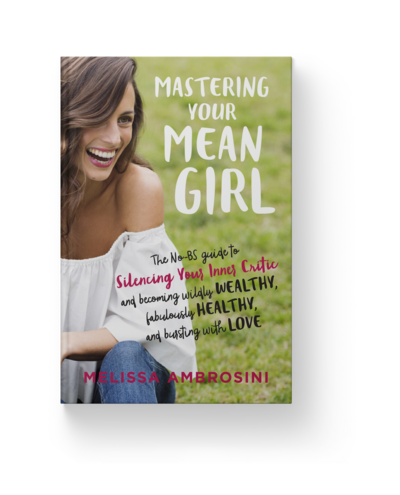
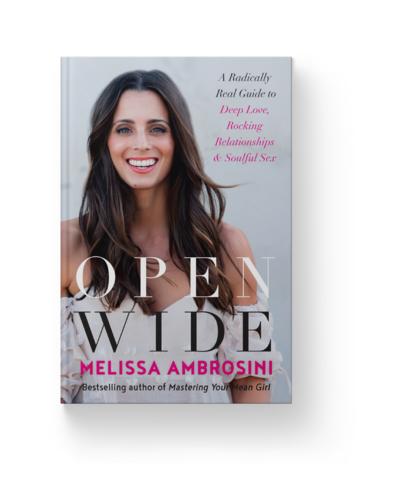
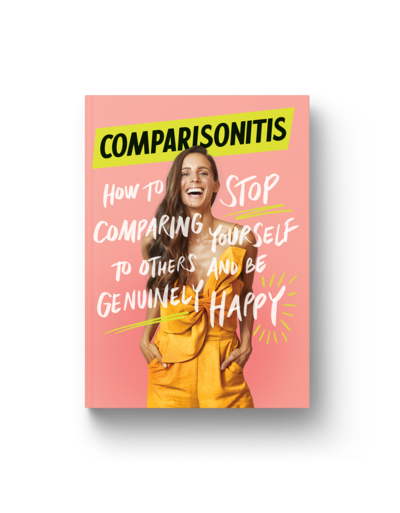
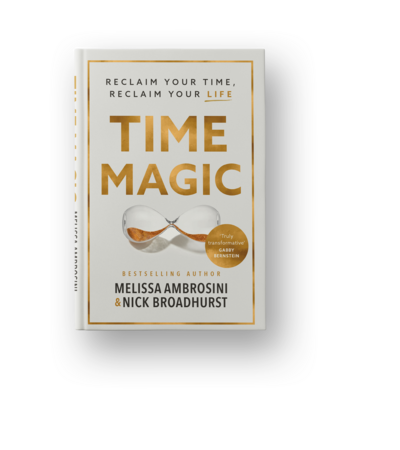








show Comments /
hide comments
- Hide Comments