



(Listen & Subscribe on Apple Podcasts, Stitcher, Spotify, iHeart or TuneIn)
Can you build a life everyone admires and still come home to a relationship that’s falling apart? This week I sit down with relationship expert Stefanos Sifandos to ask the question so many ambitious women avoid, whether deep intimacy and big ambition can actually coexist, or if one always eats the other alive. We get into why so many people feel disconnected from themselves before they ever feel disconnected from their partner, how social media is quietly rewiring our sense of worth, and the patterns Stefanos sees wreck even the “good” relationships.
This is a full download on self-worth, intimacy, and what it actually takes to stay connected while you’re building something big. Stefanos shares the tools he uses with couples on the edge of disconnection, what healthy empowerment really looks like versus the version we’ve been sold, and the one thing he wishes every teenager knew before they left home. Whether you’re single, partnered, or just tired of performing connection instead of feeling it, you are going to love this episode.
About Stephanos Sifandos
Stefanos Sifandos is an internationally recognised relationship expert, transformational coach, speaker, and educator. For more than a decade, he has helped thousands of people heal emotional wounds, strengthen self-worth, and create deeply fulfilling relationships by combining modern psychology, behavioural science, neuroscience, and ancient wisdom.
Through his coaching programs, workshops, retreats, and global speaking engagements, Stefanos supports individuals and couples to break free from limiting patterns, cultivate emotional resilience, and experience greater intimacy, connection, and purpose in every area of life.
In this episode we chat about:
- The pain that turned into his purpose (3:29)
- What real empowerment looks like, and why most people are doing it wrong (8:38)
- Why being present isn’t the fix everyone thinks it is (13:08)
- The quiet damage social media is doing to your self-worth (16:48)
- What we owe our kids in a world that never logs off (24:43)
- Can you actually have deep intimacy and big ambition? The answer might surprise you (29:11)
- Why couples doing “all the right things” still end up disconnected in the bedroom (34:01)
- The one non-negotiable every thriving relationship needs (37:14)
- The pattern Stefanos sees break relationships, over and over (46:26)
- The one book Stefanos believes every teenager should read before leaving home (49:28)
Episode resources:
- Higher Self Visualisation Meditation (get the meditation)
- Best Day Brainwash (get the brainwash)
- Book your 1:1 Strategy Session with me (book here)
- The ICONIC Mastermind (join now)
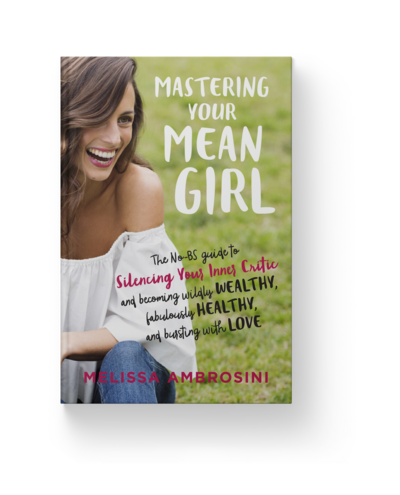
- Mastering Your Mean Girl by Melissa Ambrosini (book)
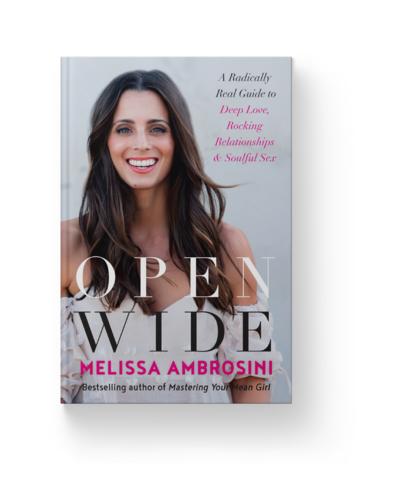
- Open Wide by Melissa Ambrosini (book)
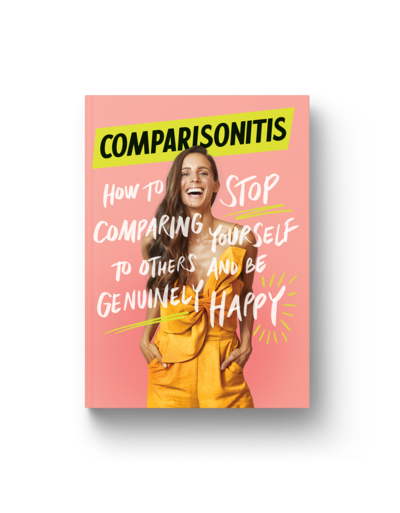
- Comparisonitis by Melissa Ambrosini (book)
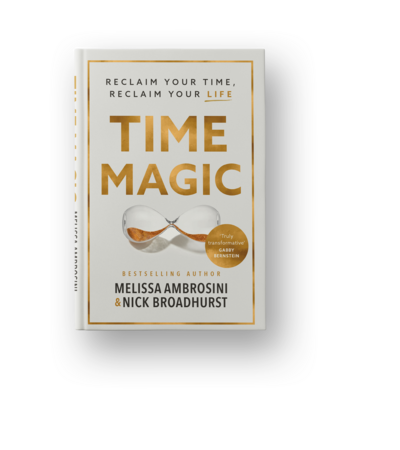
- Time Magic by Melissa Ambrosini and Nick Broadhurst (book)
- Stephanos Sifandos (website)
- Stephanos Sifandos (coaching)
- Stephanos Sifandos (Instagram)
- How To Let Go Of Expectations, Free Yourself From Your Past & Upgrade Your Present with Christine Hassler (podcast)
- Tuned In and Turned On: A Path to True Connection, Deep Healing, and Lasting Love by Stefanos Sifandos (book)
- The Labyrinth of Life: Passages of Truth Expressed Through Thought-Provoking Wisdom by Stefanos Sifandos (book)
- 10 Minute Daily Breathwork For Nervous System Regulation | Vagus Nerve Stimulation (youtube)
- Nervous System Regulation (432 Hz) | 12 Minute Guided Breathwork (youtube)
- 15 Minute Relaxing Breathwork To Help Calm Your Anxiety | Nervous System Reset (youtube)
- Breathe With Sandy (youtube)
Prefer To Read?
The following transcript has been automatically generated and not checked for accuracy.
Melissa: [00:00:00] The Melissa Ambrosini Show. Welcome to the Melissa Ambrosini Show. I’m your host, Melissa,
best-selling author of Mastering Your Mean Girl, Open Wide, Comparisonitis, and Time Magic.
And I’m here to remind you that love is sexy, healthy is liberating, and wealthy isn’t a dirty word. Each week,
I’ll be getting up close and personal with thought leaders from around the globe, as well as your weekly dose of motivation so that you can create epic change in your own life and become the best version
of yourself possible.
Are you ready, beautiful?
Hello and welcome back to the show. I am pumped for this episode because I have Stefanos Sifandos on the show, and for those of you that don’t know who he is, he is an internationally recognized author, educator, and relationship expert who has spent more than two decades helping people navigate relationships, identity, intimacy, and personal [00:01:00] growth.
His work has supported everyone from Olympic gold medalists and Special Forces soldiers to entrepreneurs, couples, and individuals seeking deeper connection and self-understanding. Drawing from behavioral science, philosophy, human performance, and contemplative traditions, he combines psychological insight with embodied practice in a way that is both grounded and accessible.
His work explores how early experiences, nervous system patterns, and emotional conditioning shape how people relate to themselves and others. And if you are someone that wants to dive deeper in your romantic relationship and all of your relationships, you’re gonna absolutely love this episode. It’s one that is super practical, that you are going to wanna take notes and implement into your relationships right away.
And for everything that we mention in today’s episode, you can check out in the show notes, and that’s over at melissambrosini.com/706. And now let’s begin.[00:02:00]
Stef, welcome to the show. I’m so excited to have you here. But before we dive in, can you tell us what you had for breakfast this morning?
Stefanos: Well, I didn’t have breakfast, but I had my first meal at around, around midday, and I had yogurt, Greek yogurt, bananas, blueberries, raw honey, and a tablespoon of peanut butter.
Melissa: Mm. Delicious. Delicious.
Stefanos: Yeah.
Melissa: Now, I am so excited for this conversation. I have had your beautiful wife, Christine Hassler, on the podcast. That was episode 386, and it was called How to Let Go of Expectations: Free Yourself From Your Past and Upgrade Your Present, and it was such an incredible conversation.
So I am so excited to have you here. I have known Christine for a very, very long time, [00:03:00] probably 16 years, and I had the pleasure of watching you two get together, and when she was, you know, really wanting to call in her soulmate, and then she calls in an Australian, which I just thought was so cool. So I am so excited to have you here, her other half, and to dive deep into all of the incredible work that you now do.
But before we go there, I wanna know how you got into this work. Take us back. How did this all unfold for you? I
Stefanos: think it comes from two different places. One more intrinsically- within me, and then the other shaped by my environment. So I think this desire to, to serve even some shadow elements of wanting to be a savior, you know, developed that pattern in the drama triangle that was created in my life with my parents, where I saw my [00:04:00] father as the villain, I saw my mother as the victim, and I saw myself as a savior.
And so the compound effect of that being habitual, but also out of necessity, out of survival, I developed an aptitude and an interest in helping people as well. But the shadow side of that is let me save someone else so that I can feel v- worthy and validated and enough and safe in the world, right? And then I, I also just as I reflect on my own life, there’s this intrinsic desire to really support other humans and, and see myself in other humans, are the mirror effect of relationship.
And then again, habitually and the compound effect over time, it just became very meaningful and endearing to me. And also, I, I like being creative. I like, quote-unquote, problem-solving. I like being able to really attune to someone and then attune to myself and, and see the unseen and make the, the unknown known and really support people in freeing themselves, because the experience that I’ve had in my own [00:05:00] life from freeing myself from my own pain and my own fear and my own unhealthy survival-based patterns has been deeply liberating and deeply intimate for me.
And the access that I’ve had, you know, on, on, on this human journey has been profound, and so I, I also wanna share that with others. And I think it comes from those two places. You know, and when, when I’m overwhelmed or when I’m Maybe disconnected from the core of who I am, or maybe I’m living out of integrity, or I’m just flustered, or I’m, or my nervous system’s dysregulated.
I can live more from that shadow place where it becomes a survival-based need. It becomes me validating myself, and my self-worth is being amplified by how good I can do and how much I can help people. I just wanna be honest with that because I think so many people get into this line of work for that reason.
I don’t mean to project that onto everyone that is in therapeutic work or that’s a coach or that’s a helper or a supporter or anything like that, or a guide. And a lot of those reasons come from, [00:06:00] “Well, I can’t help me, but let me help others, so in turn I can help myself,” and that’s the relational effect as well.
And that, that is, that is a theme that, that thematically lives in this, in the extension of, of this kinds of, kind of service and sort of area that I’m in. So yeah, I think that’s just a, an honest reflection o- of the why behind, you know, why I do what I do.
Melissa: Okay. So tell us, what do you do?
Stefanos: All those things I just said.
I just really help people get unstuck, get out of their own way. I mean, ultimately I, I am, I’ve been pretty blessed to work with… I tr- I attract a- an array of different people, and it’s part of my own life journey as well. I, I can relate to d- people from different walks of life. I, I tend to work with a lot of high performers in, in various areas, whether that’s business, whether that’s athleticism, literally Olympians and so forth, you know, people at the tip of their spear, military, individuals that really play high stakes.
And those people come to me generally. I do a lot of one-on-one work, and [00:07:00] I have done for like 25 years or so, and those people come to me and say, “Hey, I have this amazing life on the outside, but I’m dying on the inside. I feel empty. I have all this success. I have all this money. I’ve had three exits. I’ve got millions and millions and millions, tens, hundreds of millions, and I have a family, I have a wife, but I feel so disconnected.”
Or, “I don’t have those things, and I really yearn for intimacy and closeness, but I push it away. And there’s something that just doesn’t feel quite in alignment.” So I’m attracting… Or the, the kinds of people that I’m, I’m meeting are people that have a, a, a minimum self-awareness that something isn’t quite happening or clicking in their lives, and they’re pushing something that’s really important away, which is often closeness and intimacy and being seen and being alive, like aliveness, and really serving beauty.
And there’s all this compensation happening, right? And they wanna change that. And then beyond that, again, just really supporting people in seeing what’s unseen in their lives. And, and that, that flip- Going [00:08:00] from a place of I have no idea what’s happening, or I have an idea but I can’t touch it, to making it really tangible, n- now we can change, we can transform.
Like, we can actually m- have greater mastery over our lives, and that’s very empowering. So again, if I were to really even simplify it further, I help people move from a very disempowered place, or a feeling or a sense of disempowerment in whatever area or areas of their lives, to actual healthy empowerment.
Not through control or manipulation or subjugation or power over people or themselves, or through the personality and ego, but actual deeper surrender and trust, and power with the world around them. That empowerment piece is really important.
Melissa: And how do you do that? Like, are there specific methodologies or teachings?
Like, how do you get that person from disempowered to a healthy empowerment?
Stefanos: Yeah, there are many methodologies and modalities that I leverage. Over the years I continue to– I’ve learnt so many different techniques and have gone down the rabbit holes of so many different [00:09:00] philosophies. But ultimately and foundationally, it’s just seeing another human being and meeting them with compassion and non-judgment and curiosity.
You see, most people growing up, not everyone, but most people growing up, they’re just not understood. They, they, they have an experience of I’m not understood. The, the, the real me can’t be shown because it will be humiliated or rejected or violated or teased, or whatever it may be, right? It will be shunned and pushed away.
And so we develop a practice of hiding, wearing masks, and we, we become adults and we don’t really know who we are. We’re just entertaining other people and other relationships. We’re being what we think other people want us to be. And so when you meet someone, ’cause that’s the fundamental work that I do.
I just, I sit with someone, and we talk about all the stuff they don’t like about themselves and all the stuff they’ve done and all the stuff they’re doing that carries a lot of shame maybe, and embarrassment, and all the stuff that is great about them, and I do [00:10:00] my absolute best to sit there in neutrality.
Just genuine neutrality, and not judge their past, and meet them with non-judgment. That’s very new for so many people. ‘Cause when people share themselves, the, the darkest secrets, the most intimate ver- version of themselves, their deepest vulnerability, just their truth- In the past, their experience for so many has been that- that’s not, that’s not accepted.
We don’t embrace that. We push that away. It’s criticized. It’s judged harshly, and we make the association with, “I must be bad.” And when someone is met for the first time possibly in their lives without that, it- it’s a big shift, and it’s a lot to take on. And most people at the beginning don’t accept it.
They don’t take it on. They don’t appreciate it. They don’t… It’s not even about appreciation. They just, they push it away. They can’t receive it.
Melissa: Yeah, it’s too confronting.
Stefanos: It’s too confronting to be loved, to actually be loved for who you are and say, “Oh, like you’ve done these things, and look, I, I, you know what?
That’s, that’s, those actions aren’t conducive to who you wanna be, and they hurt people. And I still love you. I still see you. It’s okay.” It’s, [00:11:00] it’s really big. And that, so I, I don’t mean to be super reductionist here or simplify, quote-unquote, what I do, but that is the foundation. And that is just witnessing someone as they are.
Of course with guidance, of course with an understanding of how the mind works, how we relate, how we give and receive love, how we relate to our self-worth, how our habits today as adults were formed, created during our formative years as children, how our value sets and beliefs and all the, all that is us compounds and impacts our relationships and our intimacy and the things that we want most.
Having insight into that, of course, is very valuable and, quote-unquote, knowledge and wisdom into that. And honestly, meeting someone in truth with love and non-judgment and compassion, I’ll just keep repeating this, and empathy and understanding and curiosity, like, “Tell me more about that,” it goes a very, very long way because we just wanna be seen.
Like, it’s, it’s a human need to be seen and understood and accepted for who we are. And most people, particularly, [00:12:00] you know, high performers, people that compensate a great deal, not everyone does that is successful, but most successful people, there’s compensation there. Meaning, just a side note here, meaning that that, that outcome is based on an action of, “I don’t feel enough.
I need to feel enough. I feel disempowered. I need to feel empowered. Let me show the world how amazing I am. So I’ll build a business. I’ll hire 500 employees. I’ll sell it for 500 mil,” whatever it may be, right? And so when we, when we have that and we hide in that, and there’s all that compensation, there’s very little, we, there’s a lot of energy required to keep that going.
And so there’s very little time and space for self-reflection to actually sit in the stillness of the pain that we’re harboring and the fears that we’re holding onto. And so when we just slow down, that’s a primary methodology I use, just slow down. Let’s just slow right down. And when we slow down, and we just, we breathe slow, we listen to our [00:13:00] bodies, we ask a question, we pause, and we give it space to breathe, a lot comes through.
Melissa: Mm-hmm. This is what I’ve been pondering lately. I’ve done a lot of work, as have you. We’ve been on this journey for a really long time. Do you think that it is as simple As choosing to be present, choosing not to engage in the old stories. Like, is it as simple as that? Like, because when I’ve, like, got stuff replaying in my head, for me it’s just as simple as reminding myself that that’s old, and come back to the present moment.
Do you know what I’m trying to say here? Like, is it really as simple as that?
Stefanos: Yeah. The, the answer is, to me, it’s yes and. It is as simple as that. It’s that old saying, like, it’s easy to understand, more difficult to execute for a dif- for a number of reasons. For, for many people that live in the bell curve, [00:14:00] like the majority of that bell curve, the average, let’s just say, it is accessible.
It’s not so much the concept, it’s not so much the, the cognitive understanding of, “Hey, I…” Because it is that simple. It is actually as simple as choosing differently. You know, it, it, it’s the physiological, psychological, psychosocial, relational barriers that exist, the belief systems, the value systems, the, the stuck trauma, mental, physical, emotional, et cetera, that stops us from simplifying this thing.
It’s the lack of belief in self. It’s the low self-worth that’s being masqueraded in the world as, you know, false bravado and confidence, but you’re not really confident. It’s this inability to actually be seen and embrace self, to even receive and to receive love, right? And so there’s all these, we can call them blockers, but we can call them hurdles if you like, j- or just obstacles or just elements in the way of that.
But it is as simple as that, it really is, and it requires [00:15:00] practice. The, the, that’s the whole point, like we’re here to grow, and that doesn’t mean we’re always 100% of the time going to be constantly challenged. It just means that challenge is a part of life. There’ll be periods of life where there’s more ease and grace, and there’ll be periods of life where there’s not so much ease and grace.
It doesn’t mean you’re doing anything wrong, and it can be as simple as choosing differently. But you may have to just keep choosing differently 3,085 times before the thing meaningfully shifts in your life. Not because you’re unworthy, not because you’re stupid or you don’t have all the access, but because of so many different reasons.
Like, that’s just your path, or that’s how many times it’s going to take for you as an individual based on your history and your context. But I love what you’re saying. It actually is as simple as that, and believing that, that’s the starting point to moving through as opposed to trying to get around and navigate and be sneaky with our own…
You know, ’cause the personality is so sneaky, right? But we have to believe because it, there is a big, deep truth to that. It is as simple as choosing differently. [00:16:00] Now, when you make that decision or when you b- have that, hold that belief, you then start seeing po- the possibility of change differently. Maybe you pause just for a split second, whereas before you wouldn’t.
Maybe you walk away. Maybe you, you- Ah, but you don’t say the thing that would normally cause more rupture in the relationship, or you say it differently. Now maybe you ask a question, then you reflect back on, you go, “Wow, in the past I wouldn’t ask a question, I would make assumptions, and that would cause more arguments, and we’d argue for like 24 hours.
Now I asked a question, I got clarity, that was the end of it.” Well, that’s interesting. Now you’ve got new information. New neuronal grooves are, are, are happening in your brain. Your brain’s changing, your body’s changing, your confidence is changing, your awareness is changing. But you’ve got to start with that belief, right?
Like, i- is it as simple as just choosing differently? Yes, the answer’s yes. End.
Melissa: I love that. Talk about the role social media in general is playing on people’s nervous systems, on their self-belief, on their worthiness. [00:17:00] Talk about the role of that on people, and what can we do about it?
Stefanos: Oof. What a, it’s a really big question.
I mean, I love the nature of your question. There’s, I think there’s so many different places we can go. So I think like anything in life, there, there are, for lack of a better term, there’s pros and cons to everything, right? There’s, there’s a, there’s a light side, a dark side. There’s a side that is empowering, there’s a side that’s disempowering, and then we get to choose- We’re also heavily influenced by the algorithm, by the, the way that this thing is constructed.
We’re also heavily influenced how we use it and how we utilize it and integrate it into our lives. I’d say for the large part, based on human consciousness, where we are collectively, social media probably does more harm than good, right? Meaning that we, we get lost in the rabbit holes that is social media.
From a, let’s just, let’s just look at self-perception and self-worth for a moment. There’s so much comparison. [00:18:00] We’re seeing snippets of someone’s life on Instagram, and we s- we’re constantly exposed to those snippets. Let’s say we follow someone. Now we’re constantly seeing their life, 30 seconds, a minute, 90 seconds, three minutes, whatever it is, daily or weekly.
Now over months and years, we believe that that’s their life. It’s still only a snippet of a 24-hour period. That 90 seconds is still a snippet of a 24-hour period in their life, but we make the association that all of their life is glamorous. All of their life is private jets. All of their life is looking great and however they look, what- whatever it may be, right?
Whatever envy we have or whatever comparison we’re making. And then we look at our lives, and we live with ourselves 24/7, and we’re like, “Well, I may feel like that maybe at best, I don’t know, a couple of hours a week when I go dress up and put makeup on,” to use a, a female as an example, and go out, whatever, or, or th- when the guy hits the gym, and the rest of the time he doesn’t feel very good about himself.
There’s, there’s so [00:19:00] much disconnection with reality. So, there’s this false reality that we’re taking on, and now we compare ourselves, and we feel down in the dumps. And so we have to c- we have to compensate for that. So the greater the pain, the greater the pleasure. Now, if we’re comparing ourselves to these snippets of information of people’s lives that, that we’re seeing on the internet and we’re seeing on social media, but it’s not, it’s not a full depiction of what’s actually happening in their lives.
I saw something the other day about, it was like the, the, the quote-unquote, it was an AI thing, the luxury couple or whatever, and they’re taking pictures, and they’re, they’re going on vacation and everything. But you’re only seeing the picture is literally a second of their whole vacation and, and really it, they, they’re, it’s false.
It’s not real. They’re not flying first class. They’re not staying in a five-star hotel. They’re just visiting a five-star hotel. You just, we, there’s so much competition to be positioned as the best and be ha- positioned as I have the best life because there’s very little embrace of all of us. We’re, we’re not, we’re [00:20:00] not accustomed to this.
We live in a society that is hyperpolarized. We don’t, we’re not, we don’t embrace the difficult. We don’t embrace the challenge. We don’t em- embrace the hardship, but we embrace the conveniently looking good. We, and we project that into the world, and it’s very polarized. And so that’s part of the harm that social media does.
It affects our self-perception. It affects our self-worth. But guess what? You’ve got to be responsible as an individual that’s on social media You’ve got to be responsible for saying, “You know what? I’m not buying into this,” and have some critical thinking. And don’t just think that… I mean, I was talking about this with Christine earlier.
Another thing is she, she said, “I wonder when, when are models going to stop being around?” Especially with, with AI as an example. Like, of course you’ll need catwalk models or physical models, sure. But like magazine, media, digital media, like you can just create an AI model, right? And, and but I say that n- not because we’re having a conversation about job security here in a certain industry, but I say that because [00:21:00] We’re now creating these idyllic versions of what we think it means to be the most beautiful in the world.
And then everyday people are comparing themselves to that and saying, “That’s not me. I must be a piece of shit.” Now again, the opportunity for them is to not do that, and it’s to go into their intrinsic value, to surround themselves with people that love them and see them, and see their value, not just in their physical beauty and beyond that.
Not that physical beauty isn’t important, sure it is, but beyond that, the, the multifaceted beauty that we hold as humans, and it’s our responsibility to say no to that. What, what our social media does is it hijacks our attention, it pulls us out of the physical world, right? And it b- drops us into fantasy.
So very conveniently, when life isn’t going well, dopamine hit. “Let me, let me go on YouTube,” or, “Let me go on Instagram,” or, “Let me compare my… Let me hate my life, and then let me, let me, let me go buy something and feel good about it.” And you’re in these highs and lows, and the contrast, and contrast is great.
Contrast is fantastic. But you’ve gotta [00:22:00] utilize contrast in the right way. You’ve gotta lever- lever it in the right way for you to grow. And so that, that, that hijacking also messes with our brain. It dumbs us, it makes us stupid. So there’s probably a few other areas we can go, but, you know, overall, I, I see us needing to treat social media as a tool.
There are benefits. Some of those benefits are we can expand our reach if we have a message that’s, that we feel is important. We can expand our businesses. There’s lots of great things we can do, but we need to understand the pitfalls and the downfalls of social media, and then adjust ourselves accordingly so that we still are autonomous and sovereign, and we’re not being hijacked.
Melissa: 100%. And I think about, you know, like we are aware people, and if it affects us, imagine everybody else and how it’s affecting them, who may not even be aware [00:23:00] that it’s affecting them, and just may feel like they’re in a dark spiral and not quite sure why. You know, and I think about the younger generations and the, the kids growing up with it now, and, you know, we’ve both got young daughters, and I’m just praying to the internet gods that social media is completely banned by m- the time my child is really interested in it.
Like, I’m just like praying that they literally ban it, or it’s like so irrelevant or something that they… You know, our kids are like, “What? Why were you on those things? Like, that’s so ridiculous, Mom.” Like, you know? I’m kind of hoping there’s a big, like, flip.
Stefanos: Well, I like what you said about irrelevant just now.
I like what you said that I hope it’s, it becomes irrelevant, that they won’t have the need To, to be. Now, I don’t know if that will happen on a global scale, but what, what immediately came to mind was that becomes our duty and our responsibility [00:24:00] to light them up so much that they don’t even have a desire and need for social media, even if some or all of their friends are on it, right?
Like, that becomes our challenge or our gift as parents. But I, I love that. You, you just sparked something in me, like how can I make social media so irrelevant that she’s not even interested? She knows how to use it. She can jump on if she needs to, because, you know, it’s probably gonna be, can probably continue being a part of life, but she doesn’t have the addictive pull, and that’s on me to help her cultivate enough interest in the, in the, in the physical world, you know?
Melissa: And enough inner self-esteem and inner self-worth that she’s not looking outside of herself. And you know what this just sparked within me, is that I have a 20-year-old stepson, and he’s 21 in February, and I just realized this. He is not fazed by it. He does not give [00:25:00] a about it. He is like, “Whatever.” And not only that, he’s not really interested in drinking and partying, never was.
He’s never succumbed to peer pressure. He’s not one to follow the herd because that’s what everybody else is doing. And I’ve just literally had this light bulb moment. I’m like, “He is not interested in it.” Like, I’m not even joking. It takes him two weeks to write back to me on a text message, but I’m like, it’s great he’s not on it.
It’s usually on do not disturb mode. He’s not fazed by the thing, and neither is his girlfriend. And now that I’m thinking about it, I’m like, “Wonderful Wonderful. And these are two 20-year-olds, and she’s almost 21, that are so sure of themselves, and that’s what we want. So it’s about building their inner self-worth, reminding them that they are worthy, building their [00:26:00] self-esteem, not comparing them to anyone else.
You know, I say that I’m brainwashing my daughter every day, and I am. I’m brainwashing her. I am, like, reminding her every day that she is worthy and so loved. And it actually, I did a reel a little while ago about this, how I’m brainwashing my daughter, and my mom called me because it triggered her, and she said, “I think you should take that down.”
And I was like, “Mom, did you read the post? Like, did you actually read it?”
Stefanos: Your mother’s a symptom of, of this fast society that we live in. Just sees a headline and bang, it’s all
Melissa: Yeah. Well, she goes, “I know what you’re saying,” but, you know, it obviously triggered something within her and I was like, “Mom, this is what our children need.
They need to be positively brainwashed because if I don’t do it, they’re gonna get it from someone else. They’re gonna get it from the internet.” And she was like, “Yeah, okay, I understand what you’re saying now.” So it is our duty [00:27:00] to build our children’s self-esteem so that they are not looking left or right at anybody else.
They’re not looking down at their phone, looking for validation. They are so strong and sturdy within themselves. Like, that’s our duty, and if you don’t do it, the school teachers will or the internet will.
Stefanos: Yeah. Yeah. I mean, it, I, I totally resonate with what you’re saying, and the, the thing that I would add to that as well is my desire is that my daughter is, is under the tutelage and guidance of myself and my wife and, you know, select family members and even maybe other teachers or people in our community that we trust and really care for and, and resonate with and align with.
And, like, my, um, speak for myself as a parent, one of my biggest lessons around this is just, you know, give it to God. Like, do the best I can, and whatever the outcome is, the outcome is. Yes, I have an intention for her not to go down the rabbit hole of social media And I will do my best, and I don’t also wanna have a stranglehold or a control on that.
But like you said, I’m just gonna- [00:28:00] I’m going to keep showing up in a particular way, and quote-unquote brainwashing in a particular way. And what will stick will stick, ’cause it’s her path too, right? And that, that non-attachment is also really healthy for me personally. You know? I, I, I know it is, because it gets me out of my ego and personality, which wants control, and more into just really being in the present moment with, “This is what I value in teaching, and this is what I’m going to impart, and I pray that it sticks.
But more importantly, I actually pray that it sticks in whichever ways it needs to, and she gets whatever she needs.” That’s the, you call them lessons, or that’s the wisdom that I’m moving through. And it’s difficult sometimes. Oh, man. It’s very, it’s difficult for me, because I’m like, “Oh, no, I want it, I want it…
It has to go this way, ’cause this is the way I want it to go.” But I gotta let that shit go.
Melissa: Mm-hmm. Absolutely. Kids will show you that so much. Like, you can show up, you can do your best, and then they are their own beautiful being. They are their own being on their own journey with their own [00:29:00] life lessons, and it’s our role as their guardian to support them, to hold space for them, and to just be that loving guide.
I’m reminding myself of that all the time. So let’s move into relationships, like intimate relationships, because you teach and you talk a lot about that. A lot of people listening are ambitious, high achievers, running businesses, raising kids, holding a marriage, and somewhere in there, the relationship becomes the thing that quietly runs on autopilot.
And I feel like, you know, the more kids you have, like, your partner gets pushed down the list. And it wasn’t until a mentor said to me, “Nick needs to be above your children.” And I know that’s gonna trigger some people, but I actually now really prioritize my marriage as one of the most important things in my life, as well as my children.
But [00:30:00] my marriage, if that is not rock solid, if that is not stable, if it’s not loving, it is the foundation on which this home is built. It’s the foundation which all the love can flow. And when our marriage is not flowing, my business feels hard, parenting feels hard, everything feels hard. So is intimacy actually competing with ambition, or is that a story that we have inherited?
Stefanos: Well, it’s a great, it’s a great question. Is intimacy, uh, is ambition competing with intimacy? I think anything that you prioritize at some level competes with other priorities or other things that you find valuable, right? Again, the come from really matters. And so if your ambition Two things. I think attention, intentionality [00:31:00] come from, which is in part reasoning, very much matter.
And so if your ambition is coming from a place of compensation because you feel unworthy and you feel that your experience is that when I’m validated by the outside world for the things that I achieve in business, then I can feel better about myself and I have relief and reprieve, then you’re not going to give that ambition up very easily.
And it’s also coming from a fearful place, coming from a contracted place. Now, by default, if that’s the case, which is the case for so many, they have a wound around intimacy, around trusting other humans, around being seen, around trusting love. Yet at the same time, they, people, we, crave intimacy. We crave closeness.
We crave to be seen. We crave to be accepted and respected and heard and understood for who we are as we are. So there is a competing there, but you’re going to keep going to the shadow, to the compensation, to the [00:32:00] personality, which is very strong, which has control through ambition, and you’ll push intimacy away.
And so it will compete for intimacy, yeah. And you’ll lose yourself. And the thing is that you get so frustrated, so upset, so sad, and so angry, and so all the things, yet you won’t let the ambition go because the place from which that ambition is living is a place that is unhealed or not made whole or untouched within you, meaning that it’s not resolved.
That, that trauma, it, it– the loop’s not closed. And so until it’s closed, and that means you face yourself, you feel what was unfelt at the time of inception or at the time that these patterns became relevant or matured in your life, and you start playing out these habits, until you face all of yourself, you, you’ll keep going towards ambition.
It’s a very strong magnet. You say you want intimacy. You say you want a healthy partnership. You say you want stability. You’ll say you don’t want to cheat. You’ll [00:33:00] say you don’t want to get upset and shut down and stonewall. You’ll say all those things, and they’re true. They’re not untrue. But you won’t be able to do them because the allure of what the personality is pulling you away from, which is facing all of yourself, is too strong.
So you’ve got to sit in discomfort. You’ve got to meet your maker in that sense, right? And that’s the journey that most people are just very afraid of, of, of walking, and rightly so. I get it. Like, it’s, it’s fucking scary, really scary. But it’s really the only way through is through. And so until you meet yourself and your ambition and the things you want to create in the world, they don’t just go away.
I mean, they, they may, and if they do, they go away from a very genuine place where you’re happy to let them go. But once you heal this or you, you make this part whole, and your come from is different, you, you have ambition from a different place within you, you can welcome intimacy and ambition and many other things into your world.
And you’ll know how to be with all of them in healthier ways because You’ve tied up that loose end or those loose ends
Melissa: Yeah. Yeah. [00:34:00] Absolutely. Absolutely. So what are some other things that we can do? Because most relationship advice is very behavioral. You know, it’s like schedule the weekly date night, and do the gratitude practice, and all of those things.
But you talk about the nervous system patterns, and I talk a lot about this as well. Can two people be doing all the right things and still feel like complete strangers in bed? Like, what’s the layer underneath that nobody is talking about?
Stefanos: Yeah, truth. That’s it. Just truth. It’s not, it’s not complex, and everyone has different truth, right?
Everyone holds different truth. And so let me elaborate a little bit on that. So you can be doing all the practices, and, and you can be genuine. They don’t have to be lip service. The practices can actually be very genuine. The real genuine practices together, separate, et cetera, and they are absolutely helpful.
Whatever your personal practices are, whatever your personal prayers are, whatever your personal healthy [00:35:00] habits are, th- th- they’re absolutely useful and supportive of your growth journey and your relationship Often, though, when there’s still disconnect, there’s a truth that is being avoided within self.
Now, maybe that’s a truth that you wanna share in the relationship. There’s a truth that you’re not facing within you because you’re scared of what the potential outcome could be, because maybe there’s rejection there, or you feel that your truth or there’s fear around it, fear circulating your truth.
It’s encapsulating it, and you feel that maybe if you share your truth, the relationship will end as you know it, and that’s too much of a risk. But you hold onto the truth, but then you build resentment. You build shutdown. There’s distance and gap, and people feel that inauthenticity and lack of integrity, not because you’re doing anything wrong, but just ’cause you’re scared of telling the truth.
And often in one r- in a relationship, it’s not just one person that’s scared of truth. It’s, it’s maybe both. Now, what, what is the truth? It could be a myriad of things. I, I don’t know what that is. It’s different for everyone, but there’s, there’s truth under truth under truth. And until you get to that truth, [00:36:00] and you really get to the core of it in your relationship, so firstly with yourself and then within the context of the relationship, nothing will fundamentally shift.
It will shift, but it will be surface level. So the stuff that you really want, the deeper connection, the deeper… Whether it’s physical sex and physical contact, or whether it’s a deeper emotional connection while having sex or whatever it may be, you’ll be missing the mark because you’re not being completely truthful.
Again, whether that’s about a fantasy that you have or fantasies that you have, whether that’s a pain that you’re harboring, whether that’s a resentment or a withhold or a mistrust, it’s gonna keep coming into the relationship. And so you need processes for clearing. You need processes for healthier communication.
You need processes for processing your own truth, right? Outside of the relationship as well. It doesn’t necessarily have to be with the relationship. So that means maybe you’re a woman, you have a woman’s group you’re a part of. You’re a man, you have a man’s group. Maybe you work with a therapist or a coach or whatever it may be.
But you need places where you can release what’s happening, but be in your truth and practice that. And then if it’s relevant to the relationship, you [00:37:00] have to bring it to the relationship. And when we commit to truth- The truth shall set us free. I mean, and clearly, most people listening to this know that I’m not the first person that has said that.
Melissa: Yeah, absolutely. So I’m a huge believer in, like, in order for a marriage or a partnership to thrive, it takes two people to do their own individual work and to do the work together. Like, Nick and I have been married, I think it’s 13 years. It may be a bit more, but I’m– I can’t really remember anymore. I think it’s around 13.
And, like, what I know to be true over the years is just, like, how important that inner work is and how important the work is together. Ideally, ideally, this is an ideal situation, every week I would have, you know, a 30-minute call with my therapist, he’d have one with his, and we’d do 30 minutes together as [00:38:00] maintenance.
Like, that is the ideal, but it doesn’t always happen. Like, for us, you know, we go months without speaking to someone, and then when we need some support, we reach out to one of our mentors or coaches.
Stefanos: At least you’re doing that. That’s good.
Melissa: Yeah, and we’re very quick to do that. We’re like, “Right, we need a session.
Let’s do it. Okay.” But, you know, in an ideal situation, like, you do a little check-in every week. Like, do you think that’s necessarily– What are your thoughts? Because I do hear this a lot from different people. You know, one person does the work, the other doesn’t, or one person wants to do the therapy, and the other one doesn’t wanna come.
And divorce rates are through the roof. And you add children, you add another child and another child, like, it’s pressure and it’s stress. And so what do you recommend is, like, the baseline for people?
Stefanos: Yeah, so, you know, do- just on divorce rates, you know, again, part of the Pathologizing of ourselves, the fast world we live in, the, the misbelief of going back to social media for a [00:39:00] second, there’s like, there’s plenty of fish in the sea.
And there are, I mean, there are plenty of people out there that we could be in better alignment with or alignment with, but ultimately if we’re not doing our inner work, we’re just taking ourselves into the next relationship, the same version of ourselves that is unresolved and unhealed anyway. But we have this belief, you know, you get on a dating app, you swipe left, you swipe right, you swipe wherever you want, and you’re gonna all of a sudden be in, in heaven.
You know, whether it’s a casual one night stand or something else, it doesn’t quite work like that. But anyway.
Melissa: You know that saying the grass is greener on the other side? I’m like, in this situation, the grass is not freaking greener. The grass is greener where you water it.
Stefanos: 100%. 100%. And how you water it really matters as well.
And this is what you’re speaking to, your inner work. So to answer your question directly, I, I think it’s very different for everyone. There’s no objective, “Hey, we need to see someone once a week.” Your cadence is your, just like when, when people are physically intimate, like whether it’s spontaneous or something that’s more scheduled or a combination of both, like what can work for one couple, which is sex every day is necessary for both of them.
What works for another couple is sex every week or every couple of weeks. Like there’s no wrong or [00:40:00] right with that. Like you both get to make those agreements and you get to be very honest and truthful from where that’s coming from and what your needs are, right? I will say though, that what is important fundamentally, I think in any relationship is that you, you, you have to both value growth.
So if someone doesn’t, if someone does not value growth, not interested in looking at themselves, not interested in working with someone, having a mediator, having community intervene when things are tough, uh, you know, intervene’s a right word, but there’s more than, you know, support, challenge, hold space, whatever you wanna call it, and someone extremely values the development of self, the, the, their hierarchy of values are mismatched.
So you, as a, at a foundation level, you have to both value growth. You have to both be willing to look in the mirror and say, “Well, I could be doing better here.” Or, “Oh yeah, she’s pointing out to me the thing that’s upsetting her and What she’s saying is actually really useful for me, and it’s actually accurate.
I, I need to probably do a little bit of work around that. Let me go bring this to my, my guys, or let [00:41:00] me go work with my, my teacher on this, you know? So you both have to value growth. Now, do you need to see someone once a week? I don’t think so. Like, there may be a season where for a year you need to be seeing someone once a week because you guys are in some intensity.
And sometimes you’ll go, like you said, weeks, months, and you don’t need that. You, you both get to decide a very, decide in a very conscious, mature, deliberate way what does your cadence look like for getting support and tuning and optimizing and continuing to have the relationship grow? And what are the things that you both need to do together and as individuals?
You know, in my relationship, I need, probably a little bit more than Christine, but I need to be away by myself sometimes. And I mean, I, by nature of my work, I travel alone any- I travel a fair amount anyway, so I get, I get that. But it’s just something that I need for me. Like, I like to adventure. I like to be out in the wild.
I, it’s just something I need for me, right? And so we know that. She knows that about me. I know that about myself. I know I’m a better human when I have certain things. I know [00:42:00] she’s a better human when she has certain things. So we make cons- In a relationship, I think it’s important, people don’t like to hear this, most people don’t like to hear this, but you compromise, you make concessions, right?
You make sacrifices sometimes. And y- I know the arguments against those words, I get it, and it’s not about doing something you hate. It’s not about sacrificing yourself and then building resentment. It’s not about minimizing your needs and maximizing the needs of others. It’s about saying, “We’re in a relationship together, and sometimes the things that my partner wants, I’m not really gonna want.
But in that moment, I recognize it’s really fucking important to her, and I’m gonna make the concession, and I’m gonna be selfless in that moment.” And it maybe I have to be selfless, or I choose to be selfless for many moments. And there’ll be times where I get to be selfish, and when I really believe I need to be, I’ll be my truth about that.
And so this is the sort of the yin, the yang, the give and take, the, the push, pull that happens. When we’re committed [00:43:00] to growth, it will happen more organically. It doesn’t come without any friction. There will be friction, but how we navigate the friction matters, and how we do it is usually from a more mature place when we’ve got agreements in place, and there’s communication behind that, and we’re both willing to make concessions and prioritize each other.
So both people are coming into the relationship saying, “I’m seeking to understand you.” “I’m seeking to understand you, too.” “I’m seeking to be the best version of myself for you, for me, and for the relationship.” “I’m seeking to be the best version of myself for me, for you, and for the relationship.” When you both come from the same place- It’s very difficult to stay in tension, very difficult to not actually have your needs met.
Melissa: Mm. Yeah, exactly. How I like to look at it as well, like, that’s all beautiful, and I totally agree. And, you know, I look at it as an act of service, like surrendering my preference is an act of service to my husband, to my kids, or whatever it is. But I’m choosing to surrender my preference [00:44:00] because maybe he has a stronger preference right now, and I can just let mine go.
It’s all good. Like, I can get my needs met later or whatever it is. So there’s that piece for us, and then also I like to always look at it like how can everyone’s needs be met here? And, you know, how can Nick’s needs be met? How can mine be met? And how can the children’s be met? And maybe his isn’t completely met, but, like, we all kind of like compromise a little bit so that we’re all getting our needs met.
And I like to look at it like that because the whole ecosystem of the home is going to flow and flourish so much more beautifully if we’re all feeling like our needs are getting met. It’s a very simple thing. You know, and each day, like, Nick and I will just chat and we… He might say, “Not feeling 100%, didn’t have a great sleep.
Like, I need to go and do this. I need to go for a walk, or I need to have an Epsom salt bath.” And I’m like, “Yep, cool. You go 20 minutes. Do whatever you gotta do. I’ll hold the fort or [00:45:00] whatever.” So it’s about constantly just being in communication about what’s going on for you, and I feel like the more kids you have, the more you need to do this.
I talk about this in my books all the time, and in everything I teach, is crystal clear communication. The more you can really get excellent at CCC, crystal clear communication, everything is going to flourish so much more. All of your relationships, when you have that crystal clear communication, it’s just a game changer.
Stefanos: Yeah. Agreed. And what’s foundational for crystal clear communication is the bravery and the courage and the willingness to be in your truth, to have crystal clear communication. If you’re not willing to speak your truth in compassionate, considerate, seeking to understand ways for both you and your partner- Crystal cl- communication is mute because you’re not actually speaking your truth.
You’re speaking a version that is dulled down or softened or numbed or [00:46:00] manipulated, contorted because you don’t wanna hurt their feelings, or you don’t want the potential aftermath. You know, you’re hyper-focused and hypervigilant on, on what the potential could be of your, your sharing of truth. So you’ll, you’ll dumb it down.
It’s just, I’ve just seen this time and time again in my own life and in the 25 years I’ve been working with individuals and couples. It just doesn’t, it doesn’t end up anywhere good.
Melissa: Yes. What is the most common thing that you see in maybe the couples that you work with and even in your own relationship?
Like, what’s the common thing that comes up?
Stefanos: It does vary for men and women, I would say. I- if I was to say, like, a relational theme is, you know, you touched on this at the beginning where the part- the partnership is not being prioritized, right? Kids, life, business, whatever it may be, commitments, overextension on commitments, and the partnership is often the last thing that gets the [00:47:00] attention, you know?
Um, and so if we’re not deliberate in prioritization w- with quality time, with connection, with meeting the needs of the individuals and what the relationship needs, that’s a, that’s a big theme that, that usually leads to, you know, pain in the relationship. Men not being acknowledged and appreciated. I mean, just actually let, let me, let me retract that.
It’s not just men, it’s, it’s just this, a perception that the other partner doesn’t appreciate them. The, you know, in, in– for a woman it more, it comes more in the form of I’m undervalued. For a man it’s like I’m not acknowledged, I’m not respected. The obvious one is lack of physical intimacy because– but what’s underneath that is wi- a withholds and resentments.
In, in other words, crystal clear communication isn’t there, so commun- there’s a massive communication breakdown because life is so busy and it’s a very convenient excuse to not go down the rabbit hole of conflict or [00:48:00] confrontation, even though it could be healthy in the end and it could clear the air and actually have you c- closer.
I- in an already heavy, busy life that is pulling you in many directions, it’s easier to not have conflict, but then you build resentments and withholds, and that quietly shapes the trajectory of the relationship over months and years. And so, you know, you’ll find
People will say, “Yeah, but you know, three years ago, this is what happened.” And a partner will look at them and say, “What the f- what? Three years ago, what are you talking about?” And it goes back far, far longer than three years. Those resentments are, are tough. You know, and then there’s of course, very common as well is infidelity.
And whether that be emotional and/or physical, and, you know, there’s even the consideration of, you know, the, the, I don’t really buy into this, but some people will say this, you know, infidelity with, with their work. Now, what I mean by that is they’re undervalued in the relationship, and so they go find value elsewhere.
And it may not be [00:49:00] sleeping with someone or having sexual intercourse with someone else or even an emotional affair, but it may be, “You know, I’m gonna spend 15 hours at work every day because I get validated there. I’m the boss. People like me. They come to me. They need me. I’m not really needed at home,” you know?
So they, they … I don’t see that as infidelity, but I do see that as numbing and avoidance and addiction towards needing to be validated and not actually addressing the issues that are in the home.
Melissa: Mm, absolutely. If you could put one book in the school curriculum of every high school around the world, what book would you choose?
And it doesn’t have to be on relationships. It could be any topic. But for both boys and girls, that 16, 17-year-old, what book would you choose?
Stefanos: Man, that is such a great question. I’m looking. I’m l- I’ve got half my books here on my bookshelf. The other half are in Australia. Well, it’s probably more than half.
Well, I, I really don’t know. Uh, 16, [00:50:00] 17. It’s not often I get stumped, Melissa. Not that I s- not that I know everything, ’cause I definitely don’t. This one’s an interesting question. I really just wanna answer. I’m, I’m … I don’t know if you can see my eyes. I’m scanning, scanning here. Has anything jump out at me?
Melissa: Do you think your book, Tuned In and Turned On: A Path to True Connection, Deep Healing, and Lasting Love… Sounds amazing. I have not read it. I would love to read it. Maybe, maybe this could be for them.
Stefanos: Yeah, I, I actually thought about that. Yes, it, it very well could be, and, and I’m not, not to not, you know, wanna b- advocate or promote my own book, it absolut- You know, the, the pace of the world and what, how it’s moving, it absolutely could be for them.
It was written, though, when I wrote it, more for that, I guess, established adult, late 20s onwards. Little more life experience in terms of being in the adult world and having relationship and, and having that level of awareness and direct experience to lean, lean into. But yes, it very well could be. [00:51:00] ‘Cause, you know, the, if I, if I speak about the book for a moment, there’s three distinct parts to the book.
The first part is, “Okay, here I am in the world, and here are the things I do and how I be, and here are the patterns I’m noticing in relationship, and I’m like, ‘Oh, this is, this is hurtful. I’m … My inner critic’s really harsh. I’m not loving life,’ and help me understand that.” So the first part of the book, first third of the book really helps you understand that, and there’s lots of practical tools and techniques and many relatable stories from all the clients that I’ve, not all, but so many of the clients I’ve worked with throughout the years.
And it really helps you ground into, hey, I can change where I’m at and establish a new baseline of maturity and consciousness. Which leads us into the second part of the book, which is how do we optimize… Well, that, that maturity and consciousness now prepares you for intimate relationship, and being in a healthier intimate relationship.
Well, how do we do that? What does that look like? How do we, how do we be in conflict when that arises? How do we celebrate ourselves? How do we grow, right? Which brings us into the third part, which [00:52:00] is relationship. Intimate relationship is, to me, the fastest, the fastest way to meet God, to actually expand the capacity of being human, our human potential.
And, and, and it, and it shares why it’s so important that we do our inner work. And that’s a continual process, of course, but foundationally do our inner work, and then relationship becomes this tremendous vehicle for growth. But it catapults us into the arms of God, if you like, or it catapults us into our human potential in, in a real meaningful way.
So it absolutely could be for a 16, 17-year-old. I just think it… If, if, if someone comes at it with some more life experience, there, there could be some, yeah, some, some greater gain there.
Melissa: Mm-hmm. I’ll link to it in the show notes for everyone to check out. It sounds absolutely amazing. I love hearing about how people move through their days.
Can you talk us through a, quote-unquote, “typical day in your life,” all your rituals, your routines, everything you do from when you wake up to go to bed? [00:53:00]
Stefanos: Yeah. You know, with, with my little one, she hasn’t been the greatest of sleepers the last few years, and, or since she was born really. And so my morning is really more preoccupied with her, our mornings.
You know, just as a family. But what I’ve been doing lately and, and trying to do a better job at is just getting up a little bit earlier, right? And just having some of my own space. And usually that’s, that’s, that’s reading and doing some wr- I just read, ’cause I’ve got the book here that I’m reading at the moment.
I’ve got a few of them. But reading and, and writing and some scripture and just, just sort of being very still and quiet. And then I’ll just sort of sit and breathe and slow down my breath. Just really slow, slow. Then I’ll get into the morning routine with breakfast and the little one and playing and all that.
And then either I’ll take her to school or Christine. It’s not so much school. She’s at nature school and a little bit of Montessori as well. But her, her school is nature. You know, it’s the beach, it’s the forest, it’s the parks. It’s beautiful. Love this life for her. And so that, that’s my part of morning.
Then [00:54:00] I, I usually train. I usually exercise for, it depends what I’m doing, but one to two hours. Some intensity work there, and then I’ll, I’ll, I’ll walk. I like to walk a lot. Then I’ll, I’ll take calls and meetings while I’m walki- walking. And then I’ll get back and I’ll have work, you know? Like I’ll either have clients, I’ll have meetings, I’m working on projects.
That’s a typical day, and then we come together for dinner. We all come together for dinner and bedtime routine. When I, I… We all like to do that together. It’s very important when I’m here. Very, very important as a ritual and a practice And then, you know, in the evenings I’ll be to- be with Christine, or I’ll, I’ll have more work to do, so I’ll do a combination of both.
You know, like, we’ll, we’ll chat, we’ll connect, we may watch something together. She likes to go to bed a little earlier. I have to, don’t have to, but I stay up a little later, business in Australia and so forth. And so, you know, that’s a typical day. And then couple of those days w- me and Christine have allocated times for us.
You know, where we’re just, we’re together and we’re playing or eating or walking or [00:55:00] at the beach or whatever. You know, maybe we’ll do some work together as well. But we’re together, you know? And that’s a, that’s a typical, that’s a typical day for, for being at home. Yeah, but I, I’ve a lot of excitement. And then in the evenings sometimes I’ll go down the rabbit hole and do research and whole bunch of things.
But those mornings are, are pretty sacred for me. It’s important to get that, that quiet time in and absorbing information, the kind of information that I want, and just absorbing, you know, life.
Melissa: Yeah. Absolutely. It’s beautiful. So do you guys have, like, your weekly rituals? You mentioned, you know, you do some things together.
Is that locked in every week, same day, same time?
Stefanos: Yeah. Tuesday afternoon, evening, so like, you know, 4:00 to, like, 9:00. And then Saturday, like, uh, 1:00 to
Melissa: 5:00. That’s beautiful. I love that so much. When I had my son, we fell off the bandwagon with dates, but we’re back into it and I just, I cannot stress how powerful it is.
You know, it doesn’t matter what you do. Whether you go for a walk or you [00:56:00] go for lunch or whatever you do, it’s just about being together, off your phone, connecting, talking, without the children. It is so powerful for your relationship. And even if people are listening and are thinking, “Oh, no, we don’t do dates,” I wanna encourage you to just block out some time, couple of hours each week.
It is such a game changer. It’s, it’s truly, it’s, it’s huge. And what it actually is saying is that I value you, and I value this relationship. That’s what it’s saying. It doesn’t matter what you do, but you’re saying, “I value you,” and it really does make a difference.
Stefanos: Yeah. Yeah, I think the greatest commodity we have is time, right?
And so when we decide to spend time with people, we are, we’re inadvertently saying, “You matter to me.” ‘Cause my time, at least on this earth plane, is, is limited. And i, I think you, you nailed it. You matter to me. I value you. That’s it. End of story. That’s the [00:57:00] importance of it.
Melissa: Yeah. Absolutely. I have three rapid-fire questions for you now.
Are you ready?
Stefanos: Based on a previous question you asked me about the book, I don’t know if I’m ready. But go on, we can give it a crack.
Melissa: Okay. What is one thing we can do today for our health?
Stefanos: Breathe more deliberately Breath. I mean, breath is, oh, what a rabbit hole. Breathe. Focus on breathing better. I mean, there’s so many other things I could say, sure, but like, you know, part of my routine as well in the morning, I oil pull, I scrape my tongue.
I oil pull pretty hard for 10, 15 minutes. I have lemon, warm lemon water. Like you, all those things are great, but just breathe more intentionally, more deliberately. Notice your breath. Just start there. Breathing, so healthy on so many levels.
Melissa: Yeah. Like postpartum from my second, breathwork has … I feel like it’s saved me.
It’s helped me so much. And I just do like nervous system. I don’t do the, like [00:58:00] there’s a couple that are like get you hyped up and amped up. I don’t need that. I need the nervous system breathwork, and I’ve just found three on YouTube. The guy is called Breathwork with Sandy. I’ll link to it in the show notes, and I’ve just found three nervous system ones that I absolutely love.
A 15-minute one, a 10-minute one, and a five-minute one, and I just do one of those every morning depending how long I’ve got. So this morning I just did the five-minute one in bed, and I absolutely love it. I feel so good afterwards, so I love that you said that. Okay, let’s move on to the next one. What is one thing we can do for our wealth?
Stefanos: We love bright, shiny objects And as my wealth grew, a- as it continues to grow over the years, when my wealth really first started growing, I think every entrepreneur and every, if you have any success, material success, you, you, you’ll usually go down this path. Most will. We, and entrepreneurs by default are pretty risky [00:59:00] anyway.
They have a risky mentality. So it’s like you invest these high-risk things, high-risk investments, right? Unknowns, private companies, seed money here, angel investment there. You’re excited at the idea, great. Nothing wrong with that, but you gotta earn the right to do that. So what you can do for your wealth is build wealth slow and methodical and in safer ways, and just be continuous and consistent.
Whether it’s investing in the markets, whether it’s investing in municipal bonds. I’m not, I’m not a financial advisor. I’m gonna tell you what it is exactly. But be okay with the 5 to 8% growth. It doesn’t have to be mid-teens, 20s plus. Like, you know, don’t go for the next big thing. Just be stable. That’s gotta be your foundation.
Be consistent in that investment, and be okay with that 5 to 8% to just keep building your wealth. Compounding interest is a real thing. And when I look at all [01:00:00] the greats, and I study so many of, of, of the world’s billionaires and so forth, yes, they’ve done amazing things. They’ve built their own businesses.
Like, that’s another thing. Invest in yourself, obviously, and I’ll get to that second point in a second. But they’ve just been consistent in where they’ve also parked their money, right? And it hasn’t been razzle-dazzle. And then the other part to that is you wanna build your wealth, invest in yourself. For me, the most direct correlation to my wealth increasing is the more inner work, quality inner work I do, the more wealth I have, the more it expands.
Melissa: Absolutely. I say that all the time. You will always be rewarded when you invest in yourself, always. It will come back in some way, shape, or form. It will come back. And it may be in a relationship, it may be financially, it may be in health, whatever it is, but it will come back every time you invest in yourself.
And again, it’s what you’re saying, inadvertently saying to the universe. You’re [01:01:00] saying, “I matter,” when you invest in yourself. And when you say that, you get rewarded. So I love that so much. And the last one. What is one thing we can do for more love in our life? You’ve already given so many beautiful advice, tips, and tricks.
What else can we do?
Stefanos: Yeah. Love yourself. I mean, I know that sounds really simplistic and, and maybe a little cliche, but I can elaborate on it. You’ve gotta get out of your own way. Like, somewhere in your life- You’ve probably been shown and/or told that you’re unlovable. It’s bullshit. It’s not true. It’s, it’s someone else’s projection of their own fears and their own unworthiness onto you, and you’ve taken it on.
And you’ll never receive more love if you don’t allow yourself to receive more love because you don’t think you’re worthy of it. So self-worth work as part of your inner work journey is really important. And know that you deserve to be loved, but more importantly, not because you’ve done something, just the intrinsic value [01:02:00] that is you, your breath.
Back to breath for a second. You’re breathing, you’re worthy of love. You’re alive, you’re here, you’re worthy of love. You’re consciousness in action, you’re worthy of love. And it, it takes a minute to get to that place, right? It, it’s as simple as that, and it, it’s a journey. But you’ve got to love yourself, otherwise you won’t be able to receive that love.
You just, you won’t recognize it when it comes to you. You push it away.
Melissa: Mm-hmm. One of the many things that I say to my children to brainwash them every day is, in the evening I do a prayer over them both every night. One of the things I say is, “You are so worthy and so loved for just the way you are, no matter what.
No matter what.” And I will drill that into them until they’re no longer sleeping under my roof, and even then I will still say it to them over and over again until they’re like, “Mom, come on.” You know, I joke with my girlfriends because I [01:03:00] take parenting very seriously. Like, I really do treat it like it is my most important role here on Earth.
And my girlfriends and I joke about, you know, what our children will say in their 20s, you know, to their partners or to their friends. And, you know, we’re saying, oh, my, my daughter will be like, “Oh, my mom just constantly told me how worthy I was and just how amazing I was and just how loved and, oh, so annoying.”
And I’m like, “If that’s what she says, like great. I’m, I’m happy. You know? Like, I’ve done my job. I’ve done my job.” “Oh, and she kissed me so much, and she hugged me so much.” Like I’m joking, but like that’s what I want her to say. I want her to say like, “My mom loved me so much. She told me I could do anything.
She told me that I was so worthy just the way I was.” You know, all of those things. Coming back full circle to what we started with, like it’s our responsibility [01:04:00] with the children. So yeah, I just wanted to share that, ’cause I think it’s funny. And you know, we are shaping them. We are shaping that generation.
So this has been so beautiful. I’ve absolutely loved chatting with you and hearing all of your wisdom. It’s been so amazing. So thank you for sharing with us. I wanna know how I and the listeners can give back and serve you. You served us today. Everything that you put out, your books, all of your content, everything you offer is of such value and of such service to us.
So how can we serve you today?
Stefanos: That’s a beautiful question, thank you. If you’re interested in the book, tunedinandturnedonbook.com. You get a stack of bonuses. I also suggest get the audiobook because there’s even more there, ’cause I, I filmed that, or I recorded that rather, a year after I finished writing the book.
And so there, there’s so much change that happened in me and I just added more to that audiobook. So tunedinandturnedonbook.com. If you wanna work with me, coachwithstef, S-T-E-F, .com, [01:05:00] coachwithstef.com. And if you wanna follow me on social media, @stefanossefandos.
Melissa: I love that, and we will link to everything in the show notes.
Thank you for being here. Thank you for the work that you do in the world. It’s been such a delight, and come and visit very soon.
Stefanos: Yes. Yes, I appreciate you. Thank you.
Melissa: I hope you got a lot out of this conversation. I hope you feel inspired to deepen your romantic relationship and all of your relationships. And if you did get a lot out of the show, I’d be so grateful if you could leave me a review on Apple Podcast and send me a screenshot of your review to [email protected] and I will send you my Wildly Wealthy guided meditation as a thank you.
Now, my meditations are not like normal meditations. They are next level meditations. They are infused with binaural beats, solfeggio frequencies, and isochronic tones to really help you get into that theta state and to reprogram your brain. So if you want one of those totally free, send me a screenshot of your review and I will send [01:06:00] that to you.
And now come and tell me on Instagram, @melissambrosini, what you got from this episode. I love connecting with you and hearing your biggest key takeaways. And before I go, I wanna say thank you so much for being here. I love serving you, and if there is someone in your life that you can think of that would really benefit from this episode, please share it with them right now.
You can take a screenshot, share it on your social media, email it to them, text it to them, do whatever you’ve got to do to get this in their ears. And until next time, don’t forget that love is sexy, healthy is liberating, and wealthy isn’t a dirty word.
Thank you so much for listening. I’m so honored that you’re here and would be SO grateful if you could leave me a review on Apple podcasts, that way we can inspire and educate even more people together.
P.S. If you’re looking for a high-impact marketing opportunity for your business and are interested in becoming a sponsor for The Melissa Ambrosini Show podcast, please email [email protected] for more information.
P.P.S. Please seek advice from a qualified holistic practitioner before starting any new health practice.












show Comments /
hide comments
- Hide Comments