



(Listen & Subscribe on Apple Podcasts, Stitcher, Spotify, iHeart or TuneIn)
Who gets a front row seat in your life? Not who you post about. Not who you have known the longest. The people who actually sit closest to you, who shape the way you think, the way you love, the way you show up in the world, whether you have chosen them consciously or not. Most of us are living with an audience we never actually auditioned. And that audience is writing the story of our confidence, our health, our relationships, our business, before we even realise the pen is in their hand.
Growth is not just an inner shift. It is a social one. The moment you start becoming someone new, some relationships will stretch to meet you and some will not, and both of those things can be true without either person being wrong. This conversation is about learning to tell the difference between a season ending and a person leaving. It is about the radical, unselfish act of loving yourself first, so the home you build and the people you hold can feel it too.
About Michael Trainer
Michael Trainer is an entrepreneur, philanthropist, and community builder passionate about deeper human connection. Through his work he has brought together leaders, changemakers, and people committed to personal growth, exploring what it means to surround ourselves with people who inspire us to become more of who we are.
In this episode we chat about:
- The thing his grandfather kept for an entire life that changed how his father saw connection (4:05)
- What Indigenous elders around the world taught Michael about belonging (8:39)
- How to find the people who actually resonate with who you are and where you’re going (13:44)
- The moment you realise the people around you are no longer supporting your north star (18:22)
- Who deserves a front row seat in your life, and how to decide (23:08)
- How to tell you and someone you love are simply in different seasons (29:08)
- Why self-love is the real foundation of meaningful connection (32:09)
- The nervous system of the home, and why caring for yourself lets you show up for your family (45:24)
- What is bringing Michael the most joy in this season of his life (48:51)
- The one book Michael would put on every school curriculum in the world (51:56)
Episode resources:
- Higher Self Visualisation Meditation (get the meditation)
- Best Day Brainwash (get the brainwash)
- Book your 1:1 Strategy Session with me (book here)
- The ICONIC Mastermind (join now)
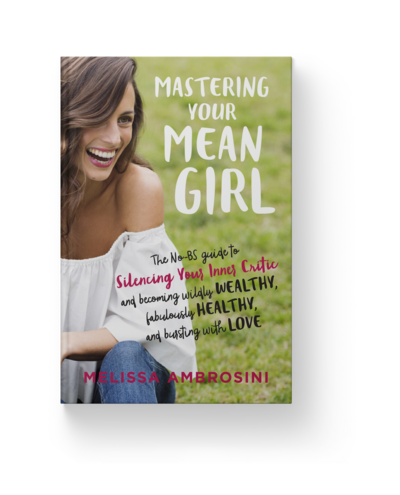
- Mastering Your Mean Girl by Melissa Ambrosini (book)
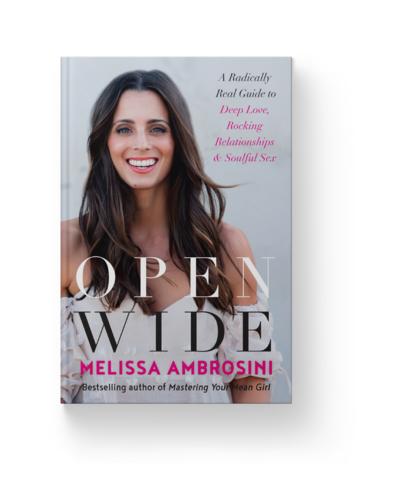
- Open Wide by Melissa Ambrosini (book)
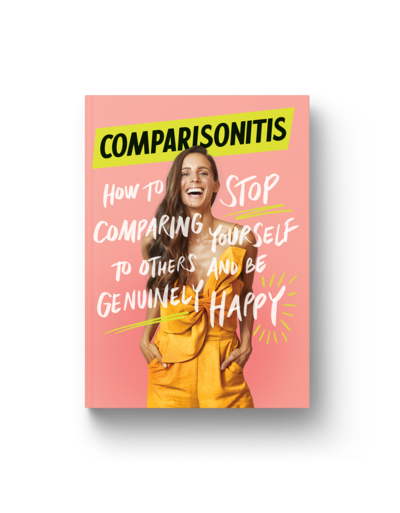
- Comparisonitis by Melissa Ambrosini (book)
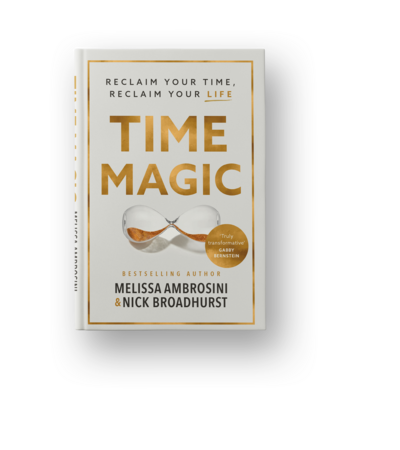
- Time Magic by Melissa Ambrosini and Nick Broadhurst (book)
- Michael Trainer (website)
- Michael Trainer (Instagram)
- Resonance (website)
- Resonance (podcast)
- Resonance: The Art and Science of Human Connection by Michael Trainer (book)
- How To Think Big & Impact Millions with Michael Trainer (podcast)
- The MindKind Projects (website)
- Love in the Time of Cholera by Gabriel García Márquez (book)
Prefer To Read?
The following transcript has been automatically generated and not checked for accuracy.
Melissa: [00:00:00] The Melissa Ambrosini Show. Welcome to the Melissa Ambrosini Show. I’m your host, Melissa,
best-selling author of Mastering Your Mean Girl, Open Wide, Comparisonitis, and Time Magic.
And I’m here to remind you that love is sexy, healthy is liberating, and wealthy isn’t a dirty word. Each week, I’ll be getting up close and personal with thought leaders from around the globe, as well as your weekly dose of motivation so that you can create epic change in your own life and become the best version
of yourself possible.
Are you ready, beautiful?
Hello, and welcome back to the show. I’m so excited about this episode because I have Michael Trayner back on the show for the second time. He was here with us on episode 287, and that was called How to Think Big and Impact Millions. And today he is here to dive deep into relationships.
We are talking about why some people are [00:01:00] close to us, why we let some go, how to build a life rooted in real connection and self-love, and it’s one of those conversations that stays with you long after you press play. And for those of you that have not heard of Michael Trayner, he is the author of the book Resonance: The Art and Science of Human Connection, with the forward by Steven Pressfield, which is absolutely amazing.
And he called it outstanding and said he would not change a word, which is a pretty big testimonial to slap on the cover of your book. He is also the co-creator of Global Citizen, and he helped build a movement that mobilized over $40 billion in communities to end extreme poverty, which is just absolutely amazing, and not through traditional strategies.
He did it through the power of human connection. He is the Fulbright Scholar, and he has spent years studying the neuroscience of connection. And he has a podcast called Peak Mind, and he has sat with everyone from the Dalai Lama to Super Bowl champions, [00:02:00] exploring what makes some connections change us while others leave us untouched.
He answers, “Renaissance is not luck or charisma, it is a frequency that you can learn.” And we dive deep into that in today’s episode. Of everything that we mention in today’s conversation, you can check out in the show notes, and that’s over at melissaambrosini.com/707. Now, let’s dive in.
Michael, welcome back to the show. It is so awesome to have you here. Can you believe that that was six years ago, the first time you were on the show? Episode 287, How to Think Big and Impact Millions. Do you know what? I realized today that in this coming January, so January 2027, my podcast will be 10 years old.
Michael: Let’s go. And you’ve done great work, by the way. I’ve [00:03:00] listened to your show on so many epic adventures, by the way. I don’t know if I told you this, but I, I, I did a 40-day road trip through the American West, and your show was the soundtrack to a great deal of that. So I’m grateful for you.
Melissa: Well, I’m glad I could come with you and accompany you on that adventure.
So it’s so awesome to reconnect, to have you here. You know how it works. Before we dive in, you have to tell us what you had for breakfast this morning.
Michael: Well, let me tell you, Melissa. I had a burrito because I am in Mexico, and there is a place called Burrito Amor, and it is delightful. If you and Nick ever come this way, I would love to treat you.
They have a, a variety of, of my favorites, but I had a egg burrito. Usually I’ll, I’ll bounce between that and huevos rancheros, and a macaroon because I was feeling a little cheeky.
Melissa: Oh. Oh my gosh, burritos. Mm. Yes. I’ve never been to Mexico. I do want to go, [00:04:00] so I will take you up on that offer when we’re there.
Michael: Amazing.
Melissa: I’m so excited to dive into this conversation. Like I said, it’s been a long time, but I want you to take us back first. You had a moment in a diner booth with your father involving a napkin your grandfather had kept his whole life. Take us back to that moment.
Michael: All right. We’re jumping right in the deep end.
I love it. No other way to be. So my father- And I think this is… There’s probably a, a good number of people that can relate to this. My father grew up in a very stoic household. His father had been in the military. He closed down bases after World War II, and he had never in his entire life told my father that he loved him.
So my father went his entire life without hearing the words ‘I love you’ from his own father. And my father was one of the first men to [00:05:00] go through what was called the New Warrior Training. It’s now called the Man Kind Project. They actually have centers in Australia, all around the world, but he was one of the very first men to go through this training, and it’s…
I think, you know, we can go into this if you want, but I think one of the great needs of our time is that we’ve lost track of processes of individuation. And, you know, since time immemorial, boys have been shepherded into manhood by a group of men that would bring them out in the wilderness, and they would go through rites of passage, and they would come back…
They would leave boys, and they would come back men. And I think one of the crisis of our time is there’s a lack of individuation. And my father went through a process of individuation, and on the back end of that experience, he decided to take his own father out to brunch, which was a very confrontational thing for him, as you can imagine.
And of course, he couldn’t control anything that his father was gonna do, but he wanted to do what he could, right? To take agency over where he was at cause in his life. [00:06:00] And so he sat down, and he told his dad how much he meant to him, and he told his dad how much he loved him. And the reason it’s so touching is because my grandfather, in spite of that moment of opening, still didn’t have the agency, didn’t have the, the words, the way to express the words back to my father.
He couldn’t say, “I love you.” And the only way that my father knew how much he cared and that that moment was significant to him was that he took the napkin from the table At the diner, and he gently folded it, and he put it in the lapel pocket of his suit, and he carried it with him from then on. And I share that story because I think many of us have an unexpressed gift or unexpressed love in, in a variety of forms that we carry through life unexpressed.
And [00:07:00] so one of my callings really is to not let my love die on a napkin. And so I share that story in the book Resonance because to me it’s, it’s this belief that we all have a unique song, and that song is the result of generations. I mean, if you think about the miracle, Melissa, that you and I are both here in this moment, right?
And all of the generations that would’ve had to endure incredible arduous challenges from generation to generation for us to be alive today. And when I think about that, I think about the fact, just like our fingerprint, that we all have this unique gift, this unique song that is ours to express, that is ours to give.
And unfortunately, some of us go to our graves without expressing that gift. And so part of my calling is to help awaken that song that you, the listener, have within you, and [00:08:00] to break the generational challenges sometimes that are passed down, which I experienced, and my father gratefully broke with his own father.
And I grew up knowing that I was loved. You know, my father did not replicate that pattern, and I think… But I think that’s, that’s part of the, the work that we, that we get to do in this lifetime, is to break some of the challenges that are our unique assignments in this earth school, so to speak, and to step into the love that we are and the uniqueness of our song, because it’s my belief that there, there is a symphony that is, that is playing, and it’s waiting for you to step in and to share your song, that, that unique note that only you can give to the world.
Melissa: Hmm. You spent three years with indigenous elders from around the world. What did they teach you about connection that Western science is only now just catching up on?
Michael: Hmm.
[00:09:00] Beautiful question. You know, there’s… I’ve been very, very fortunate to be invited into some extraordinarily privileged circles. I was invited by an elder to do men’s business in Australia at Uluru, which was one of the most powerful experiences of my life. I was… I lived with a traditional healer, which I shared with you on the last episode, for two years in Sri Lanka, a seventh-generation healer.
And what, what I’ve learned across these traditions is that we are meant for balance, that we are inherently interdependent and interconnected. And in our current Western orientation, we often think of ourselves as islands. We think of ourselves as individuals, and we exalt these goals of individuality.
And, and, and that isn’t to say that that is a bad thing. Again, that goes to, I think, the uniqueness of our song. But if we lose track of, of how our note fits in with the other notes, if we lose track of how we’re connected to those around us, [00:10:00] that is what our… is where dis-ease is born. So my, my teacher would, would share with me that health, wellness is, is, is the heart’s rhythm.
It’s the rhythm of the heart. The irony is now we’re seeing science validate this with coherence and, and current research in terms of HRV and, and our nervous systems and how we regulate and our, our heart actually drives 90% of the signaling to our brain. You know, meditation, so many of these traditions that are thousands of years old are being validated by science.
But what I learned in, in this culture was that we are as strong as… And, and I believe you shared in our last conversation, right? You are the sum of the five people you spend the most time with, and that’s exactly right, Melissa. It’s we are biologically and psychologically, we become neurological mirrors.
We, we actually share frequency. We share a field with the people that we surround ourselves with. And when we fall out of balance in, in, in Sri Lanka, for example, when someone would fall out of balance, it was the role of the entire community [00:11:00] to bring that person back into the rhythm of the heart of the collective song, and they would do that through an elaborate ritual from sunset to sunrise, putting that person in the, in the center of a circle, spending weeks building altars of flowers around them, and dancing and, and, and, and creating an elaborate pageantry to make them feel seen and heard.
And if you look at the research now, which is, is, is pretty disheartening, we’re now in an epidemic of loneliness. You know, surgeon general in the US declared that it’s the equivalent of smoking 15 cigarettes a day. And unfortunately, with technology and, you know, Terence McKenna said the world has changed more since 1992 than it did in the previous thousand years.
But our biology is still oriented towards our tribal identity. That’s still, that’s still where we find our home, where we find our balance, where our heart rhythm lives. And so what I learned from these indigenous elders was So vast and so hard to [00:12:00] encapsulate, but if I were to, to put it into an essential piece that I think could be of benefit to those listening, it’s how do we come more into tune with the rhythm of our own hearts, and how does that rhythm of our heart find its frequency with those we choose to surround ourselves with?
In other words, how does the music that wants to live through us, how does it find its band? How does it find the people that make our song exponentially more, right? Like, if you think about The Beatles, you know, each of them was an incredible musician in and of themselves, right? Like George Harrison, Ring- They, they were incredible.
But somehow the, the sum of them together, the sum of their parts, the four of them created the more, the music that is now enduring in all of our lives, right? That, that undeniable frequency. And I believe that that is possible for all of us if we find the alchemy of the right people that we can surround ourselves with [00:13:00] that are batteries in our life that bring us to, to our full expression.
And so part of what I learned from these elders was that it’s about synchronicity and singing our song with others in a way that we can walk and sing beautifully, as opposed to I think what we’re taught to do in the West, which is very achievement-oriented, and then we get into the voice I know, which you call in your mean girl and, and what, what, what, what we all kind of feel is this self-judgment and, and we try to chase this rabbit of achievement that never is quite satiating, never quite satisfying.
But if we think about the people in our lives that, that we can build incredible relationship with, that we can, that we can do this life with, that to me is the true wealth of life and, and that’s what I’ve seen in tribal culture.
Melissa: Mm. So how do we find those people that resonate with us?
Michael: Beautiful question.
I, I believe that it’s, it, that is the, that is the walk of this life. That, that is, that is the original instruction. That is what we are on this path to [00:14:00] do, in my humble opinion, and it’s what I write about in my forthcoming book, Resonance. And to me, half of that book and, and, and the majority of our journey is actually first about coming into right relationship with ourselves, right?
Because until we come into right relationship with ourself, we don’t know what is truly meant for us, right? And I think that many of us go through life at effect to whatever is around us, right? Many of us base our relationships on where we grew up or who we went to school with, which by the way can be very beautiful.
You can actually create some incredible connections. But are those people oriented to the song that is yours, to your unique vision, to your values? And from first coming into knowing what our own true north is, what our own North Star is that we are, that we are orienting towards- Only from that place can we find those that are in alignment with the path that we are walking on.
And I [00:15:00] think oftentimes we, we go about it in the reverse. We find people in this fallacious kind of Hollywood notion that are there to complete us, right? That are gonna, that are gonna be the half to our half and somehow we’re gonna be whole. Whereas I think what it’s about is what I call the exponential more, right?
Which is when does one plus one equal 11, right? When, when do two whole and complete individuals find each other? And we all know that experience, right? And that’s why I, I use the m- the metaphor of music, because when you’re in a great song, it’s undeniable. You know? When Beyonce’s performing and everyone’s listening and they’re transfixed, it’s undeniable that that is an authentic and true song.
And so for me, it’s about where can we find the coherent fields, right? And part of that is the thermostat of us, right? How do we feel when we’re with someone? You know, a lot of times we try to rationalize it with our brain, “Oh, this person’s great for me because of X, Y, Z.” It’s why oftentimes when we’re looking for a romantic partner, we create a whole list, you know?[00:16:00]
And I’ll share a quick story, which is I remember I was on a rooftop and an, an elder gentleman who was clearly deeply in love was glowing looking at his partner down… We were on top of a roof, and he was looking down at her, and I could feel his love for her. And he said, “Oh, yeah. Have you found someone?” I said, “No, not yet.”
And he’s like, “Do you, do you have a sense of, of her qualities, you know?” And I had a whole list, of course. I had, like, a five-page treatise and he looked at me and humbled me very, v- very, very quickly. He said, “I don’t know about all that, but when I go to sleep-” With my wife, we’re laughing. When she walks into the room, she lights up the room.
And it was two of these very simple things that he said, but I scrapped my whole list because I realized what I was looking for was that, right? It was that feeling. And so what I would say in one, you know, codified sense is how can we follow the feeling? And that to me is the coherence, right? We, we have our brains and we’re very much oriented towards, [00:17:00] towards cognitive dominance, but science is showing how powerful our heart is in terms of the intelligence of our heart, the intelligence of our gut.
When we move, you know, our enteric nervous system, right? Our gut has so much wisdom, right? And so how can we use this, this thermostat to feel into who’s right for us and who’s not? And I- and part of that is that discernment, because I think we, we actually know at a deep level who’s, who’s meant for us and who’s not.
But oftentimes we overpower with our cognitive sense, you know, oh, well, they, they fit into my list, or they look good on paper, and we don’t, we don’t follow our own inner knowing. And unfortunately, that oftentimes leads to costly lessons. But, but again, that’s also in a way how we learn. So I would say it’s a very detailed process, which I’ve, I spent the last five years distilling down into, you know, a seven-stage, seven-principle kind of protocol.
But for those listening, I think [00:18:00] one of the ways that we find our people is really truly getting in tune with our own North Star. What, what is our vision? What, what are our values? And then based on our own internal sense and intelligence, which is profound, how do we double down on those that nourish us?
Melissa: I love that. It’s so simple, but we overcomplicate it. But what about for someone listening who is having the realization that potentially the people in their orbit are maybe not serving their vision, their N- North Star? Like, what can we do?
Michael: I think that’s a, a really beautiful question because… And, and a- and actually a, a whole chapter in the book is about dis- what I would call dissonance, right?
So, so res- there’s resonance, which to me is what we’re, what we, what I was just talking about. You know, in physics, it’s like if you have a group of people all marching in harmony, [00:19:00] literally like a group of soldiers just walking on a concrete bridge, they could literally shatter that bridge if they’re all walking in lockstep.
There’s an exponential more that’s possible when we find that sync- that synchronicity. That said, there’s also dissonance, right? There is also, you know, we’ve all heard songs that just don’t feel right to us, you know? Uh, or someone who plays off. And, and literally in a symphony if one violin string breaks or one instrument is off, it throws the whole, it throws the, the whole out of resonance.
And so what you’re, what you’re talking about is that feeling of dissonance, which I think is integral to actually the process of coming to resonance. And to speak pragmatically, you know, one of the, the distinctions I, I talk about in the book is, is this notion of batteries and black holes, right? Now, traditionally, there’s a notion of givers and takers, but I think batteries and black holes is actually more potent as it relates to this conversation of dissonance and resonance [00:20:00] because someone could be technically a taker but still be a battery in your life.
For example, you might have a friend that’s broke all the time, but be, they’d be the first person to show up to help you move. They’d be the… If, if God forbid you ever wound up in the hospital, but they’d be the first person there with flowers or handwritten notes, right? Those people to me are batteries.
Those are the people I want in my life. Those are the real friends, right? Whereas you could have someone who’s very giving, right? “Oh, yeah, let me pick this up. Let me…” But it’s from a place of manipulation. They want you to feel indebted to them. And so that’s why I think it’s so important that we tune in to our own internal thermostat because we, we know how someone makes us feel.
We can always tell afterwards how does someone make us feel. Now- This is where it gets nuanced. You know, there might be people in your life, to keep it real talk, there m- might be family members that a- actually show up to you as a black hole in your life. They, they’re energetic takers. And [00:21:00] I can go more nuanced int- into that, but, but in essence, you wanna double down on the batteries in your life, and you wanna orient yourself towards those that charge you up.
Because batteries compound. Batteries, it’s exponential. It’s not one plus one, it’s, it’s literally a multiplier. Black holes, the creators of dissonance, are what can take us deeply off, off track, right? And so part of the journey in life is im- i- to be quite frank, and I’m sure you’ve talked about this on your show with, with incredible experts, but boundaries, which for a recovering nice guy like myself, were very hard to develop, but are so integral to, to loving both ourselves and to loving others well, and to letting others know where they cannot cross a certain boundary.
And I think one of the, the tactical tools that I would share in the context of how do we deal with energetic vampires, energetic black holes, is to [00:22:00] create effective boundaries. And sometimes, and especially when those people, for example, have to stay in our life, right? I would say if someone’s overtly toxic, I wouldn’t have said this before, you know, I, I think at, at their core, most people are great people.
That said, if someone’s showing up as toxic in your life, I do think it’s okay to walk away. I don’t think we get, we have to entertain everyone, and not everyone gets a front row seat to your life, right? Like, we get to choose who we surround ourselves with. Now, that, that also doesn’t mean you have to cut everyone out.
Some people, you know, we have like Dunbar’s number. We can have a, a multitude of different relationships. But if someone’s showing up in your life tox- in, in a way that is… I don’t love the word toxic, but in a way that is draining, I think that’s where we get to practice our, our boundaries and really step up into ourself, because we can’t control another person, but we can control ourselves.
And if we get very good at communicating what we are available for and what we are not available for, then we can tell pretty quickly if someone’s gonna meet us and, and stop where we, where we set our [00:23:00] boundary, or if they perpetually try to cross that road. And if they, if they do perpetually try to cross a boundary, that’s where I think walking away is appropriate
Melissa: I’ve had to get really good at boundaries over the years.
I have always been a very inclusive, the more the merrier, welcoming, all are welcome in my life and in my home person, and that is because that’s what my parents were like. Growing up, my parents would welcome anyone into their home. They would take in children from friends of friends who were going through a hard time.
Like, my parents often had different kids living at their house. Not so much while we, all three of us were there, but more so, like, when one of us left or two of us left, and now especially since there’s no kids left at the house. You know, I’ve had cousins living there. I’ve had different people living there, and I think that’s really beautiful.
[00:24:00] It’s a beautiful quality from my parents that I loved witnessing just how generous they are with their love, with their time, with their money, with everything. And so I have always had that within me as well. I am definitely the more the merrier. I’ve been very open, and actually couple of years ago now, it really burnt me.
And it wasn’t until I had that realization that, wow, not everyone does get a front row spot to my life, and I actually have now become a lot more discerning and a lot more cautious with who gets those front row seats in my life. And- Because I have had that mentality of like, everyone is loving, everyone is beautiful, we’re all here.
Like, why can’t we [00:25:00] all be friends? Like, I am that person. Let’s all be friends. Let’s all, like, get along. But I’ve realized that that is not the case for a lot of people. So this resonates so much with me because a few years ago, this is what I had to go through myself. So I think it’s really important that we get to decide who gets those front row seats.
Like even now, there’s people in my life where I share very intimately, and then there’s ones that I don’t, you know? It’s more of that surface level or… Yeah, it’s just more discernment. And I think as we get wiser and, you know, I’ve got two kids and I’m a different person. It’s being discerning. It’s a good quality.
Michael: I think what you said is beautiful. And I, and I feel that. I can, I can see that in you because I can see your s- your heart is so giving and so, I feel like, wanting to love and see other people and meet people in the best aspect of [00:26:00] themselves. Like I, that’s what I, that’s the energy I get from you, which I think is an incredibly beautiful quality.
And I also feel like that’s my core, right? I, part of me wants us all to be preschoolers and like we’re all playing and it’s like some kind of like, yes, everyone gets to play. You know, like, and in my notion that is, that is the ultimate of, of where we can be when we’re, we’re all… However, we’re, we’re, we’re all also, you know, as Ram Dass says, we’re all walking each other home, right?
But, but some people unfortunately are, are a bit lost in their journey, you know? And, and, and people can only meet you where they are. And that’s been a very tough lesson for me, you know? And, and so, and we all grow and evolve, right? And, and, and part of what you’re sharing, which is so beautiful, you know, you have two incredible children, right?
You have a loving partner. You’ve built this robust life for yourself. You have your show and your books. Your, your, your time, which is our [00:27:00] most precious resource on the planet, right? Like Take any billionaire and they would probably trade places with most of your listeners because many of your listeners have time ahead of them, right?
And, and many, you know, many people who spent their whole years, their whole lives trying to achieve don’t have that precious time. So to me, if you have time ahead of you, you have people in your life that you love, and you have your health, then you’re, you’re wealthy beyond measure. You’ve, you’ve won the lottery.
I mean, especially if you’re living in this day and age, right? Sure, there’s challenges. I’m not bypassing that, right? But like, you know, we, we have such incredible opportunity and therefore, it does require discernment, right? Who gets, who gets that front row seat to our li- seat to our life? Because I’m sure many people who are listening, and myself included, right, we’ve gone sometimes down journeys with people that wound up being very costly, and I don’t mean just financially, but like energetically, like wow.
Like took me a long time to come back onto [00:28:00] the, the on- back onto my authentic north like path, you know? Because I went on, I got, I got pulled in their gravity and that, that wound up being very costly, and I think many people will try to… You know, someone once told me, “If you’re not,” and I think this is, it’s a little cheeky, but, “If you’re not enrolling someone into your vision, they’re enrolling you into theirs.”
And, you know, whose vision are you getting enrolled to? And that’s why I like music, but what, what are you committed to musically? And, you know, not everything works. I, th- that’s another reason why I love the musical metaphor for resonance. It’s like it doesn’t make someone inherently wrong, right? Like I grew up liking heavy metal.
Now if you played heavy metal around me, I will be the first one to walk as far away as possible. Doesn’t make someone who likes Metallica wrong. Absolutely not. It’s just not my music, you know? And s- and people are like that, right? Pe- some, some people are Metallica. Doesn’t make them wrong, you know? But like I’m looking for Beethoven, or I’m looking for salsa, you know?
Like and so I think that’s the, that’s the piece is knowing what, [00:29:00] what moves you. You know? W- w- who are the people that make you wanna dance, you know? ‘Cause like you, we know those people, right? They make us laugh, they make us dance, they bring us to life.
Melissa: Hmm. And also what season of life are you in? You know, I’m not in my dance party season.
I’m in my season of two beautiful little children as my number one priority. Being their mother is my top priority right now. So whenever you are interacting with other people, it’s like what dance are they dancing? Are they on the same dance floor as you or, or not? Dancing to the same music as you or not?
So that’s really important as well.
Michael: And I think it’s also… By the way, that, that’s also, there’s a liberation in that, right? Like because- Well, one, you know, kids are, are, are, I think are the best at getting us out of our shells and dancing. If we’re- are we truly attune and listening to, to, to the children?
Because they are [00:30:00] like tuning forks, you know? Like, they can feel everything, and so that, that’s incredibly beautiful. And, you know, like you said, like, what, you know, as a mother, as a protector, as a, as, you know… Who are you allowing into that field, right? Like, are they compounding the, are they compounding the, the music of that, of that moment, or are they taking away from it?
And I think, you know, making it very pragmatic, it’s another piece, right? I had friends where they’re like, as soon as they had kids, they’re like, “Look, I love you. You will not be seeing me as much.” You know? Like, I’m, I have to… And God bless. Like, that’s also something if you’re on the other side of that, you don’t take that personally, right?
Like, it’s not like that person doesn’t love you, you know? It’s just the center of gravity in their life has changed, right? And to your point- Seasons are a part of nature. Like we unfortunately, in our boxes with, with ambient light and, you know, so many of the things you and I talk about, like we, we sometimes lose track of that circadian part of our day, but also the [00:31:00] seasons of the year, and, and the seasons of life, right?
I think in traditional, to, to the point earlier, in a lot of tribal cultures, you know, there’s also an acknowledgement of different chapters in life, right? Like, you know, the archetypes, the maiden, the mother, like there’s an honoring of the fact that you are in a different archetype, and you are met by people in the tribe that embrace you and celebrate you and nurture you in that archetype as a support.
And unfortunately, we’ve lost a lot of the orientation in that way, and unfortunately, a lot of people are, are on the island. You know, the g- I mean, when I lived in New York City and I’d see a mother with two kids, and I’d have to help her up the stairs of the subway with her stroller, you know, it was so heartbreaking for me because it was just like, man, where have we, where have we gotten to where there aren’t the support mechanisms that were in place traditionally to support people in this precious journey?
But I don’t wanna digress too far. It’s just to say I, I totally agree that I think seasons are such an important aspect, [00:32:00] and also the archetype of our identity and where we’re at. And to me, that’s the core of how we orient our relational universe.
Melissa: Mm-hmm. Mm-hmm. So you talk a lot about self-love and how it is not selfish.
It’s the foundation for real connection. Talk to me about this for the women listening who have been the responsible one for many years. What does self-love look like when it’s not performative or indulgent, but it’s grounded and rational?
Michael: You know, I, I think there’s… We all, we all have a sense, a-and, and it’s my belief we actually all know at our core what that feels like because it’s the place we all came from.
You know? First nine months of our life, all we know is the love of our mother, right? Like, can you imagine, like, to be in the womb, to be in the [00:33:00] darkness, and hear, and that’s why it’s so potent when I think about what my teacher said, where he said heat the h- the heart rhythm, right? Imagine the first nine months of our life, all we knew was the, in the darkness of the womb, is the rhythm of our mother’s heart, you know?
And to me, that’s, that’s home. That’s the place we’re all seeking to go back to, the place within ourselves that is, that recognizes the wholeness, the completeness, the beauty of who we inherently are. To me, you know, there’s a, there’s a big notion in the, in the spiritual community of awakening. And while that word can be powerful, and I think in certain ways is accurate, I have a deep preference for another word, and that’s remembering.
And I believe that all of us are on a path to remember who we truly are, and the love that is our birthright, our nature, [00:34:00] and our natural expression. You know, I, I, I think we, we talked on, on our last conversation, I think about the sun, or I think about the water, you know? The sun doesn’t ask for anything in return.
The sun doesn’t need to question if it’s shining right. It just is, and life is flourishing as a result. Same with water. Water is just the natural regeneration of all things. It is the source of life, right? And so all of us, because we are nature, right? We’re, whatever, 80, 90% water, all of us are that, right?
We, we are in our essence love. So to me, it’s removing the story, removing the tendencies, removing the generational narratives that keep us from the authentic knowing of who we truly are. And to me, that journey is the journey of this lifetime, and how can we come into the natural expression of that [00:35:00] love that is our unique and dynamic essence.
No, no one listening to this podcast has, has ever had that love diluted, has ever lost that ability to love, has ever… Like, there’s no compromise. It cannot be taken away. It’s your essential nature. The question is, how do we remember? That’s, that’s the question in, in my mind. And, you know, that’s what I spent the last five years in, to the best of my ability, you know, sort of articulating as a path to that remembering.
And to me, that, that’s why I love the m- the, the metaphor of music, because to me, music is this profound medicine, like the sun, like the water. You know, music scientifically has, you know, regenerative capacities beyond even, uh… You know, you may not know this, but you know this, but my father, unfortunately, who’s now in spirit, passed away of dementia, and one of the great challenges of my life was watching this man who I love with all my heart, who was to me, as you shared earlier, [00:36:00] right, this embodiment of pure love.
Like, children, when they walk by him, would light up. Animals would light up. And to me, that’s a, that’s a great mirror ’cause there, there’s, that’s such pure energy. But he, as, as he progressed in his dementia, he would move further and further from the shore But I watched this film, which I recommend any of your listeners who, who, who, or watchers who are listening.
It’s, it’s called Alive Inside, and it, it won Sundance, and it’s this story of this man who found out the favorite songs of these elders that were left in this elder homes, right? Where they’re basically left to die. And there’s a scene where they, they find this man who, who’s been basically left in a corner.
He’s non-verbal. He hasn’t talked for probably years, and he’s, his head is down, distended, and he found out what this man’s favorite songs were when he was a kid And this man, there’s no pill, no pharmaceutical pill that would have moved this man at all, right? Like, he was, he [00:37:00] was basically being left to transition.
And this man puts headphones over this, this gentleman’s ears, and I kid you not, he moves his head up. “I remember 1939,” shit like, no science cannot explain it. Literally music turned his brain on and he became verbal. And so, and he started to sing, and they did it time and again. And so there’s ways in which, you know, there, there’s certain things s- even science hasn’t fully caught up to the efficacy of how this works.
But, you know, now they’re showing that there’s a 40% less likelihood of getting dementia through freq- if you learn how to play a musical instrument or if you listen consistently to music. And so, so, so music is medicine and, and also to me it’s a tuning vehicle, right? Part of what I talk about in the book is especially in this day and age, as we all know, Melissa, there’s so many things that are [00:38:00] vying for our attention and so many things that want to knock us, that want our front row, but that only knock us off of being fully present to our kids or to our work or to just who we are, to remembering who we are at our core.
Like there’s so much now vying for our attention that it’s a revolutionary act to find the things that bring us back home, that bring us back to center. And so for me music is one of those things. Going into nature is one of those things, you know? Home. I mean I saw, I just watched the video of your next beautiful oasis that you created.
You know, like that both as aesthetically like a beautiful… It was inspirational for me. I was like that level of commitment to home is what I want to manifest in my next chapter. But that notion of home both literally and metaphorically, that music that, that brings us back to who we truly are, to our center so that we can be beautifully present for our family, for our kids, for our partner, for our friends, those are [00:39:00] part of the, the pieces is like what brings us back into tune and I think that’s, that’s, that’s part of that North Star, that work of like knowing what, what brings you back to who you truly are.
For me going on the ocean brings me back. You know? Going on a hike brings me back. So when we get, when the world gets noisy, which it has the tendency to do, how do we find the things that bring us back home? Because that, that is the love that is us that wants to be expressed and I’ll, I’ll just close with this on this particular note, right?
I s- I was sharing the story about the being in utero and part of the reason I’m currently in Mexico was I was in Austin and I was feeling totally out of tune And I was in a place of dissonance. I was actually severely allergic, and I could not think straight. And anytime I, I start to feel that sense of like, I’ve been, I’ve been exposed to mold, I’ve gone through different dissonant environments or dissonant people, whenever I can’t think straight, I’m like, “Okay, right, emergency meeting, me with me.
Where, where do I need to go to get back into center?” And so for [00:40:00] me, in this instance, I flew to Mexico ’cause it’s a place I know brings me back to life, bring it like… I can go in the ocean. And here, which I intend to do hopefully tomorrow for the, for the blood moon, I do temazcal. And temazcal is a sweat lodge, which is the traditional ceremony I went through with my father, and I’ve had the good fortune of going through with various indigenous elders.
But it’s a ritual where you reenter the cosmic womb. You reenter the umbilical connection of ourselves to the planet, and you go through four rounds representative of the directions, and you’re, you’re cleansed with, with the water, with the steam, with the herbs. And, and it’s an amazing experience because when I come out of that, when I climb out after the ceremony, I’m so alive and so grateful, just even for the breath, right?
When you’re in that heat and all of a sudden you just breathe air that we, that we take for granted, but is the source of life. And so I would just say for those listening, [00:41:00] find the things that bring you back to life, you know, and commit to those. And anytime you start to feel a little wonky, come back.
You know? Come back to those things that bring you back to in tune. And, and, and, and that’s why I use the metaphor of the tuning fork. But like, that’s the thing, right? How do we come back into tune? And for me, the temazcal is one of my most potent tools, but for everyone else, they’ll have their tool.
You’ll know those things that make you feel like you’re home, and, and, and pay attention and go back to those things.
Melissa: It really is so simple, and we overcomplicate it, and we get so in our head about it. And I call those things my anchors. I know what I need to do to get back into resonance. I know. And often, like, one of the biggest ones for me right now in this season of my life with two little kids is sleep.
You know what I mean? It’s so simple. It’s [00:42:00] simple, but I have to prioritize it because I am not my best self, I am not the best mother I can be, or the best creator, or the best boss when I am underslept. Things like that for me, sleep, meditation, prayer, breathwork, moving my body, being in nature, all of those things, they’re so simple.
They are free, and they become the anchors in which we can recalibrate, come back to our true essence, our center. And, you know, I look at my kids, and they are pure love. They don’t have any conditioning. But even now, like, my daughter’s almost five, and it’s interesting because They pick up little things from other friends and from other people, and it’s so fascinating.
Like, any sort of little programming, I’m like, [00:43:00] “Let’s iron that out.” Let me just iron that out, babes. Let’s iron that out together. But it’s just so interesting because they come in so fresh, clean slate, and then, you know, the stories, the narratives, they s- do start to happen. So as a mother, like, it’s my role to become so aware of that for her too, and to have age-appropriate conversations with her.
And as she gets older, you know, those conversations will develop, but to keep her in that pure love consciousness state as much as possible.
Michael: So beautifully said, Melissa. And by the way, like, also so much of what you said about anchors, right? Part of that is also you showing up as the best version of yourself.
I can only s- I can speak for myself. If, if I don’t get great sleep consistently for a prolonged period of time, I am 100% not the best version of myself, right? Like, I… And, and that, [00:44:00] and then obviously we can go to the science of that, but, but there’s sc- sleep is core. And kids probably even more so. I remember in our last conversation talking about, you know, the Dalai Lama and what I, what was so meaningful about his presence was he had this childlike nature and his pre- he was so present, and I felt so aware of everything and everyone around him.
And I feel like that childlike nature, right, you experience with your children. And, and more even than our words, I feel like they pick up on our way of being. Our… They’re so attuned to how we show up, and that’s why the anchors are so critical, right? Because even more than our words, I feel like who we’re being is, is what they’re picking up on.
And so that’s why both, you know, showing up as… And obviously, you know, life is life. We get life time. You know, we, y- y- we’re never all perfect, but to, to, to have those [00:45:00] anchors to bring us back into, into tune is so key because other people are, especially children, paying attention, and that is probably the way in which we, we model even more than our words or our, you know, the ways we think we’re, we’re teaching, is how we show up.
And so that’s why I think what you said is so beautiful because those anchors are the essence of being able to show up beautifully.
Melissa: Yeah. You know, being a mother, we are the heartbeat of the home. We are the nervous system of the home. Our nervous system, our energy dictates the energy and the nervous system of the home, and that is a big responsibility, but it’s God’s work, and we have been given that role because we can handle it, because we are the best people for that role.
And so it’s a role that I take very seriously. Like, my nervous system has to be taken care of [00:46:00] for my home, for my husband, for my kids, and it would be easy for me to not do all of those things, but I know if I don’t do those things, I’m not gonna be the best mother that I can be, and then my children will feel that.
So it’s my duty, it’s my responsibility to take- care of myself, of my nervous system, to make that a top priority in my life. Because I know when I don’t, I do not feel my best, and like I said, the whole family feels it.
Michael: Could not have said it better. And the science is now showing, which is in- and I share some of this research in the book, but we are, we are literally forming each other’s nervous system, right?
We are attuning and creating coherent fields, just like musical instruments, in our nervous system and the nervous systems of those around us. So we are, we are so interconnected. There’s a, [00:47:00] a powerful script that I love. It’s called the, the… It’s a Hawaiian Buddhist text called The Jewel Net of Indra, and it’s all about…
In, in the West, we think of ourselves as individuals, but actually, and this is beautiful text if anyone wants to get into it, but, you know, we’re all basically these diamonds meeting at the intersection of the great web of life, and the microcosm is the macrocosm. And, and we are all interconnected and interdependent, and when we pull one thread, it affects, it affects everything else.
And so when you’re doing that work, when we talk about self-love, or we talk about regulating your nervous system, it’s not just for us, you know? It’s also for the children, for our partners, for, you know, how we show up in the world because that is our, our song. Not just our literal song, that’s the, that’s what people are hearing.
I mean, I can tell you from my own attunement based on the h- household I grew up in, it’s, uh, you know, and it’s been both a, a blessing and a ch- great challenge. But, you know, I had a quite, you know, t- tumultuous [00:48:00] nervous system growing up in the, in the household, and, and so I’m now an empath. Like, I’m, I’m always waiting for the shoe to drop, and I’m kind of like, “Okay,” you know?
So the gift is I can really feel the room. The challenge is it’s, it’s hard for me to feel fully relaxed, you know? But that’s because of the attunement of the nervous systems I, I grew up around. So it really is beautiful that you’re… and also sharing this out, but that you take such b- beautiful self-awareness and such great care of, of, of, of being mindful and taking care of that nervous system, and that’s the work that I’m also trying to do myself so that I can be a gift to those around me.
Melissa: Mm-hmm. And I know what it feels like to not, and to be burnt out, and to be exhausted, and that is not a fun place to be, so it’s my duty for myself, for my family. So yeah, we have to take responsibility. I wanna hear, Michael, what is bringing you the most joy in your life right now, besides your [00:49:00] book launching out into the world, which is incredible resonance, and we’ll link to it in the show notes for everybody.
What’s bringing you the most joy?
Michael: You know, what comes to mind, Melissa, I’m, I’m, I’m here in, in a place that I love in Mexico and, and what’s bringing me joy is the simplest things in life. My… What’s bringing me joy, you know, I love that you asked what did you eat for breakfast this morning. Of late it’s been for me my greatest joy is found like first thing in the morning when I’m just like in that liminal space between sleep and wakefulness and I go outside and I’m…
where I’m currently living I’m, I live in the jungle and I, I, I open the door and I can, I can… I’m breathing like fresh clean air and I can hear the tropical birds singing and I go down and I, I make my, my mate [00:50:00] or my coffee and I just sit in silence for me, but I sit with the, the jungle And there’s a, just a notion I was looking the other day, I don’t know if there was this, they call it the planetary parade, but I was up, up, up looking at this, I think it was six planets that were all abelt.
And, and I was just, I was thinking about, my God, like how many generations of people lived in this jungle, and what would their life have been like? You know, like to have looked up at this, you know, at that time the sky, to have no, you know… And I, you know, I just saw this guy Paul Rosolie just showed uncontacted people down in the Amazon.
Like the fact that we are in the era of artificial intelligence, but at the same time there’s people who have never touched a piece of technology, not even like a metal knife, to me, just like there’s a joy in [00:51:00] knowing that there’s still people living totally in tune with nature. And in the moments when I feel like I quiet myself enough that the birds and I start to dance together a little bit, you know?
Like I find the times when you’re deep enough in nature and you quiet yourself long enough to be a part of the environment, the environment starts to move around you differently. You know, the birds start to sing. You start to notice the songs that are coming around you. So my great joy at the moment is coming from listening, and listening to the music that’s always present but that I all too im- all too frequently distract myself from with my devices and all the things of modern life, right?
So, so for me, the great joy is coming in tuning to the song around me, and the great gift that is, that is always there that I sometimes forget.
Melissa: Mm, beautiful. Beautiful. If you had a magic wand and you could put one book in the school [00:52:00] curriculum of every high school around the world, what book would you choose?
Besides your book. Let’s pretend that’s already in there.
Michael: Well, the first book that comes to mind is Love in the Time of Cholera, which is by Gabriel Garcia Marquez, and I love it because it’s a book that speaks to imagination and to possibility, and I think that’s, you know, there’s many, many nonfiction books that I could name.
I’ve probably read thousands of, of nonfiction books, but I think that when we- When we’re reminded of the beauty of the song. You know, I wish, for example, I speak Spanish, but I can’t read it perfectly, and that, the words that he uses s- just dance, you know? And, like, in English, so I can’t even imagine in Spanish, but I think to, to have a book that inspires you, not just in, in the words that are shared, but in how they’re [00:53:00] shared and th- that evoke a sense of possibility, that to me is the first book that comes to mind.
Melissa: Mm, beautiful. I have three rapid-fire questions for you now. Are you ready?
Michael: Ready.
Melissa: What is one thing we can do today for our health?
Michael: Sleep deeply. And I’m happy to connect you, by the way. I just connected with the personal physician for Maharishi Mahesh Yogi, a guy by the name of Suhas, and he wrote a book called Awaken Sleep, and it’s a Vedic, which is a 5,000-year-old science, take on sleep.
No affiliation, but I highly recommend it. I am now tr- he calls, uh, sleep a little death, and how do we prepare, right? We’re, we’re our five sen- like, you’re actually training yourself in ways we don’t even fully understand when we sleep. So I would highly recommend anything that it, that enhances your sleep experience.
Melissa: Mm-hmm. I used to be a gold medalist Olympic sleeper. Incredible. [00:54:00] Nick was like, “You have a gift.” My head would hit the pillow, I would be out eight hours, wake up fresh, ready to go, could run a marathon. Then I had my second child and, you know, sometimes one wakes up, sometimes the other wakes up. Like, I honestly think about mothers that have, like, three, four, five kids.
I’m like, you can’t guarantee that they’re all gonna sleep through the night. Like, what the heck are you gonna do? Like, honestly, it, like, freaks me out. So after I had my second, he’s one now, like, my sleep was interrupted, and I cannot tell you how different I felt in my body energetically, hormonally, spiritually, and these are things that I cannot control.
Like, I cannot control if my children wake up or not, and I am there for them and all of that, but it really does affect you. So you’ve got to do whatever you can to get the best [00:55:00] sleep possible, and why did God not create us to just sleep through the night from the moment we’re born? Like, how good would that be for us mothers?
Michael: I, I obviously can only empathize, but what I will say is, a- and, and by this, I, I hesitate to say this because this is not exactly helpful, but, but perhaps just I s- I share this as a relief, which is I was just in Indonesia, and culturally when a child was born there, they would, they would breastfeed from every lactating mother, because back in those tribal cultures, it wouldn’t be incumbent upon you as an individual to be responsible at every time the child woke up.
So part of it is I think also, and I don’t know how we figure this out, but how can we approximate that tribal aspect of not putting the total load of responsibility on the mother?
Melissa: On one human. One human. It’s just… Yeah, I mean, I’ve spoken about this so much. Like, we really do [00:56:00] need to cultivate more of that village, even just getting more support.
Like, it’s just mind-boggling to me. I would have 10 kids if I had a whole village. Like, I love it, but you do need the support. Anyway, that was a very long answer to my rapid fire, so let’s circle back. What is one thing we can do for more wealth in our life?
Michael: Do you mean that wealth as in terms of metaphorically or wealth in terms of literally financially?
Melissa: Financially, whatever it means to you. What does wealth mean to you?
Michael: Well, w- so to me, wealth, you know, you know, I, I had the great fortune of becoming a billionaire in my 30s, and for me, billionaire means, you know, as you know, my history with Global Citizen, we were able to raise billions of dollars to impact what is projected to now be billions of lives.
To me, that’s wealth. Wealth is, is, is how can we positively impact the life of another human being? And by the way, that doesn’t necess- I’m not saying that tr- doesn’t have to be a billion people. How can we [00:57:00] beautifully affect one person, right? Like, how can we leave an indelible mark? Like they, they actually sh- from speaking from a point of view of a man, one of the best things that can, you can do in the life for, for a young man, for a boy, the research shows if you have one positive male role model in the life of a boy, and unfortunately a lot of young men are not growing up with that, it has an exponential consequence on the, the total trajectory of that young man’s life.
So to me, it’s about how can our song live in the heart of another.
Melissa: I love that. That’s beautiful. And I mean, I’ve done a little bit of research in this too. It’s like for the boy to not have just their father, someone outside of their father as a role model, and then for girls as well, it’s like they’ve got their mother, but they’ve also got an aunt or someone that can play that role.
It’s very important, so I love that you mentioned that. I think it’s really beautiful, and it kind of leads me to my last rapid fire, which is what can we do for more love [00:58:00] in our life?
Michael: Well, I can say as, as someone who’s looking to call forward the kind of life that you’ve created, first of all, I just want to acknowledge you, Melissa, for you know, not only being a stand for love through your show in terms of your work, but also creating a beautiful partnership, creating two healthy children that you are unequivocally committed to.
I think that is a beautiful expression of love, and I believe that For me, love is how, you know, how does our heart live outside of our body? You know, how, how does it live, how does it, how do we water You know, as, as you would water a seed that, that would flourish beyond your lifetime. Hopefully maybe you’d be planted at the foot of that tree that you sowed as a seed, right?
That’s what you do with your children, but ideally, that’s also what we do with our, all of our relationships, right? How can we… You know, I, I mention in the book the notion of [00:59:00] resume and eulogy goals, right? So many of us live our lives based on what we think we need to tick off for our resume, right? Like, “Oh, if only I become this, that, or this, then I’ll finally be happy or fulfilled,” right?
And it’s a great fallacy, right? The, the true goals are the eulogy goals, right? How do I wanna be remembered at the foot of that tree when I’ve passed? Who do I want to have been there, you know? How did I make them feel, you know? And to me, like, that’s the juice, right? Like, I, I feel like love is the thing that lives beyond us, you know, in the hearts of others, and so how can we be instruments for that song?
Melissa: Hmm. Beautiful. I love that. This has been so beautiful. I’ve loved reconnecting with you and having this conversation. Is there anything else that you wanna share, or any last parting words of wisdom?
Michael: You know, I just feel like, man, I just wanna just be real talk. It ain’t easy out there, you know? It’s not, it’s not easy for anyone, you know?
And it, and, and it, and it can [01:00:00] feel, especially if you’re a deeply feeling human, if you care about people, which I’m imagining everyone who’s listening to this is, is one of those people. You know, w- we didn’t grow up… Our nervous systems weren’t meant to know all of the traumas and tribulations and trials happening to everyone around the world every day, you know?
And, and so I would just say don’t bury your head in the sand, but one of the things that I think is so powerful is how can we become the most beautiful expression of the seed that is us, and that can grow an exponentially beautiful garden around us. And the more that we focus in the areas where we can express love and have influence and, and the less we focus on areas where we exert no control, no influence, and have no agency, I think the, the better off we are, and that’s an a- that’s a revolutionary act in, in this current age.
So I, I just, I just [01:01:00] hope that everyone who’s listening finds a way to, you know, and I’m mixing metaphors here, either sing their song or, or find the way to g- to, to water the seed that is themselves in a beautiful garden. And, yeah, that’s what I wanna share.
Melissa: Hmm. That’s beautiful. Well, you are sharing, you are helping, serving, supporting, and inspiring so many people, and I’m so excited for your book, Resonance.
I will link to it in the show notes. Everyone go and grab a copy. Thank you for being here. I wanna know how I and the listeners can give back and serve you today. How can we serve you?
Michael: You know, you c- I would just say, a- and I would love… I’ll, I’ll, I’ll, I’ll message you offline about this, Melissa. One of the things, this is, I’m gonna, I’m gonna host…
One of the things that I think, that, that I love doing is, is bringing people together, you know, with Global Citizen, with, with events. And so I’m gonna, I’ve, I’ve just today, and I, uh, it’s probably too early to share, just confirmed a very incredible event that I’m going [01:02:00] to bring together that’s gonna be all around these principles of resonance, and it’ll be global, and I would love for you to be a part of it.
So, you know, resonance.biz or michaeltreanor.net. I’ll, I’ll, I’ll post more there. But I just wanna thank you for the incredible work that you do and the stand that you are for the world, Melissa. I really appreciate it.
Melissa: Hmm. Thank you for being here, and I’m so grateful and so excited for your book and all of the magic that you are creating in the world.
So thank you so much.
Michael: Thank you
Melissa: I hope you got a lot out of this conversation, and if you did, please subscribe and leave me a review on Apple Podcasts, and then send me a screenshot of your review to [email protected] and I will send you a gift, my Wildly Wealthy guided meditation, which is not an ordinary meditation. It is infused with binaural beats, Solfeggio frequencies, isochronic tones that really help rewire your brain, and I would love to give that to you when you send me a screenshot of your review.
And come and [01:03:00] tell me on Instagram @melissahambrosini what you got from this episode about connection, boundaries, and who gets a front row seat in your life. I absolutely love hearing from you. And I have a question for you to ponder for the next week. Who currently has a front row seat in your life, and have you actually chosen them, or did they just end up there?
That is your question to ponder for the rest of the week. And before I go, I just wanna say thank you so much for being here. I love serving you. Now, if there is someone in your life that you think would benefit from this episode, please share it with them right now. Take a screenshot, share it on your social media, email it to them, text it to them.
Do whatever you’ve got to do to get this in their ears. And until next time, don’t forget that love is sexy, healthy is liberating, and wealthy isn’t a dirty word.
Thank you so much for listening. I’m so honored that you’re here and would be SO grateful if you could leave me a review on Apple podcasts, that way we can inspire and educate even more people together.
P.S. If you’re looking for a high-impact marketing opportunity for your business and are interested in becoming a sponsor for The Melissa Ambrosini Show podcast, please email [email protected] for more information.
P.P.S. Please seek advice from a qualified holistic practitioner before starting any new health practice.












show Comments /
hide comments
- Hide Comments