



(Listen & Subscribe on Apple Podcasts, Stitcher, Spotify, iHeart or TuneIn)
Udo Erasmus nearly died from pesticide poisoning, and that experience became the foundation for decades spent studying fats, biochemistry and what the body truly needs to heal. In this conversation he breaks down the truth about Omega-3 and Omega-6, why your cooking oil might be doing more harm than good, and the ten-step approach to whole health he has spent a lifetime refining. If you’ve ever wondered what your body actually needs to thrive, this is where you start.
Most of what you think you know about fats, nutrition and whole health is incomplete. Your body runs on essential nutrients most people were never taught to recognise, let alone protect, and the gap between feeling depleted and actually thriving often comes down to a handful of shifts almost nobody makes.
About Udo Erasmus
Udo is a health educator, author and pioneer in the field of essential fatty acids and healthy oils. He is the author of Fats That Heal, Fats That Kill and has spent decades teaching people how to nourish and care for the body as a whole, going far beyond quick fixes to help people understand what real, lasting health requires.
In this episode we chat about:
- The pesticide poisoning that changed the course of his life (4:19)
- What essential nutrients actually are and why your body cannot function without them (9:04)
- The truth about cooked food nobody tells you (14:52)
- What Udo wants you to understand about seed oils before you cut them out (15:56)
- The first change to make today if you want to feel better in your body (27:33)
- The Omega-3 to Omega-6 ratio your body is begging for (30:13)
- What to do if you’re still cooking with oil every single day (33:19)
- The 10-step approach to whole health that will radically change your health (35:28)
Episode resources:
- Higher Self Visualisation Meditation (get the meditation)
- Best Day Brainwash (get the brainwash)
- Book your 1:1 Strategy Session with me (book here)
- The ICONIC Mastermind (join now)
- Work with me (use the code 2026 for $500 off your first session)
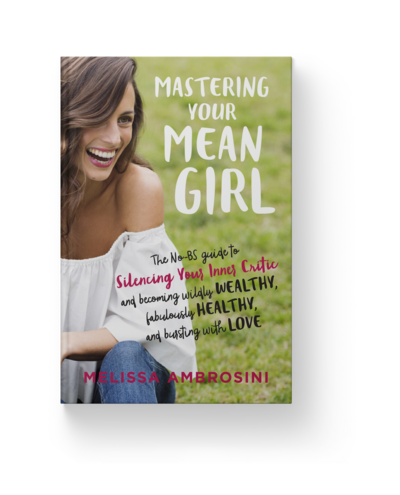
- Mastering Your Mean Girl by Melissa Ambrosini (book)
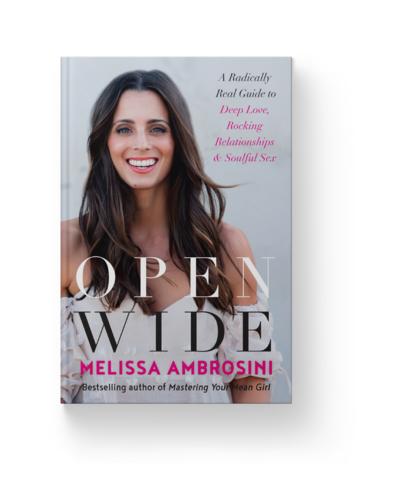
- Open Wide by Melissa Ambrosini (book)
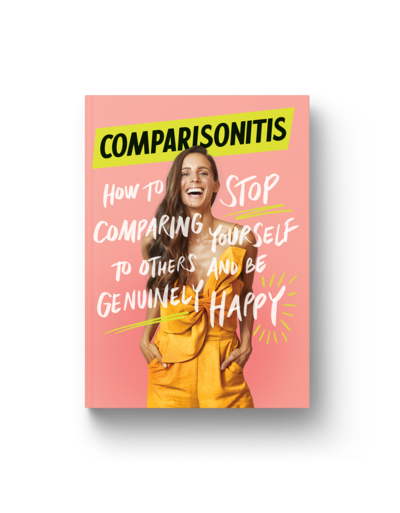
- Comparisonitis by Melissa Ambrosini (book)
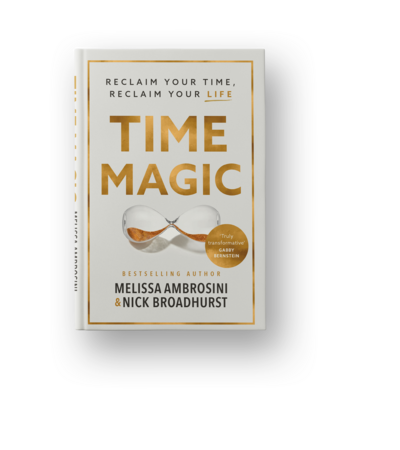
- Time Magic by Melissa Ambrosini and Nick Broadhurst (book)
- Udo Erasmus (Instagram)
- Udo Erasmus (YouTube)
- Your Body Needs An Oil Change by Udo Erasmus (book)
- Fats That Heal, Fats That Kill: The Complete Guide to Fats, Oils, Cholesterol and Human Health by Udo Erasmus (book)
- The Book On Total Sexy Health: The 8 Key Parts Designed By Nature by Udo Erasmus (book)
- Fats and Oils: The Complete Guide to Fats and Oils in Health and Nutrition by Udo Erasmus (book)
Prefer To Read?
The following transcript has been automatically generated and not checked for accuracy.
Melissa: [00:00:00] The Melissa Ambrosini Show. Welcome to the Melissa Ambrosini Show. I’m your host, Melissa,
best-selling author of Mastering Your Mean Girl, Open Wide, Comparisonitis, and Time Magic.
And I’m here to remind you that love is sexy, healthy is liberating, and wealthy isn’t a dirty word. Each week,
I’ll be getting up close and personal with thought leaders from around the globe, as well as your weekly dose of motivation so that you can create epic change in your own life and become the best version of yourself possible.
Are you ready, beautiful? Hey, and welcome back to the show. I’m so excited about this episode because it has been a while since I have done a health-focused episode. You know that I am obsessed with all things health, wellness, longevity, and biohacking, so I thought it was about time that we did a health-focused episode, and I’m excited for you to hear from Udo [00:01:00] Erasmus.
He is a pioneer in the health space, and he’s about to challenge everything that you think about seed oils, and honestly, it might change the way that you cook forever. His pioneering work in the health and wellness space started over 40 years ago. He is a prominent voice of the healthy fats and oils movement, and he invented the methodology and machinery to create healthy oils, including healthy flaxseed oil.
Like, he is an OG. And in 1994, he co-founded the Udo’s Choice supplement brand, which is a global leader in cutting-edge health products specializing in healthy oils, probiotics, digestive enzymes, and greens. He is an accomplished author of several books, including his new book, Your Body Needs An Oil Change, which is such an awesome title.
He is also the author of Fats That Heal, Fats That Kill, that sold over 250,000 copies. Now, he has extensive education in biochemistry and biology and a master’s degree in [00:02:00] counseling psychology, and he has impacted millions of lives by delivering his fresh message on how to achieve perfect health, human nature, and inner awareness.
He was a speaker at Tony Robbins events, and he has lectured at conferences on five continents, so he is pretty incredible. And for everything that we mentioned in today’s episode, you can check out in the show notes, and that’s over at melissaambrosini.com/708. And now let’s bring on the incredible Udo.
Udo, welcome to the show. I’m so excited to have you here. But before we dive in, can you tell us what you had for breakfast this morning?
Udo: I don’t eat breakfast. I start eating after 12:00, and I stop eating before 8:00, and that works really well for me. So, but I had two bananas for my post-noon breakfast.
Melissa: Yeah, I love it. There is so much science [00:03:00] on the benefits of fasting. I am not in my fasting era. I am breastfeeding, and I do not recommend fasting like that when you’re breastfeeding and when you are pregnant. But I do finish eating at around 5:30 or 6:00, and then I don’t eat again until around 7:30 the next morning.
So I am getting that long fast overnight. But there are so many benefits of fasting, and I definitely recommend everyone does that overnight fast.
Udo: Yeah. Well, the issue is you wanna do two things. One is you wanna create the kid, which is made out of food, right? So you gotta deal with that, and that’s a continuous supply of nutrients required.
But the other thing you wanna do is give your digestive system a rest, because it works better and works for longer if you also give it some rest. And so you have to r- ride a fine line between those two. And as a mother who’s pregnant or [00:04:00] breastfeeding, your body is what you need to pay attention to because it will let you know what, how you need to do it.
So this is not like some formula that some expert came up with. You know, this is life coming up with what works for you and works for the kid, too.
Melissa: Absolutely. So how did you get into this work? How did this all start for you? Can you take us back?
Udo: Well, if you want the long story, I was born during the Second World War, and we lost everything.
I mean, the country, the community, the farm, the house, the dishes, the furniture , the fields. Everything except the clothes we wore, the body we were in, and the life in the body. Everything else got stripped. So I grew up without cultural… What do you call them? Cultural, like, ideologies. You know, there was nothing much to trust.
And if you can’t trust anything on the outside, it kind of [00:05:00] pushes you either to check out or to find something you can trust on the inside. And I didn’t check out, but I became very quiet and studious and sensitive and somewhat insecure and fearful because it was the, it was a hard world, right? Like, I was, before I was three, I was a war baby, then a refugee kid, and then an orphan Right?
So my mother had to leave me behind. My father was gone. So, so there’s a … And I was just at a very sensitive age. I was two and a half, right? And so then I, then I kind of always wanted to find out how do things work. Because when you’re insecure, but you know how something works, then you get some predictability and some security from that.
That’s kind of what science is about. So I was a born scientist. I wrecked [00:06:00] so many things as a child just trying to figure out the properties. I never put it back together. That’s a lot harder. But I was always researching stuff, and looking and observing and paying attention. And got into b- biological sciences.
And then, long story, I g- in 1980 I got poisoned by pesticides. And the doctors told me, when I asked her, she said, “What do you ha-” I said, “What do you have for pesticide poisoning?” She said, “Nothing.”
Melissa: How did you know you got poisoned? What happened?
Udo: I, I, I was using … Well, my marriage broke up and I wanted to kill something, so I took a job as a pesticide sprayer, ’cause pesticides are only made to kill living things.
And so … And I was really careless. I walked barefoot over lawns that I had sprayed with weed killers. And then the skin peeled off the bottom of my feet, so then I wore rubber boots. And a woman that I worked with said to me, “Aren’t you worried you’re gonna get poisoned?” And I was, like, [00:07:00] 38 when I got poisoned, and I said to her, like, so 36, 37 years old, three years, right?
“Nah, I’m immune.” And I wasn’t immune, and nobody’s immune. I was just … We call that testosterone poisoning, that happens to young men until they have their first call with death. And then, a- a- and then the wisdom begins to dawn. So I was on my own. I had background in biochemistry and genetics. And so I said, “Okay, I’m on my own.
Doctors don’t have anything. How does health work?” I hadn’t studied health. I had studied nature, which is, you know, in a sense you’re studying health because you’re studying the normal function of normal creatures in normal situations. But I hadn’t specifically focused on health. So I got into the research journals, into Medline And l- started looking up anything to do health and nutrition, disease and nutrition, on the notion that the body’s made out of food.
It’s actually food, air, [00:08:00] and water, but I was just focused on food. Body’s made out of food, so when something goes wrong with your body, because your body’s always turning over, that’s why you have to eat after you’re an adult, right? If y- if your body didn’t turn over, you wouldn’t have to eat as an adult.
But because you, the body’s turning over is also why healing is possible. Because if your body didn’t turn over, you would never heal. So I knew that body turns over, so if something goes wrong with the body, you need to raise your standard of food intake. Because in one year, if you raise your standard, you will have rebuilt 98% of your body to a higher standard Right?
So it’s like something goes wrong… It’s almost you could say that about anything in life. Something goes wrong, raise your standard Right? Because why does it go wrong? ‘Cause your standards are lousy, right? And that’s, and when you have lousy [00:09:00] standards, you open the door for things not to work. And then I got stuck on oils because that was the most confusing area.
I read a study that said omega-6 is an essential nutrient. This is what the research says, right? It’s an essential nutrient, and an essential nutrient is a nutrient you can’t make in your body from anything else, but you have to have it to live and be healthy, and therefore, you have to bring it in from outside, either a food or supplement.
If you don’t get enough, you cannot stay healthy. Your health will deteriorate. You will get deficiency symptoms. They are degenerative in nature, which just means your body’s falling apart. And if you don’t get e- they get worse with time, and if you don’t get enough long enough, you die. That’s what essential means.
And if your health is going down but before you die, ’cause death by definition is not reversible, before you die, you bring enough of the missing nutrient [00:10:00] back into your diet, into your body, then all the problems that come from not getting enough r- are reversed because life knows what to do, provided you take responsibility at your mouth to make sure all of the essential building blocks land in your body so life can do its job, right?
‘Cause everything else, like once you swallow, it’s not in your hands anymore. Life takes over. You don’t have control of that. But here is where, is where your control is over your health, right? So I knew that, and then the other thing is that you have to have, the researchers have to have found some vital biochemical reaction in the body that requires that nutrient, and without which that vital biochemical reaction cannot take place.
So they a- also know something about what exactly it does in the body. That’s the definition of essential. 18 minerals, [00:11:00] 13 vitamins, nine essential amino acids, and two essential fatty acids fit that definition. And then I found out when I saw… So I read this study, it says omega-6 is an essential nutrient.
You have to have it. You can’t live without it. If you don’t get enough long enough, you die. Omega-6, right? Everybody’s dissing omega-6s these days. It’s really stupid what they’re doing.
Melissa: Do you need both omega-3 and omega-6,
Udo: yeah? Omega-6 we get enough. In fact, we’ve increased our omega-6 intake over the past 150 years probably at least twice, and some people as much as 20 times.
And we’ve decreased our omega-3 intake in that same 150 years to one-sixth Of what we got in 1850. That’s 175 years now. But so we’ve changed the balance major, and the problem is [00:12:00] they both go through the same system in the body to get elongated and desaturated and changed into a whole bunch of hormone-like regulating substances.
They use the same system to get there, so if you get too much of one, it’ll crowd out the other, and if you get too much of the other, it’ll crowd out the one. So you gotta make sure the ratio between them is right. And there are most s- they are our most sensitive essential nutrients. They’re damaged by light, by oxygen, by heat, so you have to protect them from the damage done by those And you gotta get optimum amount if you’re shooting for optimum health.
Those are the three things that are super important. And the omega-3 is five times more sensitive to damage than the omega-6, so it’s much harder to work with, and that’s one of the [00:13:00] reasons why they left. They, they went out of our food supply because the industry wants stable products. And here we have the two most sensitive nutrients that need the most care, and those are the nutrients we give the least care to.
We throw them in a frying pan, where light, oxygen, and heat damage both of them. But omega-3 is five times faster, right? And that’s the worst thing we’ve ever invented to do to our food if health is our goal. So frying is the dumbest thing we’ve ever invented, right? And if you, and if you think, if you think about nature and the pa- the, the part we are in nature, every creature that eats gets all its food fresh, whole, raw, organic, local, mostly seasonable, and for longevity for [00:14:00] humans, mostly plant-based or largely plant-based, right?
So there’s the standard. That’s life’s standard for how to eat to be healthy. And every step, we’ve taken away from that. Cooking in water, frying in oil, you know, turning cane into white sugar, turning wheat or grains into white flour, turning oils into wha- what I call white oils, where they’re damaged and a lot of their ingredients are taken out.
What everything we do that messes up the nutrients eventually will cost us something in health. And if you’re h- not, if you’re not healthy and you wanna get healthy, you gotta go steps back in the direction of living aligned with nature and your nature.
Melissa: So do you recommend never cooking with oil and never frying?
So would you steam, [00:15:00] or would you just opt for as raw as possible?
Udo: Well, I, I would say you start where you are, ’cause everybody’s starting somewhere. You start where you are, and you head in the direction of fresh, whole, raw, organic. So that means if you’re frying, do more boiling. If you’re boiling, do more steaming.
If you’re steaming, eat some of your stuff raw And take your whole food supply in that direction. And give it time, because if you’ve been eating all cooked food for 30 years, then your system is adapted to cooked food, and you may not do as well as you could on raw food. So you’ve gotta take some time to also give your digestive system time to rebuild itself for your change that you’re making in nutrition.
Melissa: Mm-hmm. And what about oils? You say that seed [00:16:00] oils aren’t the problem, it’s that they’re damaged. So can you explain what damaged actually means, and what people should look for instead? Because when I first got on my health journey in 2010, I learned about oils and seed oils, and I would literally go to every restaurant and every caf- cafe and ask what oil they cooked in.
And i- if they… Most of them cook in canola or some sort of seed oil, and they’re frying, and it’s not good for you. So I would say, “Can you cook in olive oil?” or “Can you cook in water?” And they would look at me like I was an alien. What are you saying when you say seed oils aren’t the problem? Because I’ve always thought when they’re heated, they are a problem.
Udo: So, so what happened goes, takes me back to, to where, where I lost the thread before, right? So they’re the most sensitive of our nutrients. [00:17:00] They need the most care. We give them the least care, and they’re damaged, bu- by industry because they want a long shelf life. And so what they do is they treat them with harsh chemicals.
Sodium hydroxide, which is a very corrosive base. Then they treat them with phosphoric acid, which is a very corrosive acid. And that’s to remove things that are good for health, but not good for shelf life. ‘Cause these, right, by nature, these have a short shelf life. They want a long shelf life because the industry likes big markets, right?
So how do you give the most sensitive of our nutrients a long shelf life? That was their goal. Then they bleach the oil, take out the mo- color molecules ’cause they absorb light, and then the light damages the oil. And then the oil smells bad and tastes bad. It’s rancid. And then they h- heat it to frying temperature for about 30 minutes.
To blow off the rancid molecules. And when I [00:18:00] found that out, I said, “Oh my God, why do they do that?” So I called the Oil Chemists Society, American Oil Chemists Society in Champaign, Illinois. At, at that time you could get the numbers. You can’t get those numbers now, right? This is in 1981, ’82. 1980 was the year I got poisoned.
And I call, I called them and I said, “I wanna talk to a researcher,” ’cause I wanted to find out, why are you doing this? So they put him on the line. I said, “So when you know that this does damage to the oil,” and they told us from their journals, I found out a half to 1% of the oil molecules are damaged when you use this process to give them a long shelf life.
All of the colorless, odorless, tasteless oils have been treated that way, right? So I said to him, “You know what, why do you do that when you know that it does damage to the oil?” And he said, “Well, one of the reasons we do that is because we can get rid of half of the pesticides in the oil.” And I had a burn.[00:19:00]
I had a burn. I didn’t even know there were pesticides in oils at that point. When I studied lipids in university, they never talked about that. We talked about the molecules, but they never talked about the practical considerations, right? Academic. So in my head, I had a burn. But then I said to him, because pesticide was my poisoning, was
That wasn’t his problem, right? So I said to him, “Well, why don’t you start with organically grown seeds? Then you don’t have that problem to deal with.” And there was this long silence at the other end of the phone. I guess he had never been asked that question. And then it’s like, you know, whatever answer you give to that is not gonna make your industry look good, right?
Why are you doing this? Pest- oh, you know. So, so pesticides in the oil and damage to the oil to get rid of half of them. That’s not really a solution, right? And so when he [00:20:00] got back, he was angry. He’s like, “I don’t know what your problem is. The oil is 99% good, it’s only 1% damage. And if you got 99% on an exam, you’d be damn happy, wouldn’t you?”
Literally, that’s what he said to me. And I used to get 100% in some of my favorite courses, so I was not as impressed as he was with 99. But then I thought, “Well, it’s only 1%. Maybe I’m overreacting. So let me do the math.” So the math I did, it says, okay, if you have a tablespoon of an oil that is 1% damaged by the processing, by industry, how many damaged molecules will be in that tablespoon of oil?
The truth is, you don’t really have a basis for knowing that, right? Because it’s, it requires you to do some math. But if you don’t have background in the sciences, you don’t know that formula. But so g- but guess anyway because everybody who’s listening is in the same position.
Melissa: 10 or 100.
Udo: 10 or [00:21:00] 100. Okay. So let’s say 100.
Two zeros, right? Wou- what … Would you like to know the actual number?
Melissa: Yes, please.
Udo: 1% damage. Six followed by 19 zeros. Six followed by 19 zeros. That’s 60 quintillion molecules. You know, a thousand, million, billion, trillion, quadrillion, quintillion. 19 zeros. That’s more than a million damaged molecules for every one of your body’s 60 trilli- trillion cells.
In one tablespoon. Most people use two to four tablespoons. If you fry it, you gotta multiply that number by about five. There’s pesticides in the oil, there’s plastic in the oil because they put them in plastic bottles, and oils swell plastic, and then plastic leaches into oil quicker than in, into water Right?
And then you do that for 30 years, and you figure out the number, you know, that you have to multiply that by 11,000 times. That’s how many [00:22:00] days there are in 30 years, more or less. And then you can figure out how many damaged molecules are you putting in your body. Now, these are molecules that never existed in nature They’ve been damaged, turned into something unnatural, and for many of those, your body has no way to break them down.
So they go into your body and they take up space wherever they take up space, and then they interfere what is supposed to be going on in that space And more health problems come from damaged oil than any other part of nutrition because of that sensitivity and because of the damage we do to them. And right, I, when I found that out, I said A couple of four-letter words in there, right?
I can’t get healthy on oils like that. We should make oils with health in mind. And then I [00:23:00] was just desperate and stupid enough to say, “I’m gonna do it.” And so then we did that. But then the reason why, then I found out 99% of the popula- population doesn’t get enough omega-3. I said, “Oh my God, if we could bring omega-3s back into the diet, make them with health in mind, oh my God, we could help almost everybody.”
And the research said that when you increase omega-3s, I add to that, provided they’re not damaged and don’t contain toxins, you can improve virtually every major degenerative disease of our time. Said, “Oh my God, if we could make them with health in mind and bring them back, oh my God, we could help almost everybody.”
And that was like, I just found a mission. ‘Cause it feels good in the heart when you help, just like it doesn’t feel good in the, in the heart when you hurt, [00:24:00] right? It was like, oh my God, mission from God. Oh my God, I get to do, do something amazing. And all it takes is we need to treat these sensitive oils with the care they need so they’ve retained their health benefits.
And that’s what drove that whole pro- that, that whole project. Now, going back to seed oils and omega-6s. There have been people since right from the beginning, there’s always somebody who dissed seed oils and omega-6s, and sometimes it was just one book every two or three years. And right now there’s a lot of people saying that, and they’re all quoting each other, and whoever started that this time didn’t do his homework Because if you did the homework, you would understand…
There’s a guy, by the way, he was a university professor, who said, “You don’t need essential fatty acids if you ta- [00:25:00] get enough B vitamins.” And when he said that, there were 6,000, 3,000 or 6,000 studies that pointed out that essential fatty acids, omega-3 and omega-6, are actually essential by the definition. So he was, he just came up with that.
Then I read some of his stuff and, and his references, when you looked up the references, there was no references. He just put numbers and titles on it. So it was like he wrote an article that was not referenced because he didn’t have reference, ’cause he made that up in his head on the basis of whatever it was.
And he then started dissing me because he said, “Oh, he’s in bed with the big oil industry.” I actually moved in with my mother in order to write the book and do the work to get that, to get that going. So the thing is, they didn’t get… You know, when I, when I f- found out, okay, they’re essential, and the next [00:26:00] study said they give you cancer and kill you, right?
Omega-6, essential for every cell in your body, turns into a hormone-like, hormone-like regulating substances in all your cells. You need them from conception till demise every day in every cell, and the next study says they give you cancer and kills you. And I was like, “How can that be? I have to have it so it can kill me?”
No. And then I thought, “No, I think I m- I must be missing something.” And it was that question, that contradiction, that drove me nuts, that got me looking at how oils are made and recognizing that what is being blamed on omega-6s and seed oils should be blamed on the damage done to them by industry as well as during food preparation.
And the people who say, “Don’t do omega-6 and don’t do [00:27:00] seed oils,” haven’t done that homework. And then one guy gets it wrong at the beginning, and then everybody who believes them, ’cause they didn’t do their homework either, right? They then quote each other and spread misinformation around the world, and it’s huge right now And it includes RFK as being influenced by those people, you know, and he’s trying to do some health stuff.
But there’s a lot of them, and some of them are ve- have very high profiles, and they com- completely got it wrong.
Melissa: So for someone who is overwhelmed, what are the first one or two changes that they can make today that really support their body in the right way?
Udo: Okay. When it comes to oils, simplest thing to do is eat seeds and nuts that are not roasted and organic and not salted.
Because sometimes they use salt and roasting to hide the rancid taste. [00:28:00] So they’re old stuff, right? So because there’s research from the Harvard School of Public Health that says seeds and nuts are associated with longevity.
Melissa: What about activated nuts and seeds?
Udo: What does it mean activated?
Melissa: So it means you soak them overnight, and then you dehydrate them.
Udo: Right. If you have a hard time s- digesting seeds and nuts, and some people do, what you do is you dump them in water for 24 hours, eight to 24 hours. You dump off the water. The water’s been absorbed. The inhibitors that keep the seed dormant when it’s dry, those get dissolved out, and then they become easier to digest, okay?
So you’re going back to the whole food, and Harvard School of Public Health says they’re associated with longevity. Now, how does that relate to Omega-6s make you sick? No. The seeds and nuts that they’re in make you healthier, right? So how do you, how do you square that? And it’s because [00:29:00] you’re, you’re blaming the wrong thing here.
It should be blamed on the damage. It should not be bla- And you need to get the ratio between Omega-3 and 6 right. You need to get them undamaged, free of pesticides, free of plastics, and you need to get them in optimum amounts. And frankly, optimum amounts is, is, you know, we get too little. If you get too much, your body actually just burns them off.
They’ll increase metabolic rate. Omega-3s are highest energy molecules in our, among our essential nutrients. And we did studies with athletes where when they took a tablespoon per 50 pounds of body weight per day of the blend that we created that deals with all of the issues, then within 30 days, if they did their sport to exhaustion, they had 40 to 60% increase in performance in 30 days [00:30:00] just by getting the oils right.
So from that perspective. But they give your cells energy. Omega-3s, like I said, they improve virtually every major degenerative condition of our time.
Melissa: How do you know what the right ratio for you is?
Udo: Uh, if you look at the research, there are different people saying different things. But basically because of the rate at which they get converted, if you get two and a half times more omega-3 than omega-6 and all the way to six times more omega-6 than omega-3, all those ratios are sustainable.
Because we’ve hydrated the omega-3s, I prefer to going the omega-3 rich end. So we went, in the blend, we have twice as much omega-3 as omega-6. That’s sustainable. And, you know, what we say to people is, like, get rid of, get rid of your damaged oils [00:31:00] and get your omega-6s also made with health in mind. So we have omega-3 and 6 both made with health in mind, both organic, in the right ratio, in the right amounts, and then the issue is solved, right?
Now, the, the oil is obviously been taken out of the seed, and there’s other nutrients in the seeds, and one of the biggest issues with the, what I call the white oils, is all the antioxidants have been removed. So the oil creates fire in your body, which is your energy, your vitality. But the bigger the fire, the stronger the fire is, the more sparks it throws.
So you get free radicals. Free radicals do damage to tissues. Antioxidants and anti-inflammatory molecules that you find in seeds and nuts and in all whole foods, they- Keep the sparks. They’re like the, they’re like the screen in front of your fireplace. They catch the sparks, and then they put the [00:32:00] sparks out of commission, and then recycle them into the s- back into the system, right?
So one of the things that’s really cool about omega-3s is the body converts the omega-3s into anti-inflammatory eicosanoids, which are anti- which, which are the hormone-like regulating substances, and they take some of those derivatives and turns them into antioxidant molecule, antioxidant molecules simply by taking the many double bonds that are usually separated by three carbons and pushing them so they’re separated by two carbons.
Then you get a, what’s called a conjugated system, and the conjugated systems, in fats, snag free radicals. So that means omega-3 cause, gets you the biggest fire, the strongest fire, and serves as spark control at the same time. No other molecule in nature does that. [00:33:00] It’s very, it’s really very cool, right? But again, you have to look deeply into the topic, and you have to get steeped in it, and it can’t just be one of your 15-minute researches.
You know, I’ve spent over 40 years in this arena. I really, I mean, I really got into it.
Melissa: And for people who are currently cooking with oil at home every single day, what’s the next step for them? Do we wanna work back slowly? Do we go, okay, let’s, let’s try, like you said before, instead of frying, let’s try boiling.
Like, and then let’s try steaming. So is it a matter of just working our way back from that?
Udo: Yeah, if you wanna get healthy, you need to g- you need to go in the direction to where health lives, right? Right? There’s no other way. It’s like you can’t make unnatural molecules and make the assumption that they’re gonna make you healthier.
Because if they’re unnatural, they’ll have side effects. [00:34:00] Side effects is what we call them, right? They’re really toxic effect, right? Because if they never existed in nature, why would life have made you a way to deal with them? So then we put them in the body, and you’re talk- we’re talking about pesticides, we’re talking about pharmaceutical drugs, we’re talking about some of the junk that we put in vaccines.
You know, like mercury and aluminum and some of the other stuff that, formaldehyde and yeah, there’s so many, so many things in there, right? And then we create, of course these are patentable molecules, so they can create tho- they can patent those. Then they can protect profits for 21 years, and then they can diddle with them a little and get another 21 years of protection.
And so what drives that is you can make obscene amounts of money on things that make people sick. And when people are sick, you don’t wanna get them healthy. You just wanna do symptom suppression. ‘Cause if, [00:35:00] if my pain goes away from a pill I take, but only for three hours, then every three hours I have to take a pill.
And maybe I have to take that pill lifelong. That’s good business. That’s a good business model, but it’s business at the expense of life, and that has to be evil. Honestly , has to be evil. You know, anything that, anything that is hostile to life is by definition evil.
Melissa: I wanna hear your eight-step approach to whole health that goes far beyond food.
Can you talk us through your eight-step approach? And how do mental clarity, inner awareness, life energy, and harmony with nature all work together for true health? Talk us through the eight steps.
Udo: It’s actually 10.
Melissa: 10. Go for it.
Udo: Yeah, ’cause I started, you know, I started and expanded. So the idea is this: you’re not just physical.
Health is not just about food and fitness. [00:36:00] You know, I worked with digestion after I worked with the oils, and digestion is the second most neglected area in nutrition. There’s always… Because it’s, it’s the, the hardest working system in your body, and there’s always something going on. All this foreign material is being thrown into the, into the hatch, and then your body and your immune system and your digestive system have to s- chop it up into building blocks that you can absorb and make sure the rest of the stuff that you shouldn’t have stays outside and ends up in your toilet, right?
So, so digestion. And then, and then I started working with greens, because greens are the foundation of everything on the planet. And then I was sitting down, sitting one day and I said, “Well, what else affects health? You know, where can I, where can I w- make a difference i- in health? What else?” And then the answer came back to me, everything affects health.
And that got [00:37:00] me in a whole other direction. Well, if everything affects health, what do we need to do to separate it out so that everything is given its due, right? So if you start in the center, I call it internal awareness. If you go get really still, like if you say, okay, sit with yourself in a safe place where you’re not gonna be disturbed or distracted.
Say, “Okay, how still can I become? And how deep can I go into that stillness? And how long can I stay there?” And how quietly and gently and slowly can I breathe? And what do I notice in that space? You will discover if you practice a little and go deep enough that within you is something, I call it
All-encompassing infinite [00:38:00] peace. And you feel it. It’s an experience, right? And that when you then pay attention to the peace, that peace is not limited to e- the dimensions of your body, but it’s within you and goes from within you as a center for it all the way out to infinity. It’s your universal essence, and it is the universal essence of all that exists in the entire universe.
Galaxies explode in peace. Wars are fought in peace. Life unfolds in peace. Clouds blow through the sky in peace. Everything that happens in the universe happens in peace, and peace is not affected by anything that happens in it. Now, what do you, what do you think? Might that be useful for health? ‘Cause you have a foundation, it’s [00:39:00] stable, it’s pleasant, it relaxes you.
There’s no conflict there. There’s no overwhelm there. It’s just like being. It’s called being. We’re human beings. Peace is the being. Okay? Content, calm. Some people call it tranquil. Some people call it… You know, there’s different names for it. E- equa- equanimity is what the Buddhists call it. Equanimity, right?
And restful. It’s restful. Nothing going on there, except presence. Just a presence. But no borders, no boundaries, no sh- shapes or forms, nothing that can change or break That’s the first part of it. So that’s the core. Within that peace is your individual essence, and your individual essence [00:40:00] is a fraction of solar energy that comes through food stored in bonds between atoms.
When you eat the food and y- and they’re, the b- the molecules are digested, that energy’s released. Now you call that solar energy fraction life or life energy, and that life energy is your individual essence. It is perfect health. It never gets sick and never dies. Neither does peace, by the way, right?
Never gets sick, never dies, weighs nothing, runs everything. And in fact, if I said to you, “So who’s, whose body is that?” You would probably say, “It’s my body,” right? Well, if you say this is, that is your body, then you’re, you just told me you’re not the body. You’re the owner of the body. So who owns your body?
Well, life owns your body, right? And weighs nothing, [00:41:00] runs everything. Not only that, its nature is a flow of unconditional empowering love through your entire system And that energy is the master in your body. The master. Now, when you talk about the great masters, they were all people who took stillness time, who all connected to that master within them, and who spoke from that experience in them to that same experience in others, and people who said, “Yeah, I…
That sounds cool. I, I, I want more of that,” they then helped them find that within themselves. ‘Cause we ha- all have that master within us, every human being. In fact, not just human beings, that same master, solar energy, is in the grass, it’s in the animals, it’s in the plants, it’s in the mushrooms, it’s in everything.
It’s everything that’s [00:42:00] alive. The life energy is the master energy. And maybe you can argue the master has human forms and animal forms and, and plant forms, but that solar energy fraction runs everything that’s alive and runs everything on every level in everything that’s alive. Unconditional empowering love.
Now imagine you can sit down, feel that unconditional empowering love that runs your body. You’re not gonna feel like nobody loves you. You are unconditionally, empoweringly loved every moment of your life. And when you have that, you begin to shine with it. And there’s number three is to shine of that love into the world.
I call it different names, but I call it inspired purpose. That’s the thing that says, “You know what?” I wanna help where I can. [00:43:00] I wanna do what needs to be done. I wanna figure out how I can make the biggest splash for improving quality of life on this planet for as many people, animals, plants as possible.
Maybe even, maybe even put in a good word for the microbes, right? So that’s number three. And then number four is the body. Food and fitness, digestion, rest, healing, all of that stuff. Body has form, so you know that one day the form is gonna go bye-bye, right? But peace has no form, love has no form, and the shine has no form either.
When you’re in touch with it, that core of your being, then you start to have real quality in your life ’cause that is the foundation of the quality in every human being’s life. How many people are actually cultivating that’s, that quality? Well, not enough. That’s why there’s [00:44:00] a war in the Ukraine. That’s why there was a war in the Middle East, right?
Every human being on both sides of every argument has that incredible thing inside. If they were in touch with it, they’d sit down and say, “How do we make it work for our kids? Okay, how do we help each other?” ‘Cause we don’t have to beat each other up. We could help each other. But you, you can’t if you just think is you’re not enough and you’re not content and you’re, you’re something’s missing and you don’t feel loved and somehow, you know, if I get more money or I get this land or I get this or that, oh, then I’ll feel better.
No, you won’t You’ll just be a rich dickhead . Right? Or, you know, or you’ll have a … You, you know … I mean Russia, the biggest country in the world, do they need more land? They’re like, why? What are you … What? Ah. Right? Okay. So then the body, food and fitness. That’s number four. Number five is, I call it protective mind, and that’s about safety, [00:45:00] protection, procreation, parenting, education, skills, skills learning, and preempting preemptive crisis management.
And crisis management when it, when we forgot to do be preemptive about, preemptive about it. Uh, those are … They’re learned skills there, but it helps to feel the power that you are and it helps to feel the peace that you are and it helps to know that something in you is indestructible even when you take a risk of losing your body for doing something to protect life.
That’s pretty cool. And then there … Then I call ha- habitual mind. That’s all the garbage in our heads. And it’s culture garbage, national garbage, religious garbage. You know, if you think about it, biologically human beings around the world, all races, both genders, every culture, every nationality [00:46:00] made by the same master plan, right?
But if you’re in some places where you go, if you whistle, they’ll stone you to death. I whistle all the time. I love songs. I, and I’m a good whistler. My, my voice not so good. I’ll be 84 in May, so. But, but so I whistle and sometimes people from other cultures say, “Stop whistling. It’s an insult.” Not to me it’s not.
And it’s just one of the things we can do, right? But or you go … You come … If, if they come from India, in India you go to a family and the first thing they do is give you a glass of water. So I say, “Why?” Oh, because in India it’s hot in summer and water is not so available sometimes. So when you come in you’re probably dehydrated.
They give you a glass of water. Very practical thing in that culture. But then you come to a cold climate and it [00:47:00] doesn’t make any sense but it persists. But you know even how about this one? We’re the chosen people. You know, who are we? Well, German, Swedish, Jewish, Italian. You know, everybody tries to say they’re the more chosen people.
You know, “God chose us. We’re the chosen people.” The truth is, every living creature was chosen by life to be alive. So actually every creature is chosen, and there is no creature less chosen than any other, and there’s no creature more chosen than any other, right? But cultures carry that, and then they have their habits, and they have their traditions, and this is how we do things around here, and, you know, all of that stuff.
And if you examine… And our heads are full of it because we’ve been sucking it up since we were babies. Whatever came our way, we sucked it up, right? That becomes our normal. But if you start [00:48:00] to examine, is this what I believe? Is my belief, is my information, is my mental knowledge, is it getting me to peace, to contentment, to love, to cooperation, to harmony?
Is it getting me there? Oh, there’s a lot of things that are contentious that will, that will create groups. Like they’ll get group coherence, but they’ll separate you from other groups, and then you’ve created a boundary where the conflict’s gonna be. Why do we need that? Why do we hang on to that? So I say, okay, look at all of your belief systems.
Bring them to mind. Look at them. Examine them. Are these really serving life? And if they don’t, disconnect the triggers, because a lot of them have emotional triggers. Disconnect the triggers and dump them, right? So that’s number six. Number seven is social group. And social group, I [00:49:00] mean, there’s a lot of mental stuff, but it, you know, it’s about cooperation and, and the, I think the challenge in social groups is to maintain your uniqueness at the same time that you cohere with other people.
Because if you co- if to cohere with other people you need to give up your uniqueness, you need to leave that group, right? Because your uniqueness is what you bring to the group. Your uniqueness is, it defines the talents you bring. If you suppress that, you end up actually hel- making this, the group weaker.
And if you don’t get to keep your uniqueness, you will be part of destroying the group. Okay? So that’s number seven. Number eight is nat- natural environment. That’s everything in nature, so food, water, air, you know, microbes, plants, animals, mushrooms, and, [00:50:00] and humans. You know, everything, geography, geology, you know, sunshine, all of that.
How do you live in harmony with that where you take what you need and you return what you have, right? So I like thinking of this way. Every time I take a breath in, I say thank you to the green plants that made the oxygen, and every time I breathe out, I say you’re welcome to the trees that like my carbon dioxide, that are made out of my carbon dioxide, right?
So now at least I have a, I have a certain respect. Yeah, they do it for me, and I do it for them, so we have a reciprocity, right? Living in line with the cycles, you know, completing the cycles, having respect and gratitude for nature’s resources and, and then having, having some respect for the danger because nature can be very powerful and [00:51:00] destructive as well.
But it’s ninety-nine percent resources and only one percent destructiveness, generally speaking, right? So and then the number nine is big picture. So now we’re talking about infinite awareness. Again, basically it’s about acceptance of the fact that here you are in a temporary body that is a terminal condition, no matter how healthy you are physically, and you’re living in an infinite universe.
And to be okay with the fact, with the fact of that and not to be, you know, biting your fingernails about it, right? So that’s number nine. And then number ten is emotional states, and our emotions are our progress reports, positive and negative, towards the goals that we’ve set. And they are a composite of the other [00:52:00] nine parts of human nature.
If all of your parts are aligned, you’re gonna have the best quality life, you’re gonna have the best health, you’re gonna have the best longevity, and your emotion, your dominant emotion will be something like calm presence or serene passion. That’s what Werner Erhard called it, serene passion. Or just cool, just being cool, right?
So those are the ten. Each one of those has a different nature and a different function, needs a different kind of attention on a regular basis, goes off in a different way, and responds to a different kind of intervention And that’s just like the basis of a teachable field of health based in nature and human nature.
That’s what I’m doing now. Two, two s- you know, we’ve been on this planet for what? 200,000 years? Maybe longer. We’ve, you know … [00:53:00] Depends on who you ask. Maybe shorter. Depends on who you ask. But the two things that affect every human being on this planet most strongly is health and human nature, and neither of those two has ever been turned into a teachable field, and both of them should be, and we should be learning about them starting in grade school, and through high school, and through college, and in fact, everything we do ought to be created with those as the centerpiece.
And we’ve never done that. And if we were to do that, we could literally live in the heaven on earth that this place is when we’re actually present to it. So that’s what I’m doing.
Melissa: I love it. Thank you so much for sharing those. It’s so important that we look at [00:54:00] health very holistically, which you do, which I absolutely love, and is one of the reasons why I wanted to have you on the show.
Now, if you had a magic wand, and you could put one book in the school curriculum of every high school around the world, besides your book, what book would you choose?
Udo: The one I’m still writing Because I’m in the process of, of formalizing that because y- y- you know, ultimately the book is not the issue.
The, the issue is to, for it to become real in your experience. And the book, you know, even if somebody hits you over the head with the book, doesn’t get to the experience that they’re talking about. So ultimately, the book you need to read is your s- the book of your own heart. Time alone, aware, awake, alert, doing nothing, just being, just experiencing, just discovering, just observing [00:55:00] what’s going on in the space your body occupies.
Ultimately, you wanna read that book because your truths about living will come to you as insights from the quietness within you, right? And actually, when people do science, you know, you can’t do science if you’re not calm because you’ll read things into it. If you have an agenda, you’ll read into your observations and they’ll become distorted.
And there’s a lot of science being done that can’t be trusted anymore because the people doing it are creating it to f- to support agendas or are doing it from agendas they inherited as kids as memes, and they don’t see that those get in the way of the observation. And you can be objective about yourself because objectivity is an [00:56:00] attitude.
And if you learn the attitude, you can f- you can focus it outward, but you can also focus it inward. And the scientists don’t like to take it inward. And that’s part of the reason why, why we’re not doing that homework
That’s homework, homework that it, that we need to do if we want to have the best quality of life. And I can talk about it, but I can’t do it for you. I can do my own homework, and I do it. I’ve been doing it for 54 years. I’ve been… Every day I do a stillness practice, and sometimes I joke about it. I said, “I’ll do it while I’m lying down in bed because I wanna check in to see if I’m still there, ’cause if I’m not there anymore, there’s no point in getting up,” right?
So that’s my, that’s my joke about it. But the thing is, I wanna start my day present to the peace, to the love, to the inspiration, to the shine, to the conviction [00:57:00] that anything is possible, and to the conviction that I’m here to help. I’m not here to take because I– life is taking care of me. I’m cared for.
It’s not about me anymore. I don’t do get stuff, get stuff, get stuff. You know, I still have needs, obviously. I gotta eat, and I gotta go to the bathroom, and, you know, I gotta breathe and sleep sometimes, right? But those needs are pretty simple. I don’t have a need for a mansion. I don’t have a need for a yacht.
I don’t have a need for gadgets and things. I don’t need AI. I could live in a cave, it’d be okay. Because what I’m looking for and what we’ve always hoped for in all our inventions is that it’ll make our life better. But actually what’ll make our life better is if we stop inventing and actually get connected to what we already have, ’cause we’re missing that.
So from [00:58:00] that perspective, in my formative years thinking about all… Coming to all this, I would say the red letter part of the red letter edition of the King James Version of the Bible, where everything the teacher said is in red ink and all the rest of the book is in black. Get the red ink. Read that.
Why? Because this makes it very simple. He says, “Look, the kingdom of heaven’s within you.” Okay? It’s already within you, in the space your body occupy. Kingdom of heaven’s there. What’s in the kingdom of heaven? Well, all the good stuff. God, Christ, Holy Spirit, peace, love, joy, insight, intuition, enthusiasm, energy.
You know, all the good stuff is in there. And then he says, “First seek the kingdom, and then everything else will fall into place.” I don’t know any better instructions than that for [00:59:00] where we need to put some emphasis. Now, a lot of people have read that and memorized it and know it’s there, but aren’t do it, aren’t doing the work.
And we need to do the work. And the work is to do nothing, and the work is to do nothing. That’s the work, right? Just be present. Just get still. Feel what it feels like to be alive. Socrates said it, too. He said, “Know thyself.” He didn’t say, “Know everything but thyself.” That’s what we do, right? He said, “Know thyself.”
And somebody asked him why. He said, “Because the unexamined life is not worth living.” Well, that’s pretty clear. You know, and when you do that, there are things that open up for you that you have no idea how magical, how miraculous some of those things are. I had a meeting with a master made of light after I was treated very badly by one of the institutions that claims to follow him.
And a, a m- a message, [01:00:00] embodied a message said, “I am come not to judge, but to love you.” There’s the message. There’s the message. That’s the message of the master. I am come not to judge, but to love. Oh, yeah. And then, and so I got cured of the institution by, by a message that came from a being made of light in the middle of the night on a deserted beach.
So… And that changed my life. That completely changed my life. It’s like, oh, well, if that’s the, if that’s the core of it, maybe I… You know, and then I wanted… And then it became a memory, and I said, “No, I, I wanna stay in that experience.” And that’s why you do the practice, ’cause that experience is always within every human being that’s alive.
Do the practice. Do the stillness. Discover the magnificence of your own existence. You know? You’re just d- [01:01:00] dust, water, and air run by sunlight, and gets to have the human experience. Dust, water, and air get to have a baby. Dust, water, and air get to laugh and dance and sing and be depressed and cry and, you know, walk and jump and skip and…
You know? It’s like dust, dust, water, and air. It’s all this is made of. But what a magnificent invention is a human being.
Melissa: Yes, exactly. I feel like that’s such a beautiful place to end on. It’s just such potent reminders of the magnificence of this human experience, and we only get one in this body- Yeah
and we may as well enjoy it. Yeah.
Udo: And if you don’t enjoy that, that gift, nobody else can enjoy it for you, then it’s a wasted gift. Why would you wanna waste that gift? Oh, my God. [01:02:00] Yeah.
Melissa: Anyway.
Udo: I know. I know. I could go on and
Melissa: on and on, but… Udo, this has been so amazing. I’ve absolutely loved hearing your wisdom.
Thank you so much for sharing with us. Is there any last parting words of wisdom you’d like to share?
Udo: Everything that you look for on the outside that you think will make your life better and more is already on the inside. Take the time and look and discover for yourself how awesome you are.
Melissa: That’s beautiful.
I love that so much. We are all awesome. Thank you for the beautiful reminder. This has been such a treat, so thank you for being here.
Udo: Thank you for having me
Melissa: I hope you got so much out of this conversation. I hope you feel inspired with your health. Let’s take it to the next level because at the end of the day, if you don’t have your health, you can’t show up as the [01:03:00] best wife, the best mother, the best business owner that you are. We need our health in order to show up the way that we wanna show up.
So I hope you got a lot out of this. If you did, please subscribe and leave me a review on Apple Podcasts. And if you haven’t already, send me a screenshot of your review to [email protected] and I will send you my guided Wildly Wealthy meditation as a thank you for taking the time to leave that review.
Now, come and tell me on Instagram @melissahambrosini what you got from this episode. I love connecting with you, and I love hearing your biggest key takeaways from every episode each week. So come and share them with me. And before I go, I just wanted to thank you so much for being here. I absolutely love serving you.
And if there is someone in your life that you can think of that would really benefit from this episode, please share it with them right now. You can take a screenshot, share it on your social media, email it to them, text it to them. Do whatever you’ve got to do to get this in their ears. And until next time, don’t forget that love is sexy, healthy is liberating, and [01:04:00] wealthy isn’t a dirty word.
Thank you so much for listening. I’m so honored that you’re here and would be SO grateful if you could leave me a review on Apple podcasts, that way we can inspire and educate even more people together.
P.S. If you’re looking for a high-impact marketing opportunity for your business and are interested in becoming a sponsor for The Melissa Ambrosini Show podcast, please email [email protected] for more information.
P.P.S. Please seek advice from a qualified holistic practitioner before starting any new health practice.











show Comments /
hide comments
- Hide Comments