



(Listen & Subscribe on Apple Podcasts, Stitcher, Spotify, iHeart or TuneIn)
Balance is a lie. And the pursuit of it might be the very thing burning you out.
This episode is about something most high-achieving women have never been taught: how to manage your load the way elite athletes manage theirs. Not by doing more. Not by optimizing every hour. But by getting radically clear on what this season actually calls for, protecting your energy like it’s your most valuable business asset, and releasing the invisible weight you’ve been carrying so long you’ve forgotten it’s there.
If you’re holding a lot right now and wondering why you still feel behind, this episode will name exactly what’s happening and give you the tools to change it today.
In this episode we chat about:
- Why doing everything right and still feeling exhausted is not a you problem (2:40)
- The load management method elite athletes swear by, and why it works for your life too (8:02)
- How to stop fighting the season you’re in and start moving with it (10:07)
- Why three priorities will do more for you than any to-do list ever has (11:29)
- The hidden daily habit that is quietly stealing your best thinking (13:15)
- The invisible weight you are carrying that no one told you to put down (15:28)
- Why the women who last at the top treat rest as a strategy, not a reward (17:50)
- The Tuesday Test: five minutes that will save your entire week (18:52)
- The two-minute audit that can turn a derailed day completely around (19:28)
Episode resources:
- Work with me (use the code 2026 for $500 off your first session)
- Mastering Your Mean Girl by Melissa Ambrosini (book)
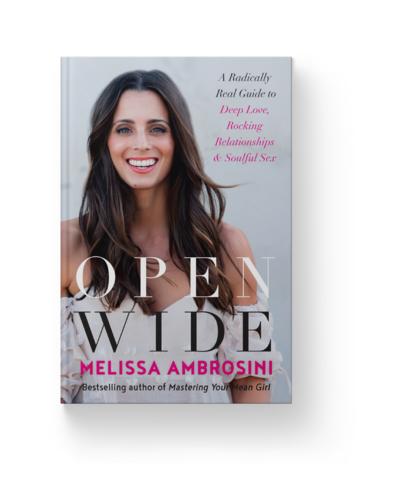
- Open Wide by Melissa Ambrosini (book)
- Comparisonitis by Melissa Ambrosini (book)
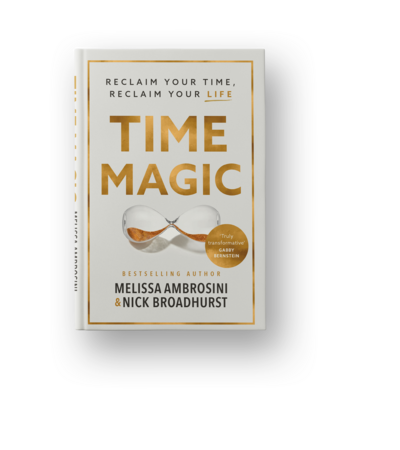
- Time Magic by Melissa Ambrosini and Nick Broadhurst (book)
Prefer To Read?
The following transcript has been automatically generated and not checked for accuracy.
[00:00:00] The Melissa Ambrosini Show. Welcome to the Melissa Ambrosini Show. I’m your host, Melissa bestselling author of Mastering Your Mean Girl, open, wide, comparisonitis and Time Magic, and I’m here to remind you that love is sexy, healthy is liberating, and wealthy isn’t a dirty word. Each week I’ll be getting up close and personal with thought leaders from around the globe, as well as your weekly dose of motivation so that you can create epic change in.
Your own life and become the best version of yourself possible. Are you ready? Beautiful. Beautiful.
Hello and welcome back to the Melissa Emini Show. I’m so excited about this episode because this is one of those topics that can instantly change how you move through your day, especially if you are a mother. A leader, a business owner, or you’re just the kind of [00:01:00] woman who carries a lot. And today I am talking about something I honestly do not believe in, and that is balance.
I don’t believe in perfect balance because life isn’t a perfectly still set of scales. It is a dance dance. And some days I am doing the wild tango. Some days I’m doing the jive, and some days it is a waltz, and some days you’re doing some kind of interpretive dance that no one has ever taught you, and you are barefoot and you are holding a snack and you’re trying to answer an email and you’ve got a baby on your hip all at the same time.
So instead of chasing balance, which can make you feel like you are failing every time your day gets messy, I wanna offer you a different framework. It’s called load management. It’s what athletes do. It’s what high performers do. It’s what emotionally mature women do when they stop treating their bodies like [00:02:00] machines and start treating them like living intelligent divine systems, which they are.
And today I’m going to make this so practical and tangible that you can implement it today, not one day, not when the kids are older today. Here’s what we’re doing. I’m going to explain why balance does not work. I’m gonna show you what load management actually is, and I’ll give you a simple, repeatable method that you use every week in motherhood, in business, in your body, in your relationships.
This is what I teach my clients, and I’ll finish with a quick audit you can do in two minutes. That will immediately lighten your load. So first, why Balance is a trap for so many incredible women. This is why, because balance implies that you hold everything evenly all the time. Do you do that? Like I absolutely don’t, and you can’t.
And more importantly, you are not meant to. [00:03:00] There are seasons where you are in pure output mode. There are seasons where you are in repair and rest mode. There are seasons where you are deep in your mothering. There are seasons where you are in creation mode, and the problem isn’t that one season is wrong.
The problem is when you try to operate, like it’s always peak season. When you treat every week, like it’s the week you’re launching or hosting or performing or parenting, creating, training, socializing, and being spiritually aligned all at once. That is not balance. That’s just chronic load. And when your load stays high for too long, your body pays the bill.
In the science world, there’s a concept called allostatic load. It’s basically the wear and tear on your body when your stress response is activated over and over again without enough recovery. So think of it like your [00:04:00] system being under challenge. Constantly adapting, constantly bracing until it becomes expensive.
Hormonally, neurologically and emotionally. And before you think, Melissa, I’m not stressed. Let me say this clearly. You can be coping. You can be performing, you can be competent and still be under a level of load that isn’t sustainable. And a lot of high performing, high achieving, high capacity. Women don’t actually look stressed.
They look impressive, but behind the scenes, they feel wired and tired, snappy at their kids, foggy in the morning, needing the coffee over it, overwhelmed by tiny things. The noise of the oven when you’re cooking and you are unable to make decisions. And you might say things like, why am I so irritated? Or Why can’t I focus?
Or Why does everything feel so heavy? And that’s not you being dramatic. That is your [00:05:00] system being overdrawn. And one of the sneakiest contributors to overload is cognitive load, the constant switching. Deciding, holding, remembering all the tabs open because your brain is not designed to do eight things at once.
For me, I used to wear multitasking as a badge of honor. Now I literally, I’m like, I can only do one thing at once. I’m like, let me do this and then I’ll do that over there. It’s not something I wear as a badge of honor anymore. Our brain is not designed to do multiple things at once, and even when you can do it, it costs you.
The American Psychology Association has written about multitasking and task switching, and what we call multitasking is often just rapid switching. And switching comes with measurable time and performance [00:06:00] cost, and we speak about this in time magic. Every time you switch. It actually takes your brain 20 minutes to come back to focus on what you were doing.
So if your day feels like, write an email, pack lunches, send voice note. Pay the bill, answer the client message. Sign a permission slip or book the dentist. Create the content, make the dinner, respond to the messages. That is a lot of switching, and you don’t just lose time, you lose presence, you lose calm, you lose energy, you lose focus.
There’s another piece here that I wanna name because it’s real and it’s deeply gendered in many households. The mental load, the invisible management of life. I used to hear people talk about the invisible load before I had kids, and I’m like, what are they talking about? Now I have kids. I’m like, oh, I get it a hundred percent.
I get. There is research showing mothers often carry a disproportionate share of cognitive [00:07:00] household labor. The thinking work of running the family, things like the organizing, the planning, the anticipation, the remembering, the scheduling, the food, the always thinking five steps ahead. I’ve gotta do that snack and then I’ve gotta do that, and then I’ve gotta pack it there so that I don’t forget to take it to school pickup so that she has food for afternoon tea as soon as she gets home.
I know, you know what I mean? I know you can relate to what I’m saying. And one study reported mothers take on about 71% of those mental load tasks. So if you are listening to this and thinking, yes, but Melissa, my brain never turns off. It might not be because you’re doing it wrong. It might be because you’re carrying more cognitive labor than anyone sees.
And here’s the shift. Instead of judging yourself for not being disciplined, we just manage the load because you can’t always control what’s happening in your life, but you can learn to [00:08:00] choose how you move through it. So what is load management? Load management is simply choosing your intensity on purpose, not letting your week decide for you, not waiting until you crash and burn out, and then calling it rest.
It’s deciding is this a high output week? Is this a high output day? Is this a maintenance week or is this a maintenance day or is this a recovery week or a recovery day? I want you to imagine an athlete training for a big event. They don’t train at maximum intensity every single day. They build, they peak, they deload, they recover.
And for us it’s the same. We have weeks where we go hard, but they need to be intentional and they need recovery built in. And I think this is where social media does such a disservice for us women. Because it’s the highlight reel we see everyone else just launching and achieving and launching and big numbers and this [00:09:00] and that and holidays and all the things.
But not many people actually post the built-in recovery. And because if you are always in go hard mode, you eventually get taken out. And here’s the thing, if you are always in go hard mode, you’ll eventually get taken out. And not because you are weak, but because you are human. And we are not designed to go, go, go, go, go all the time.
It’s like the seasons we have our summer, our autumn, our winter, and our spring. We’re not meant to be in summer all the time, think cyclically in one month. We have our own summer, autumn, winter, and spring. So I wanna offer a practical, simple system that you can start today. I call it increase, maintain deload.
I’m obsessed with the gym. I do strength training three times a week and I love it, and there’s always the deload. Okay, so there’s three modes, increase, maintain, deload, and your job each week is to choose your mode before you start feeling your [00:10:00] calendar. So let’s do it together. If you’re driving, just listen.
If you can open the notes section in your phone. So the first step is you choose your mode. Ask yourself, what season am I in right now? What’s my baseline energy? What’s already on my plate that is non-negotiable? And what support do I have this week? And then you pick one increase. This is the week where you’ll add pressure on purpose.
You create more. You output more, you stretch. Maybe this is a week where you get your hair done and you film a whole bunch of content. Maybe that is your week or you maintain. So this is where you keep things steady, you keep moving forward, but you are not in full launch mode or you deload. This is where you reduce, you simplify, you protect your nervous system.
You rest and you recover. Now here’s a rule I want you to borrow. If you are ever asking yourself, how can I handle this week? How am I [00:11:00] going to get through this week? How on earth am I going to do it? You are probably not in increase, and that is not failure. That is self-leadership because the most powerful women I know aren’t the ones who carry the most.
They are the ones who know when to reduce the load before their body forces them to. I’ve ended up in hospital. I have been at burnout and it is not fun. So that is step one. Now, step two, set your big three. This alone will change your life if you let it. So every week you choose three priorities, not 10, not 15, three.
And these are not your to-dos, these are outcomes. For example, it could be deliver the client work that is already booked. Record one solo podcast episode or create your monthly content plan. And then in motherhood it could be get everyone fed and [00:12:00] out the door every morning with less stress and peace in the home.
Or it could be be present and not rush bedtime and do one family life admin session, batch it all, laser focus and do it all in one go. So you pick just three because when everything is important, your brain never lands. And when your brain never lands, you don’t feel safe. Your brain is just go, go, go all the time.
And when you don’t feel safe, you start reaching for control. Perfectionism over functioning overexplaining, over committing, overwhelmed. So big three, that is it. Everything else is optional. And this is where some women get uncomfortable because the identity of. Being the capable one or the high achieving one wants to say, but I can do more.
Yes, you can. You are an incredible woman. [00:13:00] We can do more. We can do lots. We are incredible. We can do anything. But the question is not can I? The question is, what does it cost me? What does it cost my family? So that is the next step. Then we’ve got step three, cut the switching. This is so practical. I want you to look at your day and ask where am my context switching the most?
And choose one place to batch. I talk about batching a lot in time magic. Where can you batch? Like, can you do all of your client calls on Mondays and Tuesdays? Can you do all of your podcast recording and content creating on a different day? Can you do all of your admin on another day? Whatever it is, where can you batch?
And for those of you that don’t know, batching is simply grouping similar tasks. Like I said, you do emails only twice a day and then think daily. Instead of checking emails all day, you can only check emails twice a day. You [00:14:00] could do one admin block. You could make all of your food for breakfast, lunch, and dinner at breakfast time.
You could do all the school forms at one time instead of throughout the whole afternoon. Because the more you switch, the more you drain. And this is especially important if you are tired. And speaking of tired, I wanna drop in a stat here because it’s a huge wake up call. Studies have found that being awake for around 17 to 19 hours can impair performance similarly to having a blood alcohol concentration of about 0.05.
So if you are doing long days short sleep and expecting yourself to be emotionally regulated, created, patient, strategic, sensual, kind, all the things, just know that you are trying to do a high level life on a low power battery. Sleep is not a luxury. It is load management. And the CDC and [00:15:00] NIH have both described how inadequate sleep impairs cognitive functioning, and can affect how well you think react work and get along with others.
We all know how sleep affects us instantly. If I don’t get a good sleep, I want to eat different things, I am a lot more irritable. I’m just a different person I am. Such a better person when I get good quality sleep. So that is number three. Cut the switching. Okay, let’s move to step four. Remove one emotional surcharge.
This is where the gold is because it’s not just your tasks, it’s the emotional cost attached to them. Two women can have the same job, the same schedule, the same kids, but one is paying an emotional surcharge on everything. Resentment, dread, perfectionism, fear of disappointing people over responsibility, guilt.
So I want you to pick one thing this [00:16:00] week and ask, how can I make this 20% lighter? You can lower the standard. You do not need gourmet dinners on a deload week. You need nourishment. Yes, 100%. But you don’t need gourmet. You can delegate one piece, not the whole thing. One piece. You can put a time cap on something, 30 minutes and then I’m done.
Whether that is cleaning the house or emails, you can remove the nice layer. This is huge for women. We add extras to prove we’re good. We add the ribbon, the follow up, the additional voice note, the perfect canvas slide, the emotional cushioning, and sometimes the most loving thing that we can do is just be clear and complete.
And honest and speak from our heart. We don’t need all the fluff. We don’t need to perform. Goodness. And I’ll share a little script with you that I share with my clients that you can borrow. I can do X, [00:17:00] but I’m not available for Y. I’m keeping it simple this week. Here’s what I can commit to and here’s what I can’t.
I trust you to handle that. Now I want to add one celebrity reference here that’s actually relevant. So Barack Obama talked publicly about reducing trivial decisions like wearing only gray or blue suits so he could preserve decision making energy for what mattered. Now, whether you love him or not, the principle is powerful.
You protect your capacity by removing low value decisions. You don’t need to copy someone’s wardrobe, but you can copy the concept. Default meals. Default routine. Default school lunch, default workout days, default content schedule. That’s not boring. That is freeing. So that is step four. Now, step five, install a deload ritual.
I want this to be so simple that you can’t talk yourself out of it. So deload rituals are small, they’re [00:18:00] consistent actions that tell your nervous system, we are safe. We can soften. It’s not an elaborate self-care checklist, not another thing you have to do correctly. It’s just something easy to do. So here are some options.
You can go for a 10 minute walk with no phone. You’ll be okay. I promise. You can have a shower with amber lights. You can have a cup of herbal tea outside. You can do a five minute tidy of your desk to signal that your work is done. You can do a screen free bedtime queue and one early night a week and get to bed early every night.
Make that a non-negotiable, and I wanna say this gently, if your rest requires effort, it’s probably not rest. So choose rest. That feels like relief. On to step six, the Tuesday test. This is one of my favorite tools, so I want you to ask yourself, could I [00:19:00] sustain this week if I felt 70% on Tuesday? Not your best day.
Not your most motivated day, just a normal standard, random Tuesday. And if the answer is no, your plan isn’t a plan, it is pressure. So what do you do? You reduce, you simplify. You move your week from increase to maintain or from maintain to deload because load management isn’t about doing nothing. It’s about doing what is important and real.
Now I wanna pull this all together with a two minute audit. So let’s do this together. The first question I have for you is, what am I carrying right now? Because I am the reliable one, not because it’s truly mine. Just name it out loud, write it down if you want to. What am I carrying right now? Because I am the reliable one.
Maybe it is a family admin task that could be shared. Maybe it’s the emotional management of everyone’s experience. Maybe it’s work you’re [00:20:00] doing because you don’t trust someone else to do it properly. So write it down or say it out loud. What are you carrying right now? Because you’re the reliable one.
Question two, what’s one commitment that I can clarify today? Because ambiguity is exhausting. It’s the maybe it’s the, I’ll see. It’s the, we should, it’s the, I might. I will never respond to someone with a, let me get back to you or Let me think about it, or I’ll see, or maybe, or we should, I never say those things because if I don’t know in the moment, I’m just making more work for myself, so I will leave the message unread until I am sure.
And then I will respond. So I might take a few days to get back to you, but I’m not gonna message you and say, let me come back to you. I’ll just wait until I’m clear and then I can give a yes or a no. That just makes more work for yourself. So I want you [00:21:00] to choose one and you make it clean. You either say yes or you say no, or not this month or not this time, but let’s leave out.
The maybes all sees we shoulds. I might, you know, those things, they just create more work for you. The next question is, what’s one thing I can do at 80% this week? And I want you to notice what comes up when you even ask that. Does your body soften or does it panic? That reaction is information. What is one thing I can do at 80% this week?
Question four, what mode am I in for the next seven days? Am I in increase? Am I in maintain or a deload? And then based on that mode, what’s one practical change that I’m making today? One, not 10, just one, because small adjustments done consistently will change your life more than grand and reinventions that you can’t sustain.
Nick and I always say it’s the little things that you do every day that add up to big results or [00:22:00] big consequences. I wanna finish by bringing it back to that dance metaphor. Some days you will do the tango. It will be wild, it will be sharp, it will feel like you are being flung around the room by your dance partner.
And then some days you will do the jive and it will be different. And then some days you will do the waltz and it will feel different. But the goal isn’t to force a perfect routine. The goal is to stay present with what’s in front of you and meet it with wisdom. Load management is wisdom in motion. It’s you saying, I’m not here to prove I can handle everything.
I’m here to build a life that I can actually live. And if you’re a mother, if you are building something, if you’re the woman who holds a lot, this matters because the world doesn’t need you to be balanced. I need you to be well happy, thriving, because when you are at your best. That ripples out to your children, [00:23:00] to your partner, to your work everywhere.
And when women are thriving, the world changes. So I hope you got a lot out of this episode. And if you did, please subscribe to the show and leave me a review on Apple Podcasts and send me a screenshot of it to [email protected] and I will send you my wildly wealthy guided meditation as a thank you for taking the time to leave that review.
And if there’s someone in your life that you can think of that would really benefit from this episode, please share it with them right now. You can take a screenshot, share it on your social media, email it to them, text it to them, do whatever you’ve got to do to get this in their ears. And until next time, don’t forget that love is sexy.
Healthy is liberating, and wealthy isn’t a dirty word.
Thank you so much for listening. I’m so honored that you’re here and would be SO grateful if you could leave me a review on Apple podcasts, that way we can inspire and educate even more people together.
P.S. If you’re looking for a high-impact marketing opportunity for your business and are interested in becoming a sponsor for The Melissa Ambrosini Show podcast, please email [email protected] for more information.
P.P.S. Please seek advice from a qualified holistic practitioner before starting any new health practice.














show Comments /
hide comments
- Hide Comments