



(Listen & Subscribe on Apple Podcasts, Stitcher, Spotify, iHeart or TuneIn)
What if everything you thought you knew about aging was wrong?
I sat down with scientist and entrepreneur Chris Burres, and this conversation stopped me in my tracks. We got into fasting, sleep, stress, mindset, and some compounds that are genuinely changing what is possible for human health. Not in a hype-driven, wellness-trend way. In a Nobel Prize-winning, peer-reviewed, cellular-level way.
Chris has spent his career studying why we age and what we can actually do about it. And what he shares in this episode is not what you will hear anywhere else. Because this is not about living longer just to live longer. It is about waking up with energy. Thinking clearly. Feeling like yourself again. The kind of vitality that makes every year worth adding.
About Chris Burres
Chris Burres is a scientist, entrepreneur, and the founder of MyVitalC. He is best known for his work with ESS60, a Nobel Prize-winning molecule studied for its potential longevity benefits. His passion lies in helping people live longer, healthier, and more vibrant lives through science-backed solutions.
In this episode we chat about:
- The fasting truth nobody tells you, and why doing it wrong could actually backfire (2:57)
- What happens inside your body after just one bad night of sleep (and why it compounds) (6:58)
- The exact mindset shift that separates women who grow from women who stay stuck (12:33)
- Why chronic stress is not a willpower problem, and what is actually keeping you stuck in it (19:28)
- The Nobel Prize-winning molecule that scientists say may slow aging at a cellular level (25:39)
- Should you actually be taking ESS60? Chris gives the honest answer (29:38)
- What Youth39 does for your skin and hair, and whether the research backs it up (37:49)
- If you avoid putting chemicals in your body, you need to hear this before dismissing it (40:01)
- Peptides explained simply, what they are and why everyone suddenly seems to be talking about them (41:02)
- Why asking AI for peptide recommendations could genuinely harm you (42:42)
- The different forms peptides come in and what you need to know before trying any of them (44:40)
- The one book Chris believes every person on the planet should read (46:06)
Episode resources:
- Work with me (use the code 2026 for $500 off your first session)
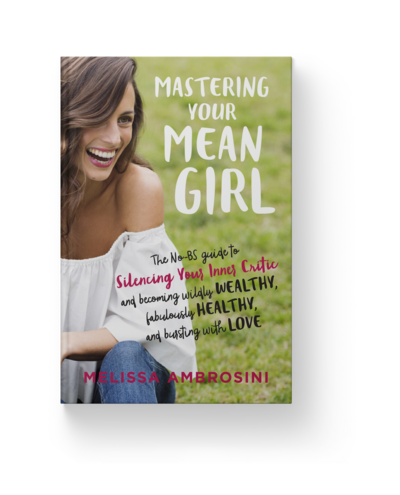
- Mastering Your Mean Girl by Melissa Ambrosini (book)
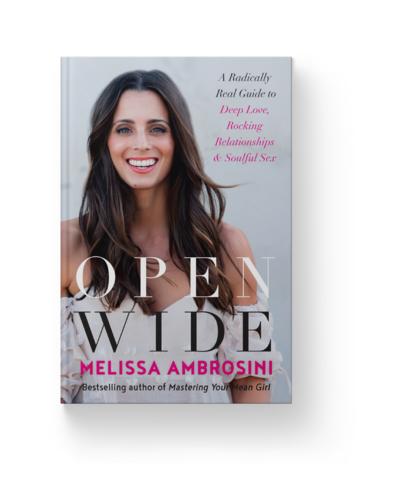
- Open Wide by Melissa Ambrosini (book)
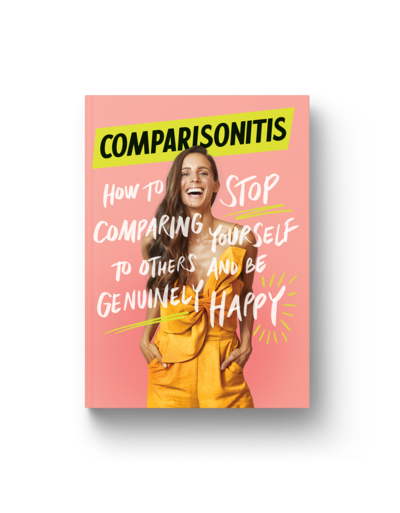
- Comparisonitis by Melissa Ambrosini (book)
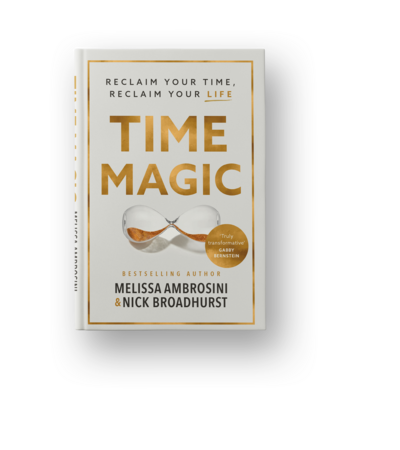
- Time Magic by Melissa Ambrosini and Nick Broadhurst (book)
- Chris Burres (Instagram)
- Chris Burres (website)
- Live Longer And Better by Chris Burres (book)
- Live Beyond The Norms (podcast)
- Breath with Sandy (youtube)
- Feel the Fear… and Do It Anyway by Susan Jeffers (book)
- My Vital C (GET YOUR DISCOUNTS)
Prefer To Read?
The following transcript has been automatically generated and not checked for accuracy.
Melissa: [00:00:00] The Melissa Ambrosini Show. Welcome to the Melissa Ambrosini Show. I’m your host, Melissa bestselling author of Mastering Your Mean Girl, open, wide, comparisonitis and Time Magic. And I’m here to remind you that love is sexy, healthy is liberating, and wealthy isn’t a dirty word. Each week I’ll be getting up close and personal with thought leaders from around the globe, as well as your weekly dose of motivation so that you can create epic change in your own life and become the best version of yourself possible.
Are you ready? Beautiful. Hello, and welcome back to the Melissa Ramini Show. I’m so excited about this episode because I have the incredible Chris Burs on. He is the founder of my Vital C, the company behind ESS 60, A groundbreaking longevity molecule linked to the longest lifespan extension ever [00:01:00] recorded in experimental studies.
His work has been shaped by unexpected collaborations with Nobel Prize winning researchers and a breakthrough discovery in molecular science that reframed aging not as an inevitable decline, but as a challenge to be met with curiosity, discipline, and innovation. He’s the author of Live Longer and Better, where he shares insights into health, resilience, and living well beyond conventional limits.
In addition, he hosts the Live Beyond the Norms Health and Longevity Podcast, exploring science-backed strategies and unconventional thinking around vitality and long-term wellbeing as a longevity expert. Chris is deeply focused on ESS 60 A molecule at the forefront of longevity research and responsible for the most significant experimental lifespan results in history.
And for everything that we mention in today’s episode, including his incredible products, you can find all of that information in the show notes, and [00:02:00] that’s [email protected] slash 6 9 8. Without further ado, let’s bring on the incredible Chris Burrs.
Chris, welcome to the show. I’m so excited to have you here. But before we dive in, can you tell us what you had for breakfast this morning?
Chris: Ooh. You know, I, this is maybe the easiest. Well, okay, so first I’m gonna say nothing. It’s actually six o’clock here in Houston. I typically do a 24 hour fast on Mondays.
So my last meal is Sunday night. First meal is a Monday night. Now, if we’re gonna get technical, I have a little coffee. Actually, I was playing around with a new collagen as my creamer instead of a little bit of milk. So that was my breakfast technically. ’cause it did break the fast and then I’ve just had some teas.
Melissa: Mm-hmm. And you do that every week?
Chris: Every week at this point? Yes.
Melissa: There is a lot [00:03:00] of benefits to fasting. I am not in a fasting season of my life. I am breastfeeding, so I am definitely not fasting, but I have definitely fasted in the past and there are so many benefits to fasting, but you do have to always.
Check in with the season of life you’re in. Obviously you do not fast when you’re pregnant. Obviously you do not fast when you are breastfeeding like I currently am. And however, I do stop eating around like at the latest 6:00 PM and then I don’t usually eat till around 7:00 AM maybe seven 30 the next morning.
So I am doing the overnight fast and that is what I’m doing at the moment. But no long fasts like what you are doing.
Chris: And I think even for women fasting, you have to be more careful. Like, where are you in your cycle? Does it make sense? And even today, I, you know, I have a little bit of a, a cold and I just don’t get ’em anymore, which [00:04:00] is crazy.
I used to be the, the guy who would get four colds per year, and I’d go to the doctor and they would like, you should take amoxicillin. I was like, that never works. Give me Z-pack And four times a year, yeah, I, I’ll just share this. I’m in Spanish class and I described that and the lady next sitting next to me was like, oh, you’re sickly.
I’m like, I’ve played semi-professional soccer. Sickly is not the word that I think of myself, but if I’m getting sick four times a year where I need antibiotics and I wouldn’t do that now, then yeah, I was sickly. So that tends not to happen now. But I do have a little bit of a cold that my body’s managing really well.
I would argue. And I debated whether I should fast today because it is another stressor. Like it is. It’s not just, it’s not nothing. I mean, even though you’re eating nothing, it’s a stressor. And, and there are, there are some Mondays where I don’t do it because I’ve already got enough stress. And by the way, congratulations.
How old is your little one? That’s super exciting.
Melissa: Yeah, so I have a almost five-year-old [00:05:00] daughter and my son is almost 15 months.
Chris: Mm. That’s awesome.
Melissa: And I breastfed my daughter until she was two and then I stopped and I did a big cleanse ’cause I wanted to get my body ready for baby number two. So. He is most likely my last.
So I might breastfeed a little bit longer this time, but definitely like minimum two years for me.
Chris: Enjoy it. Right? Because? Because when it’s done, it’s done.
Melissa: Yeah, exactly. And I think you raised a couple of really great points. I feel like we need to ask if we are going to fast, why are you fasting? What are you doing it for?
You need to know why you are doing it. Like there have been so many benefits of fasting when it comes to disease and different illnesses, but you need to know why you are fasting and exactly what you said as females. Where are you in your cycle and your season of life? Like these are all factors that you [00:06:00] need to consider before you just go and start fasting.
Chris: I, I agree. Yeah. And for me, I am looking for the autophagy. I, I understand there’s benefits there. I also, I think, like so many people on the planet, you know, I, I have like five pounds I would like to lose, and I’ve tried every diet on the planet, and I’ll tell you the difference for intermittent fasting for me is with every other diet, like hunger was the enemy, right?
You’re counting calories or you’re restricting this, you’re restricting that. And if you get hungry, you’re like, ah, am I gonna be able to eat enough the next time for, for intermittent fasting? The goal’s different. Hunger is the goal. So if at any point in your, in your intermittent fasting, you’re like, oh, I’m hungry.
It’s not like, oh, this sucks. No, it’s, yes, that’s exactly what I’m trying to accomplish in this scenario. So your whole mindset is like, no, this isn’t torture. It’s the torture that you’re after. So I, I do think it has that impact.
Melissa: Yes, that was a fasting little 1 0 1, but I really wanna [00:07:00] kick this off by talking about sleep and longevity.
And because I talk about in my latest book, time Magic, reclaim Your Time, reclaim Your Life. I co-wrote this with my husband. We talk about the pillars of health and longevity and happiness, and we talk about these low hanging fruits, the things that are so easy to do and access that are free to us most of the time, like sleep and connection, and these low hanging fruits that really move the needle in our health and our happiness and our longevity.
One of them being sleep, and I wanna talk about this because it is so important, yet so many people are not getting good quality sleep. So if someone is doing all of the quote unquote longevity things, but their sleep is not dialed in, it’s not consistent, what actually happens to the body? And what are the biggest downstream [00:08:00] effects that you see on the brain?
Hormones, inflammation and recovery.
Chris: Well, first you and your husband wrote a book together, so what a spectacular relationship that must be. I love my wife. I would not write a book with her. That is, that is, and I love her very much. I just would not like write a book, nor would she write a book with me.
Like, this is, this is, this is the reality. So congratulations there. I, I think what you’re describing I is, is, the way I describe it is sleep. Everybody knows that sleep is important, right? It’s good for your mental, physical, and emotional wellbeing, and you should absolutely focus on sleep and make sure you’re getting your seven and a half hours to nine sleep opportunity unless you got something else to do.
Like, that’s, that’s how the general population thinks about it, right? Like, oh, it’s so important. Unless you got something else to do. We’re literally the only species on the planet that will forego sleep for things other than escaping from a predator finding food. Or, [00:09:00] well, you, you m might come in there, right when you’re not getting sleep.
Like that tends to be about the right timeframe, right? But, but we’re the only creatures that’ll do that, and that makes us very weird. There’s a famous book, you’re probably very familiar with it, which is why We Sleep by Dr. Matthew Walker. The way I describe this book is it’s the Freddie Krueger of Sleep books.
You may remember Freddie Krueger Nightmare on Elm Street. He scared you out of the dreams. This book will scare you into your dreams. In fact, Matthew Walker in the beginning of his book is like, Hey, if you were to fall asleep while reading this book, I would take it as a compliment because that’s the whole point of this book is you need to get sleep.
He points out in that, well, so many things and, and, and the reason it’s so scary is it’s 25 years of research on sleep and the detrimental impact of sleep on you when you’re not getting the right amount of sleep. And the one that, uh, always resonates with me is, you know, there is a 2 billion, multiple billion.
[00:10:00] Person study on sleep that happens twice a year and most people are like multi-billion person study. You can’t even get like 10,000 people into a study and it’s daylight savings time, right? So there’s two times in the year, and the data’s really clear. The part of the year where we gain an hour of sleep, heart attacks go down by somewhere between 21 and 23%.
When we lose the sleep by one hour, heart attacks go up by 21 to 23%. So people often think like, oh, I feel groggy and you know, I wish I had gotten more sleep. Or no, it has absolutely physiological detrimental impacts on your sleep, including increased risk of cardiovascular problems, incidents. So, so yeah, I, I, I don’t know if you’re looking for anymore, but I am a big believer in, you know, and I have something else to add.
And sleep is good for your mental, physical, and emotional wellbeing. I think the context of this, right? So I, I have a product, we’ll probably get to talk about that at some point, but if somebody [00:11:00] were to come to me like, Hey, you know, you’ve interviewed so many people on your podcast. You’ve got the book live longer and better.
You did the Longevity summit. Like, what, what’s the first thing you should do? I’ll tell you, I the first thing isn’t my product. Right? Like, that’s not what I would recommend. First. I would recommend mindset first and then sleep, and then exercise, nutrition. I think those, I see those as intertwinable and, and, but I, but actually I would do nutrition and then exercise and the mindset I think is so important because if you know you need to make a change with exercise, nutrition, or sleep, and you do not have the mindset to make that change, then you will not make that change.
Right? Like, so it, it, it’s the thing that can hold back or facilitate proper execution in all other places. And I will. Say, I do think because of what we under believe our product does at the mitochondrial level, that there can be benefits. Like if you’re really not in the right place, there can [00:12:00] be some benefits to start that and it can have a positive impact and kickstart you, but it is not where I typically recommend people start.
Melissa: So you start with mindset. Mindset. Mm. Mindset. Okay. So let’s go there because this is why I do my work. Like it is so important. Like you said, if you want to have the relationship, the business, the health, the body of your dreams, but you don’t believe that you can A have it or do it, you will not get there.
So let’s talk about what are your strategies to. Help somebody get out of a funky negative mindset and get back into a more abundant growth mindset. What do you do? How do you teach people how to do that?
Chris: Well, I think first is to, and so I, I did, coming out of my Longevity Summit, I interviewed like 57 experts in longevity, including [00:13:00] being Ben Greenfield, Steven Gundry, Dave Asprey,
Melissa: they’ve all been on my podcast.
They’re incredible.
Chris: Yeah, there is. Absolutely incredible. And as I was coming off of that Longevity Summit, right, this is like 57 interviews, so at least 30 minutes, probably some to an hour. That’s a lot of content. And what is somebody gonna do coming outta that content? ’cause not everybody’s gonna process it and go, oh, here are the three things I need to do this week.
You know, from, from this, you know, 50 something hours of content. So I put together a longevity fast track and the way I, in that I talk about from a mindset perspective, one, maybe understanding why you might have these negative thought, thought, thoughts, understanding that we’re actually wired to be negative as humans.
And here’s, here’s the reason I love this example. There was no caveman ever who rolled the giant rock that was blocking his cave out of the way, keeping him safe and his [00:14:00] family safe, who stepped out in front of the cave and said, wow, what a beautiful sunset. He stepped out and he is like, what’s gonna kill me?
What can I eat right? And can I find another mate? Like, that’s literally always a but, but two of ’em are like, am I gonna have enough food? Negative mindset, resource, limited mindset. And the other one is what’s gonna kill me? We are wired to address the negative first, and when we go through our day, you have these negative thoughts.
I remember. Kind of becoming aware of negative thoughts. Probably I was around 14 or 15 and I had a friend of mine who just shared with me. I don’t even know how the topic came up, right? Like I wasn’t into deep philosophical conversations about, you know, how, how my mind is working. But like, somehow the topic came, maybe I was, I don’t know.
The topic came up and he shared that he just has this positive phrase that he repeats over and over again because, and, and it made perfect sense and it’s actually worked, and I’ve been using that for, since age 14 or so. And [00:15:00] the concept is if I ask you not to think of a pink elephant until you replace it, or until I replace it with something else, the pink elephant stands maybe on his toes, you know, maybe on his back legs, I don’t know.
However, you picked an el, picture an elephant, until you replace that pink elephant with another image of something, it stays. And that is true of a negative thought. That is actually true of positive thoughts too. So you have this negative thought. You can’t just go like, Chris, stop thinking this way. You can’t just say, Chris, that’s not even a healthy way to think, Chris, it’s dumb to think this way.
You should think any other way. No, you have to replace it with some other thought. And for me it’s some short phrase like, I’m healthy. I, I, and I know I have one that I used in my long, in my longevity fast track, which is I’m healthy, I’m motivated, I am making changes. I’m like, whatever that phrase is, and it’s, it could be different for you.
It could be, you know, steal that particular one. At one point I had it memorized when I [00:16:00] was in the middle of teaching that course. Now it’s gone. So it so that you replace that negative thought when you see yourself and recognize yourself ruminating on something that’s negative, replace it. And you probably have to repeat it five times, not just once.
Right. You don’t, you know, it’s not just, oh, let me think of green frog. No, you gotta keep thinking of the green frog for the pink elephant to go away. And so that’s what I teach.
Melissa: Yeah, I love that. What I’ve done often in the past as well, is I’ve used different mantras, different things, like I am healthy, I am strong, whatever it is.
I’ve used different mantras, but one that I keep coming back to whenever I am, you know, feeling overwhelmed, is just repeating. I am love. I am love, I am love. Here’s the thing. Ideally, we want no thoughts going on up there. We wanna be fully present in the moment with our children, with our clients, whatever it is.
So we don’t want [00:17:00] any thoughts going on up there. We wanna just be in the moment. If you are going to have thoughts, make them positive, make them inspiring, make them work for you. That’s what I like to say, and that’s what I do. If I’m gonna have thoughts, I want them to serve me and to be supportive of.
Where I wanna go. So I love that. So I wanna encourage everyone listening to find a couple of mantras. I am healthy, I am strong, I am abundant. Whatever it is that they can replace. Whenever that inner critic, I call it the inner mean girl, whenever that inner critic voice comes in to tell you otherwise, it’s a very simple thing.
And it’s one of those things, like we have between 60 and 80,000 thoughts a day. I think men have around 40,000. So we may be doing this
Chris: Is that high? That sounds high for men,
Melissa: but you know, like, we may be doing this many times throughout the day, [00:18:00] but it’s worth it. So I love that so much.
Chris: There’s one, one of the ones that I, I just remembered, which is, which I really like, which is I am growing. I embrace challenges,
Melissa: love,
Chris: right? So neither one of them, some, some of the thing love, I love, like pun intended because it means so many things, right?
For you to be love, you have to be lovable. I think like that’s my impression. And if it’s not, then maybe there’s some work to do and you also have to be giving love. And those are two incredibly powerful, like a, a two-way street. That’s really powerful. And when you say something like, I am growing and I embrace challenges, right?
Sometimes they’re just shoving out the negative thought with something positive. Well, it’s a challenge and you’ve gotta kind of embrace that. It’s a challenge and they that there’s things to do about them. So good stuff. We’re on the same page. This is cool.
Melissa: Also do this with your kids, you know, like you’ll start to notice that your kids have these negative [00:19:00] things and usually they pick that up from you or somewhere else, and you know.
I just replace them. Whenever my daughter says something, I’m like, we can, I can, we can. If she ever says, I can’t. I’m like, we can. We can do hard things. You know, it is just so simple, but it’s these little micro moments throughout your day that add up to big results or big consequences, and it’s like just these little things.
So I love this. Let’s all work on that together. I wanna talk about stress and the nervous system, because now more than ever, we are the most stressed and the most dysregulated, the most fried in our nervous systems than ever before because of so many different reasons. There’s so many different things that are causing this stress.
What can we do? And we know that stress is a huge cause of [00:20:00] shrinking your life and causing disease in the body. We know that. So what a lot of people don’t know is how to regulate their nervous system, how to get out of chronic stress. So please share all of your tips.
Chris: Yeah, I think, you know, you have to be careful here sometimes, ’cause I’m, I, I think you are, I’m in a relatively privileged position where we can lean on meditation and we can lean on, I don’t know, lots of things that take time.
And there’s a lot of, a big part of the population who is like, I’ve gotta get up, I’ve gotta work. Maybe I’ve got multiple kids. And so what can they do? Which would apply? So yeah, to be mindful, to have that quiet time. I think, you know, somebody, and I’m, I’m not big into prayer, but those moments when you’re going to bed and you’re praying, right?
When you can have just that, carve that time out for meditation, for this positive reinforcement, even the reinforcement that we’re using with those negative [00:21:00] thoughts to do that at night. To have some sort of, I, I, I’m loathed to use the word journaling ’cause I know that there’s a big part of the population who’s like, I would never journal.
Like, it’s like I’m not gonna go there. And I think like a gratitude, you know, jotting down of ideas or bullet gratitude bullet points. Maybe that’s what it needs. Right? So where you are spending. Just the minimal amount of time. Nothing more than two minutes, because if it becomes more than two minutes, then it becomes a chore that you won’t do to write down these things.
What are you grad? You know, what are you, why do you have gratitude for for that day? And then I would say getting exercise again in some group of people that can be really hard, but have a non-negotiable when it comes to exercise. I saw this meme once. This guy was describing his ideal workout, and it was like a full two hours.
It was like half an hour of meditation, and then I’m doing cold plunge and red light sauna, and then I’m gonna do some EMF, and I’m doing a full workout and getting cardio. And you’re like, well, he can’t do that every day. And he’s aware [00:22:00] that he can’t do that every day. So he has the fallback exercise. Of 50 pushups, 50 situps, 50 squats, and whatever your fallback is, if it’s one time around the block, right, which makes, maybe it takes 10 minutes.
You don’t even have to put on exercise clothes for it, have some sort of fallback. That is something that you do every day, right? You can carve, it’s worth it to carve that 10 minutes out, walk out the front door, walk around for 10 minutes, come back in, have that minimum, because the habit ultimately is more important than the actions.
Because once you have the habit in place, you can change the actions, right? It’s easier to tweak ’em. But without the habit, you’re not gonna, it it, it just never goes anywhere. And I actually found that to be true when it came to jogging. You know, I played semi-professional soccer and my standard jog was three miles.
When I cut my standard jog to two miles, I started doing it every single day, right? So they have that non-negotiable. So I think exercise, I think having that positive and [00:23:00] having that mindset of gratitude. I love, Ben calls it vitamin G for gratitude. Those are the things that I would typically learn on.
And then you also like just throw in, have that focus on sleep where you are shooting for seven and a half to nine hours of sleep opportunity. So you don’t need to be in sleep, but you do need to be in bed without a distraction. And that’s even harder these days, right? Like with, with these devices, that it can be a lot harder.
Like you’ve gotta distance yourself from that device at night, I believe. Stop that doom scrolling. You know, maybe pick up a real, real book, but focus on getting the seven and a half to nine hours of sleep opportunity.
Melissa: Yeah. Okay. So they are a couple of things that can really calm the nervous system and the stress load.
I also love and wanna add in breath?
Chris: Hmm. Literally, I was thinking, I miss breath, but go ahead, please. Your approach.
Melissa: Breath for me has been huge. It’s free. [00:24:00] And you can do it anywhere. So I often do it if I miss it in the morning because I have two little kids and sometimes I don’t get it in. I do it in the car on the way home after I’ve dropped my daughter off, and I’ll just do some deep breaths.
I can do it whilst I’m walking. I can do it whilst I’m showering. I can do it standing at the, in the line, at the post office. You can do it anywhere. So that has been really helpful for me. On YouTube, there’s a channel that I follow. They have free amazing breathwork sessions and you can do like five minutes, 10 minutes, 15 minutes, and I always do the nervous system regulating ones.
I love those ones. They have ones for sleep. It’s called Breathwork with Sandy, and I’ll link to it in the show notes. I have no affiliation with him whatsoever. I just like his breath work sessions, and so I will pop those in in the morning and I do it with my legs up the wall. Again, that is very calming to the nervous system, so I will do like five minutes of that, 10 minutes, [00:25:00] 15 minutes, depending how long I’ve gone.
And I also then put on my hydrogen breathing machine. So I’m like time magic habits stacking all of these things and sometimes some red light therapy at the same time. If I’ve got five minutes, I’ll just do all of the things at once. And you gotta do what you gotta do.
Chris: I love the idea of legs up, right, uh, on the wall because, you know, this is all tied to physiological interpretations and you are not running from a lion.
If your legs are up against the, if your legs are above your head, like that’s, so they’re, you’re physiologically, your body’s gonna go, we have to be safe. ’cause or dumb.
Melissa: Yeah. So you talk about a Nobel Prize winning molecule linked to lifespan in different studies. So for a smart but skeptical listener, what do we actually know with confidence?
What is still emerging and who is it not for?
Chris: Well, one, I, I think smart and skeptical, I think, I think are really two pieces of the same thing. If [00:26:00] you’re smart, you should be skeptical, so I, I certainly was kind of coming into my experience. What we’re talking about is this molecule, so I’m holding up a model of a molecule.
If you’re listening, just imagine a soccer ball where the lines on the soccer ball represent the bonds between the carbon atoms, so you have a spherical molecule of 60 carbon atoms. The molecule was discovered in 1985 at Rice University, and the three scientists who discovered it won the Nobel Prize in 1996.
For various reasons, they thought the molecule would be toxic. They put it in a toxicity study instead of being toxic, the test subjects that they gave it to, in this case, Wistar rats lived 90% longer than the control group. So the single longest longevity, experimental results on mammals in history, peer reviewed published research is because of this Es S 60 molecule dissolved in olive oil.
I’m very proud to share our lab provided the material and our lab is mentioned in that original study that kind of changed my trajectory from being the the chief scientist, [00:27:00] which I still am of a carbon nanomaterial manufacturing business that my business partner and I started way back in 1991 to getting into the health and wellness space.
And I had a lot of things that I needed to figure out in the health and wellness space. I’ll talk about methods of action. I’ll talk about the research. The first place that we landed with method of action is because our most consistent testimonial is people will take the product in the morning. They report mental focus and energy during the day, and then better sleep that night.
We’ll sleep like we’ve already talked about it, right? Mental, physical and emotional wellbeing. If you can just improve sleep, hang your hat there, and that’s where, but you know, I, I, I like to dig deeper. So we started kind of digging further, why was it that these Wistar rats live 90% longer? So I started looking at the medical community and what do they think about aging?
Now they don’t all agree, but in general they think of it as an oxidation and an inflammation process. In terms of an antioxidant, there’s an ad hoc [00:28:00] study showing us to be 172 times more powerful than vitamin C. And then there’s peer reviewed published research showing us to be 125 times more powerful than vitamin C.
So like we live in Texas, so we put a big old check mark on antioxidant. So here in the states, you have to be concerned about the FDA is concerned about conversations about inflammation, right? And they. Believe that conversations about inflammation are the same as conversations about the diseases of inflammation, which are also the diseases of aging.
So arthritis, Alzheimer’s, cardiovascular disease, cancer. So if I come onto your show and I say like, Hey, we address chronic inflammation. What the FDA hears is me claiming weaker cancer or weaker cardiovascular disease, we are not doing that. No. There is so much work that would need to go into the research and very expensive research in order to be able to make those claims.
What the FDA will allow us to say is that we address inflammation, at least as it [00:29:00] relates to exercise induced inflammation, right? So we all had a, a tough workout or maybe a long walk longer than normal and woke up and felt that sense of inflammation in our body. The FDA allows us to say that we address that type of inflammation.
And those are the kind of the first two places that we’ve landed. And then finally, there is a, a theory that suggests that this is working at the mitochondrial level, but I don’t know if you have any questions up to this point.
Melissa: Okay. So what is this called?
Chris: ESS 60. So it stands for Elemental safe spheres, right?
’cause it’s a spherical molecule and 60 atoms in the atoms are carbon.
Melissa: Mm-hmm. And do you recommend Everybody takes it. How do we take it? Talk to us about that.
Chris: Yeah. So first off, trying to get pregnant, pregnant nursing young children. No, right? Because this is a new molecule. So I’ll be happy to send you some samples.
You just can’t have ’em yet. And other than that, no. Like it really does seem to [00:30:00] apply everywhere. And in fact, let me, let me talk about what we think it’s doing in the mitochondria, because I think that’s so unique and, and valuable. So where it’s called the Boss theory, buffering Oxidative Stress System.
So there’s peer reviewed published research that shows this ESS 60 molecule gets into the mitochondria, and way from way back in the nineties when it was discovered, we know that it can hold up to six negatively charged particles on the exterior of this cage and what that looks like. So quick refresher.
The mitochondria is the powerhouse of every cell. There’s between 50 and 5,000 mitochondria and every cell in the body except for your blood cells which have zero, and your brain and neurons, which have 2 million. It is amazing how much energy our nervous system uses relative to our other systems. Like any power source, there is a negative byproduct.
You think about your car going down the road, you have exhaust. You think about a power plant, you have a smoke stack. In the case of mitochondria, it’s reactive oxygen species. Now, I like to picture these like [00:31:00] little bumper cars. If they’re left to their own devices, they run around in your body and everything they smack into, they cause rust.
Oxidative stress. Oxidative damage. Internal to the mitochondria. You have the key antioxidants, melatonin, and glutathione to manage those reactive oxygen species. I do like to pause here, right? ’cause melatonin is the sleep hormone. Our most consistent testimonial involves sleep. So there’s some nice parallels here.
So you’ve got your glutathione and melatonin managing these reactive oxygen species, but that all changes when you stress your mitochondria. Now. That begs the question, how do you stress your mitochondria? I point out if you’re alive in modern society, you have stressed mitochondria, right? Tough workouts, drinking, smoking, exposure to EMF, which is coming off of your phone, lack of sleep, like tough workouts, like tough conversations, tough emails.
And so if you are alive in modern society, you have stress mitochondria. And at that point, they start producing more [00:32:00] reactive oxygen species than can be managed by the internal glutathione and melatonin. And that’s when they run around like little bumper cars, everything they smack into their causing oxidative stress and oxidative damage.
And that’s where the ESS 60 molecule shines. Again, we know from peer-reviewed published research, it gets into the mitochondria. It holds on to those extra reactive oxygen species, so they can’t run around like little bumper cars causing damage. And then when that. Particular mitochondria replenishes the melatonin and or glutathione, then they can manage them properly.
So I have a, I have a fun analogy for this. I don’t know about you. I kind of feel like all biological analogies should start with Mardi Gras. So, so there’s a lot of biology at Mardi Gras, so why not? So it’s the end of Mardi Gras right here in Houston. I mean, here in the States we’ve got, it’s on Bourbon Street, right?
So you have these drunk, reactive oxygen species running around on Bourbon Street, and you have the New Orleans [00:33:00] Police Department, the glutathione and the melatonin coming onto Bourbon Street, handcuffing themselves to those reactive auction species and getting them off of Bourbon Street. But what does the New Orleans Police Department do when they’re overwhelmed?
They take those reactive auction species and they put ’em in a paddy wagon. They attach ’em to the exterior of the ESS 60 molecule, so they can’t do any damage. And then when the New Orleans Police Department can replenish the glutathione, replenish the melatonin, they can handcuff themselves to those reactive oxygen species and get them off of Bourbon Street.
What that fundamentally means is we believe we’re reducing the negative impact of stress mitochondria and if we reduce the negative impact of stress mitochondria, we should have systemic benefits. We should have what we have, which are head to toe testimonials. And I think you said, how should people take it?
One teaspoon a day in the morning.
Melissa: I want it. I wanted to get it in my life, but I will wait till I have finished breastfeeding [00:34:00] to have this in my life. This is great. And we’ll link to it in the show notes. People can grab it. I love it. This is so good. Is there anything else that we should know who it’s not for?
Like is there anything else?
Chris: Yeah. Well, I think why I’d like to share one thing, which is we are a very, very weird supplement company. Most supplement companies don’t do research and even fewer publish that research. We are continuing to do research. We published in 2024. We published in 2025. We’ll publish with that same researcher in 2026.
We just started a, we can’t call it a migraine study, so we’re gonna call it a frequent headache study because of the testimonials that we have as it relates to these frequent headaches. That study just started, and that’s a clinical trial, so people can sign up for that. We are starting an HS CRP study.
So hs. CRP is A, is a, it stands for high sensitivity, C-reactive protein. It’s an inflammatory marker. They tend to look at it, U use it [00:35:00] for understanding your cardiovascular risk and or cancer. And the reason we’re doing an H-S-C-R-P study, again, we can’t make any claims about headaches. We can’t make any claims about HSC RRP yet, but the reason we’re doing this study is we had a Dr.
Lane Young. Visited our booth in, in Vegas at A four M, which is the American Academy of Anti-Aging. And he shared the following. And by the way, he shared it. And then it was like, Dr. Young, I have to take a video of this, I, I have a video. He said, Chris, I don’t care if you’re male, female, pre-surgery, post-surgery, cardiovascular disease or otherwise healthy, your product.
So my vital C is reducing elevated HS crps. And he was talking at a client who, who was at nine down to 0.9, which is in normal ranges in four to eight weeks. And he went on to say that they’re seeing improvements in sleep between 20 and 60%, both sleep and HRV. Which is talking about stress management.
Get that HRV where it needs to be, [00:36:00] you’re managing your stress. And he, he finished it by saying, we just believe it should be something that we should keep in our break room for our employees. So we’re doing H HO CRPS by, by the way, when he said nine, I had a conversation with an oncologist after that, and the oncologist was like, if you have an HS CRP of nine, we assume you have cancer until we prove otherwise.
So these are dramatic shifts. So we’re doing an HS CRP study. We already did an informal study on sleep. It was a crossover study, so we collected 10 days of data before they got on the product, 10 days of data while they were on it, 10 days off of it, and then 10 days back on it. It was a small cohort cohort, but 100% of them reported improvements in sleep when they were on the product.
So we’re getting more, getting more formalized data. So that’s for a clinical trial, for sleep data. And then the last one is we’re doing a wrinkle and age spot study because we have a, a, a product and, and it’s, it’s pretty [00:37:00] fantastic. So at one point we had a business partner come to us and say, Hey, you should do a, a, a face serum.
And I didn’t kind of really share the story, but I didn’t wanna be in the supplement market. Like I from, from this study comes out in mid 2012. We don’t bring this product to market until 2018. Part of me wishes I was like smarter and then like, oh, this is a big opportunity. But really we just didn’t wanna be in the supplement space because the supplement space is a challenge space.
There’s a lot of. Challenging things going on in the supplement space. And so we would just meet quarterly and like, do we wanna do anything about this? And we’re like, we just don’t wanna be in the supplement space. So when our business partner was like, Hey, we should do a face serum, I was like, yay. A face serum.
Just what I wanted to do when I woke up today. So we bring this face serum out. Right as it’s coming out and getting amazing testimonials, my director of research comes to me and says, Hey, I found a peptide that has 30 years of skin and [00:38:00] hair improvements in peer reviewed, published research. You should look at it.
So I looked at it and I was like, this is amazing. We want to combine this with our product. Now it’s a peptide that we call UTH 29, which is kind of cool ’cause it stands for Youth 29, which apparently is the age all women would like to stop aging at. Right? Enough sophistication. But still the the youth that they would like, I don’t, I, it’s been confirmed by a lot of people.
Are you on board with that?
Melissa: I love the way that I look right now. I wouldn’t change a thing. I love the way that I look. I love my body. I love my skin, I love it all. I’m not just saying that like I genuinely love where I’m at. If I could go back in time, would I have worn a hat and more sunscreen on my face?
Yes, I probably would have, but you know, I feel like we’re exactly where we’re supposed to be with the smile lines and everything. But if I went back, I would’ve told my younger self to wear a hat and put [00:39:00] some zinc on my face.
Chris: I think that’s fair. I think that’s good advice. So Youth 29, right, is the peptide, which is water soluble, and then to combine it with ESS 60, our molecule, that’s actually oil soluble.
So we could have shoved these two together with an emulsifier. Instead of doing that, what we ended up doing was keeping them separate. And it’s a two part, so you take the lotion, you, well, I can, I can do this here. You can put that in your hand. It’s a beautiful blue color. You take two drops per squirt of the ESS 60 activator and you activate it right in your hand.
And so now you’ve got this freshly activated ESS 60 and Youth 29 product. And I just put it on everything that, you know, shows aging, which seems to be more and more every day as it goes. And so we’re getting fantastic reviews on that. That’s why we’re doing the Wrinkle and H Spot study. So. Those. Those are the the, that’s how we’re a weird [00:40:00] company ’cause we’re continuing to do research.
Melissa: Oh, I love this. I wanna talk to you about peptides and I also just wanna pause and talk about this product. I tend to only use organic and no chemicals on my face. Does this have anything in it? That would be a red flag for me. Someone like me who I only use organic. I only eat organic. I’m very particular.
Yeah. Is there anything that’s a red flag in there for me?
Chris: I don’t think there’s anything that’s a red flag. I know people have d different levels. We, you know, operate in the kind of biohacking space and haven’t really had anybody go like, ah, I don’t like this. Very proud of the fact that we kept it separate so that we don’t have to have an emulsifier.
’cause if you, one, I don’t like how it sounds. And two, if you Google emulsifiers, they, they don’t have any benefits. The scent is amazing. It’s the mask rose oil. So it’s not a fragrance, it’s an essential oil. So yeah, I’m that I’m happy to send you that you can play around with like right away. [00:41:00]
Melissa: Send it over.
Send it over. I would love this. Okay. And so for someone listening who is like, what are peptides? Can you give us a overview on what peptides are? Because they’re all the rage at the moment.
Chris: Yeah, so peptides are just fractions of a protein, right? And our body is driven by proteins and how proteins interact and how proteins cause communication to occur.
And so by having a fraction of these proteins in our bodies, they actually can communicate different messages, right? So I’m currently taking BPC 1 57 and TB 500. They call that the Wolverine stack that is supposed to fund support soft tissue healing, also taking ipro. It’s supposed to be good for visceral fat loss and maintaining muscle mass.
The guy, the reason I’m taking it is I was talking with a guy and he said, when I was taking imar and I got too big, and I do wanna get a little bit bigger muscular, right? So I’m [00:42:00] taking that. I am also taking RIT Tide, which is a GLP three. I’m doing microdosing, actually, I’m doing microdosing of all of them.
I’m, I’m not big into like, let me try what everyone else is doing. Like, let me just ease into this. And I feel that, that there’s been some nice benefits, which is really just getting rid of food, noise, that kind of thing of like, oh, I’m walking by. Should I grab a handful of nuts or, I don’t know, chocolate or something that basically disappears.
When I was on a, a typical dose of IDE is one to two milligrams. I was take per week. I was taking half a milligram and basically zero fo food noise. Pretty, pretty fantastic.
Melissa: So interesting. Is it something that you would recommend people get professional advice on for what peptides they want? Or are you like, go and just chat GBT, what peptides you need?
Like, you know what I mean?
Chris: Melissa, let me ask [00:43:00] you, clarify this question. Are you asking if I suggest people go onto chat GPT and figure this out on their own? No, absolutely not. So I’ve had the privilege of interviewing probably three experts. Even in the last two months, I’ve bumped into three people who own peptide companies.
Right? So I’m getting, getting it from the heart. Today I had a conversation about, well, that was actually more of an oral lipid, lipid, testosterone. The conversation did evolve into like talking about peptides. So I’m having conversations with the people who are manufacturing this stuff, and so that’s why I’m comfortable.
I think, yeah, it would be better to do this under the guidance of somebody. So, yeah, for sure.
Melissa: Okay. Yes, I agree. Always have that guidance from somebody who is an expert and yeah, professional, because otherwise, you know, it’s, it’s your health. You don’t really wanna be messing around with it.
Chris: Yeah, it [00:44:00] goes back to what are, you know, what are you putting in your body?
How confident are you that it’s the right amount? ’cause these things matter, right? We’re talking about half a milligram versus one to two milligrams. Like these are, they start to have a, a, an outsized impact. And you know, one of the challenges with the all the GLP is that you lose weight too quickly. You lose your muscle mass.
And that is, that is an absolute disaster. If you think about longevity, you must preserve muscle mass, period, end of story. And so if you’re doing something that does, has any detrimental impact on that, like you need to be, it needs to be for an unbelievably good reason. And frankly, you should just do it slightly differently.
Melissa: And are all peptides a liquid or are they capsules or tablets? How does it work?
Chris: So there are capsules, there are peptide capsules that you can take and they, they’re working on by, by wrapping ’em in a lipid. Right? So you get an oil around them, they’re able to get across the [00:45:00] gut barrier, survive the stomach acid.
So they’re, those are coming out better. I am not aware. I haven’t, I haven’t gone down the path of taking any oral peptides ’cause it’s a fairly new technology. But I think it’s a, it’s, it’s a great way. So I’m, I’m personally using insulin needles and just injecting it into subcutaneously. So, which is another thing that would probably scare the average person away from like, do I, you know, ’cause people don’t tend to like that.
Melissa: Yeah. I don’t really wanna do that. It’s not for me right now. I just know I’m all about anything I can do to calm my nervous system. And even that little finger prick, it’s like, ow, you know?
Chris: I did a video and we, it was with Ben Adi, and he was talking about the best way to know if you’re in ketosis. Right.
And the best way is actually with a finger prick. And I, I was, I literally that week had, you know, done a finger prick and I was like, but it hurts so bad. I was like, Chris, I’m, you really aren’t gonna get much sympathy from me about a finger prick. [00:46:00] Like, that’s just, just not, just suck it up.
Melissa: Yeah. Yeah. Okay.
So I want to pretend now that you have a magic wand and you could put one book in the school curriculum of every high school around the world. So for boys and girls around 16 years old, 17, what is one book you would choose? It doesn’t have to be a health book, it could be anything, it could be a spiritual book, whatever.
But I want the first book that comes to your mind.
Chris: The first one is, and I read it at about 14. It was the, my mom bought it for me. It was the first one. It’s called Feel the Fear and Do It Anyways, and I think it’s Susan Jeffries, I’m pretty sure, like I’m 95% sure their last name is Jeffries. And the concept is like you’re afraid all the time.
Like everybody’s afraid. Even the people who are super successful, they’re not just running out there. They didn’t grow up unafraid. They were afraid and they did it [00:47:00] anyway. And there is a huge advantage to feeling fear and doing it anyway.
Melissa: That’s one of my favorite quotes, and I say it to myself all the time.
I remind my clients of it. I’ve written about it in my books, I’ve said it on my podcast, in my seminars that I do. You have two options. ’cause like you said, the fear is there. You have two options. You stay paralyzed by the fear or you move forward anyway. And I know which option I’m gonna take because I don’t wanna just stay paralyzed by fear.
Chris: Yeah. I, I think in the moment by moment you can feel better for not having embraced the challenge in the moment by moment. But in the end of the day, like when you get to the end of the week or the month or the year and you look back, it’s, you don’t regret that. You embraced a challenge and it didn’t work.
You regret that you didn’t embrace the challenge and you don’t know if it would work.
Melissa: [00:48:00] Mm-hmm. Exactly. Now I wanna talk about your non-negotiables and a typical day in your life. I know no two days are ever the same, but can you talk us through from the moment you wake up to the moment you go to bed, all of your little rituals hacks when you work, what you do, everything that you do to extend your life, to stay healthy, to stay well, and to combat stress.
Chris: Yeah, so I have 15-year-old boy girl twins. They’re in high school, appropriate for 15. So I drive them to school. I wake up just in time to drive them to school. So I get to have a chat with them in the in, in the, in the car. I drive back and then I will do some form of training, 22 minutes to an hour of training every single day of the week.
Wednesdays and Fridays, my wife and I have a personal trainer that comes to the house, and so we actually do resistance training. I [00:49:00] believe you should be sore two to three days per week in order to maintain and potentially grow muscle mass. Then the other three days, so that’s Monday, Tuesday, and Thursday, I am doing one of zone two cardio or sprints.
Sprints can be on the bike. I’ve actually incorporated a new one. Sprints can be on the bike or, or, or street, like sprinting on the street, which I love. I just, there’s something so youthfully feeling that makes you feel so youthful. So many people, like when the, the last time they sprinted was probably even before high school, right?
And sprinting, there’s a reason kids will just start running, right? You have kids, they’ll just start running and like, what are you doing? And they’re like, bring, they’re being kids. Like that’s what they’re doing. And that’s what it feels like when you really let yourself sprint. It’s also the best BO two max training that you can do.
Highest testosterone boost next to deadlifts. So sprinting is absolute. [00:50:00] I’ll also do zone two, which took me a very long while to accept Zone two was even an acceptable workout. ’cause having played semi-professional soccer, I’m used to tough training, whether it was with weights, whether it was sprinting, whether it was on the field.
And zone two is not that. Zone two is a brisk walk. So I I, I described the bicycle ride as like a peewee Herman bicycle ride. We’re like, hello everybody. Like that’s how, how slow it is, and it doesn’t feel like a workout, but it’s actually really good for you. That movement is really good for fat burning.
So those are those three days, and then I’m doing something typically on Saturday and Sunday. But those are, those are optional. So that’s five days a week. Take the kids to school, come back and train. Depending on my schedule, timing, whatever, I might do some meditation in the morning. That’s not a non-negotiable for me.
It just happens. And then I get to work. I. Fast until three. So my last meal the night before is usually about seven 30 or eight. I know that’s later [00:51:00] than is recommended. It’s just how it works with my schedule. And then my first full meal is at 3:00 PM during the day. And then, but in the morning I will have coffee that’ll have, I don’t know, I don’t know, a quarter cup of probably less than that, eight of a cup of milk in that coffee that’s brewed in, that’s mixed in.
With my coffee, I include our MCT product. ’cause we have an MCT with the ESS 60 molecule that’s blending. I take a teas spin and a half of our olive oil product and then I’m going about my day, you know, podcasting, digging into data, getting in the lab, all of the fun stuff. And then I wrap that up, I go home.
My target is to leave the office at six 15. I don’t often make that, but then I get home, hang out with the kids, eat a meal, and that’s most of my days.
Melissa: Mm. Thank you for sharing. I always love hearing how people move through their days. It’s just so interesting how we all do things. I just love it. So I have three rapid fire [00:52:00] questions for you now.
Are you ready?
Chris: I am.
Melissa: What is one thing that we can do today for our health? Just one.
Chris: I’m gonna give you the hardest one probably, is that is put your phone outside of your bedroom, move your charger to outside the bedroom. And if you do have the lame excuse that it’s your alarm, I understand. Maybe you can’t do that today, go by this, this thing.
It’s a, it’s cold, an alarm clock
or
Chris: a watch and you can’t, or watch, you can’t doom scroll on it and put it literally, I’ve got a plug outside of my, in my hall. Plug it in, right? And I’ll all like hundred percent transparency as I’m going to sleep. I play wordle and connections right on my phone. These are just some New York Times games.
They’re fun, they’re Word games. And then I get out of the bed and I drop my phone off in the hall, and then I come back and read or just fall straight to sleep. Get that phone out of your bedroom.
Melissa: It’s [00:53:00] so important. And I just wanna share something because I wanna be honest. I have always charged my phone in the kitchen.
It’s always been in a drawer in the kitchen. Since I’ve had my son, it’s now being charged on the other side of my bedroom, like far, far away. And I’ll tell you why I do this. I do not have a doom scrolling issue. That’s not my issue for me. This is my theory. Okay? So I try and wake up before my kids and I meditate and I pray, and then I wanna do my breath work on the app.
And I don’t wanna go downstairs because walking down the stairs potentially could wake my children. And so that’s why I charge it in my room at the other side. So then I can sneak over, I grab it, I then plug it in. I do my breath work. I do not have an issue with scrolling in the morning or in the evening.
I have a lot of self-discipline with [00:54:00] that because I know it doesn’t make me feel good, but I do charge it in my bedroom and I don’t recommend that. I don’t want you to do that. Don’t do what I do. But that is what I do right now because our stairs are noisy.
Chris: Unless they have the discipline, right. If they have the discipline to leave it over there and have the reason, which is in the morning, at some point I’m gonna use it.
Not for doom scrolling, but I’m gonna use it for breath work. Yeah, that’s true. Like that makes perfect sense. Sounds like you’re in control and, and otherwise. Leave it outta your room. But you know, even that takes, takes some perseverance, right? Like it, it took me until I started teaching my longevity fast track program, that’s when I was like, oh, I, now I need to practice what I preach.
And that is leave it in the hall
Melissa: a hundred percent. Honestly, like when we used to leave them both in the kitchen, Nick leaves his out of there like he doesn’t need to. But when we did, it felt so good. It felt so good. And maybe I could get something else, like, [00:55:00] I don’t know, maybe I could do my breath work.
I don’t know. Like I said, the only reason is because if I walk down the stairs at five 30 in the morning, my daughter will wake up, she’ll hear me, and then she’ll wanna come, and then I don’t get my breath work in.
Chris: Yeah, that makes perfect sense.
Melissa: You gotta do what you gotta do. Right. Okay, so next question.
What is one thing that we can do for more wealth in our life?
Chris: For more wealth?
Melissa: Mm-hmm.
Chris: Make more mistakes faster.
Melissa: Mm. I love that.
Chris: So the faster you can make mistakes, nobody who’s wealthy didn’t make a mistake. They made a lot of mistakes and they learned from those mistakes. Period. Well, or they inherited it and we’re not talking about them.
We’re talking about the people who, who’ve earned it. Right. They made a lot of mistakes. And the more mistakes they made, probably the faster they got. They they came to success, financial success specifically or, and or the faster, the more success they had because they were willing to make mistakes. I believe that your comfort [00:56:00] zone is the same size as your success zone.
Meaning the bigger your comfort zone, the bigger your success zone.
Melissa: Mm-hmm. Yes. And last one, what is one thing we can do for more love in our life?
Chris: Hmm. Give it attention. Give, give the love the attention. Right? And so in, in my case, I would be thinking about my spouse. How do I give my spouse that attention?
Those moments were just coming off of Valentine’s Day. So how do you go spend that time together? Like give it, give it some time, and it doesn’t need to be a lot of time, right? Maybe it just needs to be a little bit more time than is currently allocated to it. But it, it takes time. You have to nurture it.
Melissa: Mm-hmm. Absolutely. You know, one of my mentors said to me last week, I was having a session with him and he had a session with my husband a few days before, and then it was my turn. And he said, look, Melissa, the relationships that work are the ones that get worked [00:57:00] on. And the more you work on your marriage, the more it’s going to work.
And I was like, oh yeah, like it just light bulb moment. I’m like, of course. So it’s like that with anything. The more you work on your business, the more it’s gonna thrive. The more that you work on parenting, the more that that’s going to thrive. The more that you work on your health, the more that that is going to thrive.
The more you pour into anything, the more it is going to grow. A
Chris: hundred percent, yeah. Give it, give it the focus that it needs and deserves.
Melissa: Absolutely. Is there anything else, Chris, that you wanna share? This has been so insightful. I’ve absolutely loved this conversation, but is there anything else that you wanna share?
Chris: No, I think, I, I think we’re about to give, oh, if anybody was interested in trying it, we’re about to give a link. I’m happy to do that and discuss what they could do there. This has been a great interview. Like the, the start was super cool, like very different than other interviews, so I, I’ve really enjoyed this.
Melissa: So good. I’m so glad. So, tell [00:58:00] us the link that everyone can go and check out your incredible products.
Chris: So it’s my vital C, right? C as in carbon. So my vital c.com/melissa. And let me just walk you through what you’re gonna find there. So one, there’s a coupon code for $15 off of, of, of our products. You’ll find that there.
I’m not gonna give you the code. You have to go to that link to get that code. So make sure you go to the link, my vital c.com/melissa. When I did the Longevity summit and interviewed 57 experts in longevity, including Dave Asprey, Ben Greenfield, Steven Gundry, I compiled 18 biohacking tips. Those are available for free.
Just need your name and email. You’ll find that on the page. We have a special offer actually up to a 40% discount for your audience. And let me kind of describe that. It, it’s actually on six bottles and that’s because we think of our product as like a three month timeframe. And let me walk you through that real quick.
So, you know, remember most consistent testimonials, people take the [00:59:00] product in the morning, the report, mental focus and energy during the day, and then better sleep that night. We think of the three months, first three months of the product as month one, focus on energy. We had somebody share with us, they didn’t finish their cup of coffee the first day that they tried it.
I used to be a two to three cup of coffee per day person. Now I’m like one. Or really, it’s kind of this, the ritual of having it. So that’s month one. Month two is sleep. People tend to report sleep. I think they actually get better sleep earlier, but because everybody gets a little bit more or less sleep every night to attribute it to my vital C that’s really happening in month two.
And, and I’ll share my business coach. What he says is for 50 years he needed an alarm clock. When he started taking the product, he wakes up before the alarm clock and he’s going out to late night mixers, late night business dinners. None of that matters except if he doesn’t get the product for about 10 days, then he starts to need the alarm clock again.
And finally, month three. Really again, when [01:00:00] you’re thinking about reducing the negative impact of stress, mitochondria. Systemic benefits. We just have benefits that we can’t share because of the FDA and probably the TGA that we’re not able to share. So what I’ll share in this case is my father-in-law was walking with a cane right at about the three month L mark.
He didn’t need the cane anymore and started walking more. Well, he’s walking more, not because of our product, but he’s losing weight because he is walking more. And that just had that kind of, that’s the type of systemic benefit. So we, our best offer is that six bottles. So you can take your three month trial and maybe give it to somebody else, or you know, keep it for yourself.
And then a little bit farther down the page, we have the same kind of thing. We call it our inside out. You can actually get the skin duo set with a bottle of the olive, olive oil, the oral product, same kind of offers a two, three, and a six offer. And then finally, oh, and each of these, you can go on subscription.
So even if you just wanna try it once, go on [01:01:00] subscription. By the way, if you order two bottles, the subscription is every two months. You order three bottles. The subscription comes every three months, six every six months. So it’s not a monthly subscription. But even if you just want to try it once, take advantage of that discount.
You can cancel at any time. Our customer service team has 1,005 star reviews on Google. They are not trained to talk you out of canceling your subscription. They’re trained to help you and they do an amazing job. And then finally I wanna share my book and, and a very cool charity piece. So the book is Live Longer and Better.
You can find it for 1999 on Amazon. You can find it on the link, my vital c.com/melissa at the bottom, also for 1999. For an additional $10, I will autograph it. And the $10 fee goes to Operation Underground Railroad. So you may remember the movie The Sound of Freedom, which is an amazing movie about a horrible topic, which is child exploitation.
The Operation Underground is who that movie is about, [01:02:00] and they’re doing a great job of getting child exploitation off of our planet. So a hundred percent of that autograph fee goes to Operation Underground Railroad.
Melissa: Mm. I’ve had Tim Ballard, the founder on the podcast of Operation Underground Railroad, and he’s incredible.
I love the work that he’s doing. So. That is beautiful that you’re doing that, and I’m just looking at your website now. There are so many goodies on there and guys, there are things for exercise recovery, focus and energy, better sleep party recovery, menopause support. There is so many things on there, so make sure you go to my vital c.com/melissa to check out the products and get that beautiful $15 off.
This has been so amazing. I’ve loved this conversation so much. You are helping, you are serving, you are supporting so many people with your work. So I wanna know what I and the listeners can do to give back to you. How can we give back and serve you today?
Chris: Oh, [01:03:00] that’s a, a great question, and thank you really, you know, to grow my social media presence, right?
So on Instagram, I’m putting out content. I have, my podcast is called Live Beyond the Norms. Please kind of check that out. Subscribe to it on Instagram, it’s my vital C again, C as in carbon. Lots of great tips, lots of great longevity. I think I’m putting out like six pieces of content today. Don’t worry if you subscribe, you’re not gonna get all six.
That’s just gonna give you some of them. You’re not gonna be inundated with me. But our, our channel’s growing. It’s exciting to see that, and it’s just exciting to know that we’re delivering value to more and more people.
Melissa: Mm. So beautiful everything that you’re doing, and I’m so grateful that our paths have crossed and you have shared such incredible wisdom today.
So thank you for being here. Thank you for sharing, and thank you for all the work you do, and I cannot wait for my skin to try some of your magic.
Chris: You. Yeah. Melissa, thank you so much for having me again. Great, great interview. This is an [01:04:00] absolute pleasure.
Melissa: Thank you for being here.
I hope you got a lot out of this episode. I hope you feel inspired to take your health to the next level. And if you did love this episode and get a lot out of it, please subscribe and follow the show and leave me a review on Apple Podcasts and send me a screenshot of your review to hello at Melissa Ambrosini and I will send you my wildly wealthy guided meditation as a thank you for taking the time to leave me a review.
I’m truly so grateful. I love reading them. So if you can do that now and I will send you that gift as a thank you. Come and tell me on Instagram at Melissa Ambrosini, what you got from this episode. I love connecting with you and I love hearing from you. And before I go, I just wanted to say thank you so much for being here, for wanting to be the best, the healthiest, and the happiest version of yourself, and for showing up today for you.
You are amazing. Now, if there’s someone in your life that you can think of that would really benefit from this episode, please share it with them [01:05:00] right now. You can take a screenshot, share it on your social media, email it to them, text it to them, do whatever you’ve got to do to get this in their ears.
And until next time, don’t forget that love is sexy. Healthy is liberating, and wealthy isn’t.
Thank you so much for listening. I’m so honored that you’re here and would be SO grateful if you could leave me a review on Apple podcasts, that way we can inspire and educate even more people together.
P.S. If you’re looking for a high-impact marketing opportunity for your business and are interested in becoming a sponsor for The Melissa Ambrosini Show podcast, please email [email protected] for more information.
P.P.S. Please seek advice from a qualified holistic practitioner before starting any new health practice.










show Comments /
hide comments
- Hide Comments