
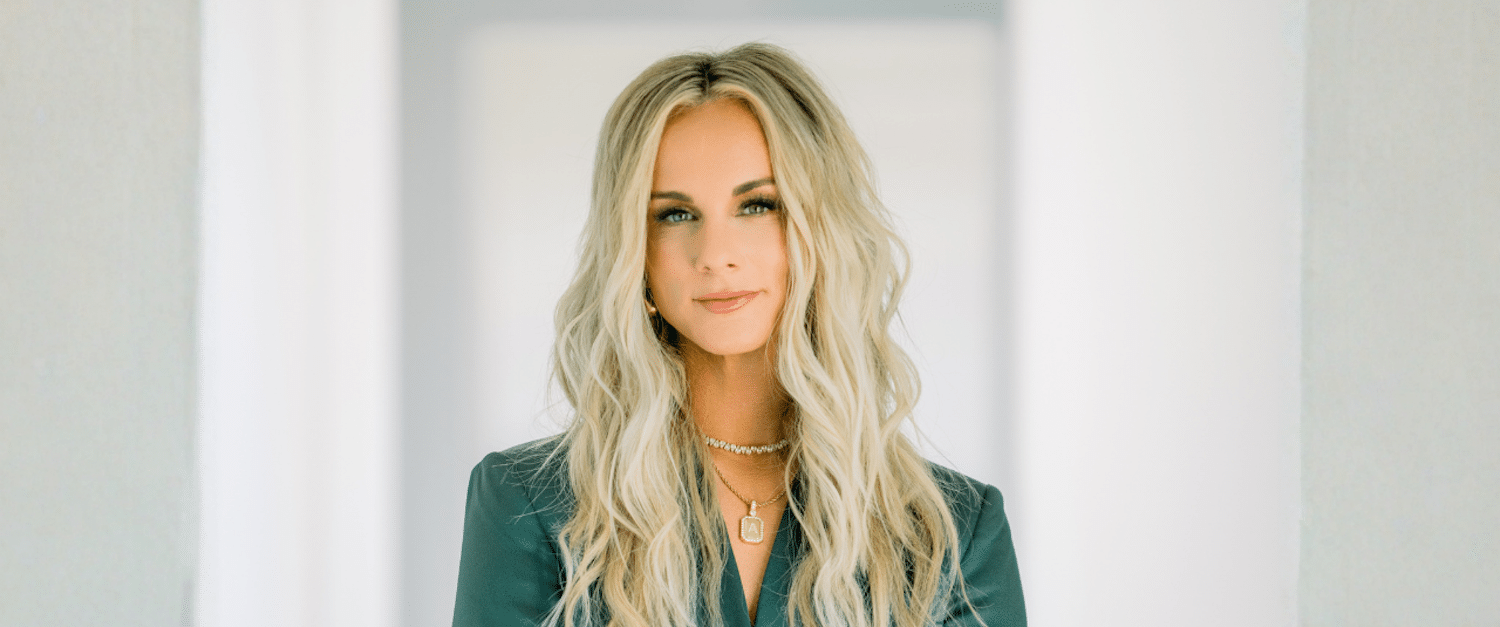


(Listen & Subscribe on Apple Podcasts, Stitcher, Spotify, iHeart or TuneIn)
What if the most valuable thing you’ll ever build isn’t a product, a property, or a portfolio, but your own name? In a world where AI can churn out endless content in seconds, the one thing it can’t replicate is you: your story, your perspective, and the trust people feel when they know who’s behind the work. And yet so many of us are still hiding the very thing that makes us valuable, held back by the quiet fear of what other people will think. We have the idea, we feel the pull, and then we wait, while someone else builds the brand that was meant to be ours.
In this episode, I sit down with Adley Kinsman, entrepreneur, content creator, and founder of Viralish, who makes the bold case that personal brands will be worth more than Bitcoin by 2030. Adley went from singing on The Voice to going through bankruptcy, and she shares how she turned that low point into a business built on her own creativity. We talk about why your personal brand is becoming one of the most valuable assets you can own, how to stand out when every feed starts to look the same, what makes content people actually stop for, and whether niching down is still the smart move. We also get into how to stop letting judgment make your decisions for you, how to earn trust from an audience that’s more skeptical than ever, and why being unapologetically yourself is your greatest advantage.
About Adley Kinsman
Adley Kinsman is an entrepreneur, content creator, and founder of Viralish, a creative media company focused on social media content and storytelling.
After appearing on The Voice and navigating major personal and financial setbacks, Adley built a career around creativity, entrepreneurship, and digital media.
Today, she’s known for her approach to creating attention-grabbing content, building personal brands, and helping people understand what makes audiences connect, engage, and share.
Through her work, Adley encourages entrepreneurs and creators to embrace their individuality, trust their ideas, and show up with greater confidence in an increasingly crowded digital world.
In this episode we chat about:
- How Adley went from The Voice to bankruptcy, and what saved her (2:23)
- The moment Adley decided to stop waiting and bet on herself (8:09)
- How Adley got started on social media with zero roadmap (11:31)
- The fear of being judged, and what it’s quietly costing you (14:32)
- Why the dream that won’t leave you alone isn’t random (17:42)
- The one thing AI will never be able to copy about you (21:12)
- Why you’re still waiting for permission nobody’s coming to give (23:24)
- What makes someone stop scrolling and actually pay attention (25:10)
- Is niching down growing your business, or keeping you small? (26:42)
- Why your personal brand will be worth more than Bitcoin by 2030 (32:28)
- Why audiences trust no one anymore, and how to earn it back (34:33)
- Where Adley’s best content ideas really come from (42:02)
- The one book Adley thinks every teenager should read before graduating (43:30)
- Plus so much more!
Episode resources:
- SHE Manifests (join here)
- Higher Self Visualisation Meditation (get the meditation)
- Best Day Brainwash (get the brainwash)
- Work with me (here)
- Shop all my meditations (here)
- Shop all my books (here)
- Adley Kinsman (Facebook)
- Adley Kinsman (Instagram)
- Adley Kinsman (YouTube)
- Viralish (website)
Prefer To Read?
The following transcript has been automatically generated and not checked for accuracy.
Melissa: [00:00:00] The Melissa Ambrosini Show. Welcome to the Melissa Ambrosini Show. I’m your host, Melissa,
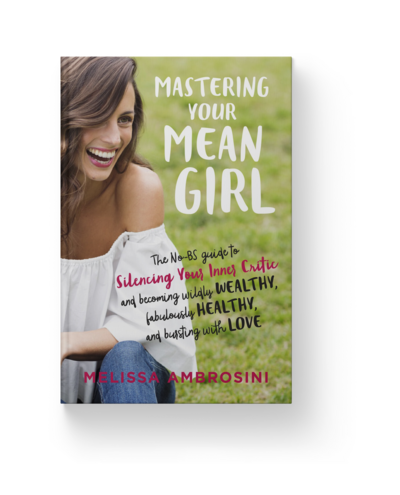
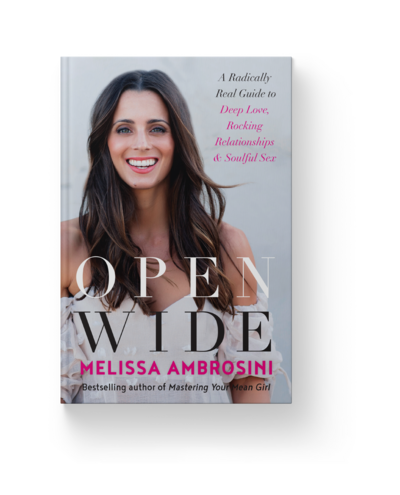
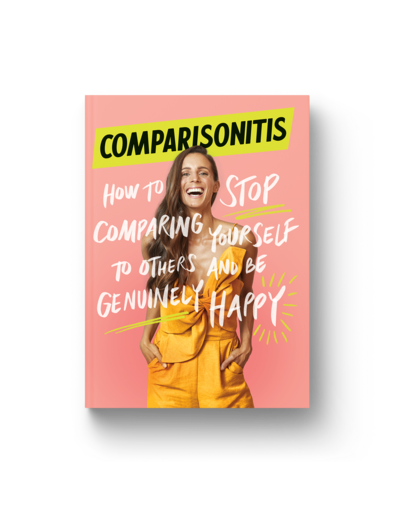
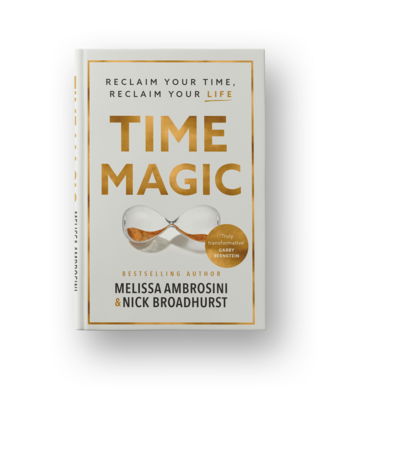
best-selling author of Mastering Your Mean Girl, Open Wide, Comparisonitis, and Time Magic.
And I’m here to remind you that love is sexy, healthy is liberating, and wealthy isn’t a dirty word. Each week,
I’ll be getting up close and personal with thought leaders from around the globe, as well as your weekly dose of motivation so that you can create epic change in your own life and become the best version of yourself possible.
Are you ready, beautiful? Hello, and welcome back to The Melissa Ambrosini Show. I’m so excited about this episode because I have the incredible Adley Kinsman with us. And for those of you who have never heard of her, she is one of the most viewed female producers and content creators in Facebook history, consistently averaging more than two billion views per [00:01:00] month, and she has over a million followers on Instagram.
She’s the CEO and founder of StoryHouse and Viralish, which is a creator collective in Nashville that helps brands and creators build their way into viral communities at scale. She’s designed campaigns for some of the world’s biggest brands, including Land Rover and TikTok, and she’s spoken on stages like AdWorld and Social Media Marketing World.
And in today’s conversation, we talk about what big brands and platforms know about attention that most creators don’t, how to package any message so it can’t be scrolled past, and why she believes personal brands will be more valuable than Bitcoin in 2030. We also get into the trust recession, why audiences are more skeptical than ever, and what actually makes someone unignorable in an AI world.
For everything that we mention in today’s episode, you can check out in the show notes, and that’s over at melissaambrosini.com/716. Now, without further ado, let’s bring on [00:02:00] the incredible Adley.
Adley, welcome to the show. I am so excited to have this conversation with you, not only because you’re brilliant at what you do, but I feel like we’re gonna have a lot of fun today.
Adley: I have no doubt. We’re here for a good time, girl. Let’s go.
Melissa: So before we dive in, can you take us back? Tell us your story. How did you get into this work?
There was two things that, when I was doing my research for you, two things I was really impressed with. Firstly, your age. You’re 35, and you are a gazillionaire. And then secondly, you were on The Voice. Like, take us back. How did you get here? Tell us your story.
Adley: I feel like I need to correct the record because I am 37.
So I don’t know what you read. I love them for that. But I am 37 now, but I was on The Voice, and this is a part of my story I’m not shy about, but [00:03:00] I get so hesitant to share it because I know people are gonna be like, “What?” And they’re gonna go look it up, and it’s mortifying, girl. It- it- Melissa, it is not flattering of me whatsoever.
I was fresh out of college, and it was a dare from my sorority sisters to go on this air quote, “karaoke show” ’cause it was season two. And so it hadn’t really taken off yet in season one. So long story short, I drive through the night chugging energy drinks for an 8:00 AM audition. I wasn’t taking it that seriously, but I was like, “I love Nashville.
Would love to go. Love music. How fun would this be?” ‘Cause I’ll do karaoke on Wednesday nights, you know, if I have a, you know, a beer. It- that would be just so funny. So I did it. In a nutshell, I end up on the dang show. I end up on Team Blake. My life is rapidly changed. In the interim of that, I sign a, another air quote, “record deal” that moved me to Nashville, helped take advantage of the opportunity and all of this, and it was a wild whirlwind.
And it was my fir- it’s how I got into entertainment as [00:04:00] a whole. But I mean, if we play that story, I was 22, 23.
Melissa: Yeah. And where were you living before Nashville?
Adley: Oklahoma. In Stillwater, Oklahoma. I grew up in Tulsa, but Stillwater is where our university was, so as soon as I graduated, moved to Nashville.
Melissa: Wow.
Oh my God, I love that. I love that story. And then how did that career wrap up?
Adley: There were a series of events. It was, you know, the- well, from… I’ll tell the real story. Okay. So there was um, I signed, that air quoted record deal that I had signed, I had signed away rights to my name for life, and I did not understand that in my 23-year-old brain at the time.
But pretty much if I were to ever commercially monetize my name or my being, like the way that this was written, as an entertainer, this guy r- really owned me. And I don’t know if he knew what he was doing either. I like to believe the best in people. I don’t know if it was meant to be as predatory as it was.
Long story short, I needed to file bankruptcy or fight it out. [00:05:00] This is right after The Voice, too, so I couldn’t use, keep in mind, the only leverage that I had, which was my name. And so I’m making fake names and fake resumes to try to work in, on Upwork or like Fiverr to make money any way that I could a- at this time, and I’m just, I’m devastated to be honest with you, because I thought I was gonna be on such this amazing high.
It ended up being such a low, and I, it ended up being such a critical pivot point in my life because I, I remember laying on the abs mat and praying, and this was the time before I knew I was gonna be on the show. And there’s a time like before you go on a reality show where you know that you’re gonna be on it and that your life has changed, but the world hasn’t found out yet.
The results haven’t been revealed, you know? And so I’m laying on the abs mat, and I remember as clear as day, and I’m praying and I’m like, “God, I think you got the wrong girl. Like I, you’re, you’re super smart, but I’m pretty confident you messed this one up.” Because I wanted to go work for a nonprofit at the time, struggling, that was helping people struggle- struggling with [00:06:00] addiction, se- depression, self-injury, and suicide, ’cause my dad was dealing with several of those things at the time.
And I wanted to be more empathetic. I didn’t understand his addiction, alcoholism at all. And it was just tearing our family apart, and so I wanted to educate myself on it. And so I was like, I wanted to go s- speak and encourage and inspire people learning, or who are struggling with this stuff. And here I am in Nashville with a record deal that I was super excited about at the time, and I’m gonna be on the number one show in America, which it was that season.
And I just heard His voice, like if you’ve ever been spoken to, like it is a cellular thing. Like you cannot explain it. I’m not even sure it’s English. But He said, “Ad,” the way I heard it, He called me Ad. And He said, “I just gave you a stage and a microphone, and a voice you didn’t know you had. What do you think you’re supposed to do with it?
Go speak. Go encourage. Go inspire people.” And it hit me like a ton of bricks, Melissa, and so I said, “Okay, heard, understood. Thank you so much. I will earn everything [00:07:00] else.” And I don’t know if you’ve ever made a promise with God before, but it’s a very dangerous thing to do because almost immediately it is obstacle, obstacle, obstacle.
As if He’s saying, “Do you really want this? Or did you just want this if you thought it was gonna be easy?” And so that was when I learned about the record deal that I had signed. We lost my dad to alcoholism. I can’t use the only leverage that I have, and I was in a terrible romantic relationship at the time, and I’m just like,, okay.
I already knew the outcome was that I was gonna win, right? I gaslit myself into believing that, or I thought it was just destiny, like God and I had made that deal. So even during that really devastating two-year period where it was really hard, I was just thinking like, man, this is gonna make one heck of a testimony someday.
Like, this is gonna be one heck of a book because I already know the outcome, that I will be in this game for a long time until, and I’ll do whatever it takes to figure out how to entertain people on my, on my own accord. And then the next eight years were the beginning of the journey that has led to now.
Melissa: Wow. Oh my gosh. Oh [00:08:00] my gosh. I’ve had a couple of moments where I have been spoken to like that, and I get it. I totally get it. So- Then you started your business. How did it unfold from there?
Adley: Yeah. So then I spend the next s- eight years in the music industry, seven, eight years in the music industry doing the starving artist thing.
I was r- songwriting every day, had an office down on Music Row, and was just freelancing, doing anything I could. But m- music is not… It’s an asset, but it’s a free one, you know? There’s not a lot of money in music. Even my friends who have several number ones, Melissa, they’re very broke or they’re just in debt, and they have to pay off everything back to the label before they get anything, and it’s just a, a pretty wicked business.
And so I’m starting to see the writing on the wall, but I’m touring. Four years later, I start touring with Blake Shelton, and I get to be the opening act on all these stadium shows. And I, s- I don’t, I just had a promoter who, like, really believed in me and I was like, [00:09:00] “This is great,” ’cause I don’t have a label, I don’t have a publisher, and I don’t have an agent or anything.
He just liked me and thought I was a talent and wanted to help me, and so he put me on all these shows. And I just was really, I was kinda seeing the writing on the wall. Like, I s- I, I don’t like where this is going. I don’t like waiting for permission to be successful from some suit behind a desk, you know?
I know I’m built to entertain, and I don’t like where this is gonna go. And even while I’m playing a stadium show, later that night, I’m like, “This, this is probably the best it’s ever gonna be for me in the music industry.” And I was always, this was the secret tell, I think. I was always way more interested in how to market the music than I was even making it.
I was like, “The art doesn’t mean anything.” What I’m passionate about, my miss- mission, message, product, or service doesn’t, quote, unquote, “mean anything” if nobody knows it exists, you know? No one is ever gonna hear these pack of songs. Like, I have hundreds of songs just sitting on my floor, you know, that no one’s ever gonna hear unless I learn how to get them out there, and so I started making videos.
I was terrible at it. I was stuck in, like, [00:10:00] 5,000 view jail at best for four years, and but I knew the power of it, right? We were starting to see the power of social media really unfold 2017, 2018, 2019, and even before that, but I was just catching on. And so I’m standing backstage at one of those shows, and Blake, my then boyfriend, now husband, just, like, is having the time of his life.
He’s like, “This is the best thing ever. Like, can you believe we get to hang out with Train, and Phillip Phillips, and Blake Shelton, and Lynyrd Skynyrd?” And he had just shook Lynyrd Skynyrd’s hand. He’s like, “This is the best thing ever.” And I was like I think I don’t wanna do this anymore. I think I wanna go all in on social media.
And he goes, “What? That makes no money.” And I was like, “Well, to be fair, neither does this.” So we… And so I said, “Give me one year, and I’m gonna figure this out, but I really gotta, I gotta get focused.” And so that was the last stadium show that I ever played, and went all in on videos, and just really s- set my mind to it, and it was a series of events of being really, really bad at it.
But again, [00:11:00] knowing the outcome was, I’m going to figure this out. I know it’s hard. I know I’m really bad at it right now, but I won’t be forever if I just don’t quit and I keep trying to figure it out. And then I got a mentor who helped me, and he was like, “Oh, you’re close, but you’re doing so much wrong at the same time.”
But there were small minor tweaks, and when I just got around him and he showed me, I mean, it was off to the races after that. In 2019, we just really started taking off, and then 2020 It was preparation meets opportunity when the world shut down
Melissa: Mm, I love that so much. And now you help others grow their platforms, share their message, their product, their offers.
Tell us a little bit more about specifically what you do with your business.
Adley: There’s three parts, right? So it started literally, Melissa, with me just pranking my husband, and we were just… And we were pranking each other. And we were doing, then in 2020, a billion views a month on just our pranky stuff, because everyone’s just on their phones all the time.
Well, then all my friends and family [00:12:00] are getting laid off, so we’re like, “Oh, my God. Well, these videos are crushing it.” Like, making more money than I knew was possible, because I was still bankrupt. You know? I was recovering from bankruptcy to, “Oh, my gosh, we made a million dollars our first year.”
Melissa: And what were you selling?
Adley: Nothing. We were getting paid from Facebook and for views. Just views. Facebook and Snapchat, not even YouTube. And so don’t let the plaques fool you. It’s our weakest platform. They’re just the only ones who give trophies, you know? So we just started cranking on Facebook and making as many videos as we could.
Then we… I was getting all these crazy ideas for, like, what will make people wanna watch. People love cops and cop chase videos, so we bought a cop car, and then we bought cop outfits, and we would stage and re-enact famous cop scenes. Karens on airplanes. We would get airplane sets, and we would just… We would…
Amazon delivery drivers giving birth in the driveway caught on Ring cameras. Like, we were making the wildest stuff, and people were not used to seeing staged things on social [00:13:00] media. They are used to reality TV or WWE, and they know it’s fake, and they know it’s scripted, and it’s fine. It’s just for entertainment.
But we adopted that mindset for social media, and so it was working very, very, very well. And even if people figured out that it was fake, well, then they were very mad, but it was just that paradigm shift. Now people are used to it. We were just very early to it, and people have a lot of feelings about change, you know?
Melissa: There was one I watched yesterday of Blake on the toilet and you walking in. I was crying with laughter. Crying. It’s
Adley: so good. It was… That was so fun. We just have so much fun, and it’s this childlike joy to just be able to have silly ideas and not… I’ve gotten over what people will think about it, and that’s really what that season did, is it gets the green out of you real quick, and it gets the people pleaser out of you.
And I realized if you really wanna build something great, you cannot be a people pleaser and do this job. You can’t. One of my [00:14:00] favorite quotes is, “If you wanna lead the orchestra, you must turn your back on the crowd.” And that anytime I’m feeling the resistance of like, what are people gonna think, and I’m okay with it, I’m proud of it, and I’m just worried about their optics, then that’s usually a pretty good signal that I need to do the thing.
Melissa: Mm-hmm. This is something that we hear a lot. I hear it a lot from my students, my clients. I hear it from friends. I hear it from people in the industry. They really care what other people think to the point where they won’t post the thing, they won’t launch the thing, they won’t say the thing. So any other advice you have for anyone who’s listening to this that is having those internal thoughts right now?
Adley: Oh, which fear is greater? Which fear are you gonna let win, you know? I’d be curious to hear what you teach your students, too, to get over that. ‘Cause people in my world, that’s half of what we do at Viralist, is coaching people through their own limiting beliefs. Content and views are just a symptom of what’s happening inside of you, in your own courageous [00:15:00] journey to c- being more courageous, in your own journey to bravery, you know, and being able to try new things and fail and fail and fail for we don’t know how long it’ll take, you know?
We like to say everybody has at least 100 bad videos in them. They just gotta get them out. That’s the rite of passage to play, and most people can’t tolerate that. You know, it’s not that we’re, as entrepreneurs, afraid of failing, I don’t think. We’re used to that, like, the micro failures along the way and things not working.
I think we’re… I think that it is the greater fear of being seen failing. That’s what we don’t want, is being seen failing. And so that’ll hold a lot of people back. But look at anybody that you admire, a- and anybody that you look up to, they got over it. And so if you want the level of success that you say that you want, you’re gonna have to get over it, too.
Melissa: Mm. Amen. Amen. I’ve interviewed some of the best people on this earth, I feel like, some of the most inspiring, incredible humans, and what I have heard [00:16:00] repeatedly from all of them is that fear doesn’t ever go away. That fear is there. The fear is there before they step out on stage. The fear is there before they post the thing or launch the thing or whatever it is, but they move in spite of it.
They move anyway. You know what I mean? It’s like, it’s there. It’s, “Hello. It- you’re there, but I’m not gonna let you win. I’m gonna move forward anyway.” And like you said, if you’re proud of it, if, if you are excited about it, like, that’s all that matters.
Adley: Amen. That is all that matters, and that is a gift. Like, God…
People are gonna laugh at you. God didn’t give them your vision. He gave it to you, so why do you expect them to understand it, you know? You can’t, not even the people closest to you. And that’s typically, I feel like, what holds us back, is it’s not Susie Q from high school. It’s my husband, my wife isn’t gonna understand, ’cause…
And you do feel like [00:17:00] you need to explain it to the person closest to you. And that’s why, you know, it, it really matters who you marry, because we’re never gonna be able to see their vision fully, but we just have to trust that they’re walking in- Whatever is in alignment for them, even when we’re like, “This sounds crazy, but okay, I trust you.”
But you just have to remember, God gave you that specific vision for a reason. And so y- you are gonna be capable enough to hold it, but it’s gonna require work. It’s gonna require growth, and I think everything that you want in life is on the other side of cringe mountain. It’s necessary.
Melissa: Mm. I love that.
Adley: It is the development required to hold the size of the blessing that you’re asking for.
Melissa: Yes, yes, yes, and I love that it’s on the other side of cringe mountain. And I truly believe that God, the Creator, whatever you believe in, put those dreams, those goals, those desires on your heart for a reason. They didn’t give them to someone else.
They gave it to you, and it’s our [00:18:00] duty to realize them, to express them.
Adley: Yeah, it’s the parable of the talents. Like, if there’s anything that actually keeps me up at night, outside of, like, nuances of the business and stuff, it is, like, the parable of the talents. It’s a Bible story if you’re unfamiliar, but the t- uh, gifts are given to th- three different…
I think they’re brothers. I should learn this story before I tell it on podcasts better. But the point is, like, if you just bury it, it is going to get given to somebody else. And whether you believe it’s given to somebody else or not, but it, that doesn’t necessarily matter. I’m scared of burying the gifts that I’ve been given.
I recognize my privilege. I recognize the leg up that I had. I recognize when luck came into my life. I recognize the preparation meets the opportunity. I’m not negating the preparation and my hustle, and God knows I’ve hustled and had to be really creative and really scrappy. But it’s because I’ve been so focused on the mission and the outcome, and that is I have been given a leg up.
I really feel that. I really feel like the luckiest woman on the planet, [00:19:00] Melissa. And so I’m just gonna, like, F around and watch Netflix with my time, you know? I, I can’t. Like, I want… I really struggle. What I’m working through right now is stillness And it’s the difference between being content and being satisfied, I think.
I think I can be content, but never satisfied. And so I struggle with stillness and just absolutely being present because there’s so much I wanna do in this one big beautiful life. And I’m willing to do all the things in the business day-to-day that I hate, that I don’t love doing because that’s the price that I pay f- to get to do the things that I love, like talking to amazing people like yourself, you know?
And so I think it comes back to what your question originally was, was what do we say to people who are really struggling with being stuck in the fear, and whether that’s fear of doing the work or, oh my gosh, this is unglorious. That is what it takes. And for me, the fear of burying my talents and not sliding into heaven or, like, ending this life being like, “Man, I really lived all out.[00:20:00]
I really gave it my all, and I’m really proud of that.” And I… It’s, for me, it’s the impact of what our business does. Like, it’s not, sure, go viral. Sure, I can help you do that, and I love and find a lot of joy in it, but I love watching who people become in the process. That is the biggest gift back to me, and I’m sure you understand and resonate with that, too.
Like, that’s what I love doing more than anything in the world. And we’re all so privileged. Anybody listening to this is so privileged t- and to be even now able to listen to this. When we grew up… Sorry, we’re h- You hit a hot button, apparently, but I just love this subject so much. Like, when before we had podcasts, what did we have?
And I was from a smaller town. We had just the people around us that showed us what was possible, you know? That was representation. It’s like anything that you could see around you or see in movies, you know? We- But now we have podcasts, now we have the internet. Now we have all these role models from afar.
People are listening to this podcast from all over the world and being mentored by you from afar. [00:21:00] What a privilege. What a gift. You’re, they’re not gonna have to figure it all out the hard way because they have a mentor like you in their life. We’re just so lucky, and I don’t wanna waste a second of it.
Melissa: Hmm. Amen. I agree. I agree. I agree. So how can we, or how do you teach your clients to stand out and be unignorable, as you say, in this very AI same, same world?
Adley: Oh, you know, I- what I see a lot of people doing wrong is looking at exactly what somebody else is doing and then copying it verbatim and, and expecting it to work.
Not that you can’t copy a trend. There’s a difference in, like, doing a funny bit and, and replicating that. That’s fine. But y- what is unique about you, everything that is unique about you, what is your effortless ease, your magnetism, the unique thing that God put in you, that has to show up in your content.
Melissa: But what if you don’t know? [00:22:00]
Adley: You get your reps in, and you figure it out. You’ve… It is this weird Venn diagram of what the market values, like what people wanna pay attention to, and then what you are really passionate about, your expertise, and then the way in which you’re gonna do it different than somebody else.
Like, there’s other coaches who are similar to you, but you have a very different font and flavor and reason why somebody’s gonna wanna be in Melissa’s world rather than somebody else. That’s what people gotta figure out for themselves. Their business doesn’t even have to be that unique. They’re gonna vibe with you for some reason, then they’re gonna vibe with somebody else.
And so it is your job to believe that that’s in you, and then we help people see what that is and how to package it and so people will care. And so I don’t care if it’s the most boring business on the internet. We can package it in a way that can get it very, very viral, and that’s all that is, Melissa, is us just being in this game long enough to understand the internet and social media and social psychology very [00:23:00] well, and then have a few tricks that we can pull, and so we can see your blind spots.
Because not all of us can see what is amazing about us. But if everybody in their life can see what’s amazing about them, you know? And so we all have blind spots, and we just need people to say, “Oh, why don’t you try it like this? I see greatness in you in this way, so what if you’d make the video like this?”
Is what it boils down to in our world.
Melissa: Yes. And it’s almost like- Some people have had so much going on in their life. They’ve, they’ve had traumas, they’ve had, you know, different things happen to them, and often they just need that permission. They just need that permission from someone else to say, “This is it,” or, “You’re on the right track.”
And ultimately, we would give ourselves that permission, and we don’t need someone else to, but some people do need that.
Adley: Uh, yeah. And isn’t it shocking how often that it is just confirmation virus- bias? That they, they do know, but they’re just looking for the [00:24:00] permission. And it might be a little… It might be a big or a little light bulb that we’re able to give somebody that makes it, like, click, but most pe- most of the time people know what they need to do.
They just don’t wanna do it, and they kinda need the accountability system around them. But all of social media is just, is just packaging. It’s just packaging to… You know, if 80 billion views organically has taught us anything, it is that there is a difference between what people say they wanna watch and what they actually will pay attention to on social media.
We can say that we want this, like, heavily… Like, our feeds are so curated, and I only go on for research, but when that cat video comes across your feed, you’re gonna watch it. And I am, too. Because we’re on social media for little dopamine hits. That’s what it is. It’s a distraction. It’s a doom scroll most of the time when you just click in out of habit.
And so we have to understand the intent of why people are opening that app, and we have to meet them there and then create and package our content in such a way that it compels people to watch something they wouldn’t normally watch. And oftentimes that is, it [00:25:00] is emotion that we are able to cause in the viewer that stems from our story.
And it can stem from the trauma. The best content honestly typically does
Melissa: Mm, mm. So how else can we get their attention? Is that, like, the best, the best thing we can do?
Adley: Oh, gosh. I mean, there’s a million different frameworks I can throw at you right now, but really, the, the biggest thing as, as far as getting their attention, it all- It’s so cliche at this point, but it really is how, how you’re gonna stop the scroll.
Because we could go into framework after framework and teach you thing after thing, but none of it matters if they’re not watching. Most people think they have a views problem. What they actually have is a retention problem. And so if we can solve the retention problem, the stickiness of the orchestration of that video, we solve the views problem by default.
It’s just the symptom of a greater disease. And so most people are honestly thinking so small. They’re trying to be contextually relevant and talk to us about, like, [00:26:00] why, how to fix arthritis in their knee before s- so they don’t have to get surgery, and that’s not what we got onto TikTok to look for. But if we can help them design it in a s- in a different way, oh my gosh, I just binge-watched hamstring repair videos.
You know? Like, how does that happen? And it’s just all, it’s just all packaging. So it’s d- it’s what we call, I’m happy to give this to your people, too, but it’s called our billion view formula, and it’s a checklist that we go through. Nearly every single video that we’ve designed for the last six years has been designed with it, and it is our surest way to get millions of views consistently and predictably.
Melissa: Yeah, I would love to share that with the audience. That would be amazing. Thank you so much. Do you hear from women, and men, that they think their content is too boring or too niche to stand out? Like, how do you package something so it can’t be scrolled past, and how do we combat the But I don’t, I’m [00:27:00] boring, or I’m too niche, or I’m not niche enough.
How do you combat those objections?
Adley: You know what I think was the worst advice to circulate the internet in the last two years was everybody niche down. Niche down.
Melissa: Well, can I just tell you something? This has caused me so much pain. Okay, so much pain. Because I started in this industry in 2011. I spoke about everything that I loved.
I spoke about business. I spoke about health and wellness. I spoke about conscious relationships. I spoke about everything that I loved, and my business blew up. Like, it just skyrocketed. I wrote five books, podcast hit 30 million downloads, like, did a TEDx talk, all these things. And then a couple of years ago, I had this, like, brainwashing, niche down, niche down, niche down.
And so I did. I went very, like, [00:28:00] business-focused, and I loved helping women grow their business, but I got bored myself. Like, I didn’t enjoy the content I was creating, and it, like, I’m like, “Where’s my essence gone?” And I’ve never spoken about this ever, like, ever spoken publicly about this. But for me, that niche down really, like, caused me a lot of stress, a lot of pain, and made my business feel boring.
Adley: Niching down is a death sentence. It just is. I am so happy to hear you say that. And, Al, the amount of people who are like, “Oh, I need to niche down or I’m not gonna monetize,” is a crock of crap. It’s just not, for all of the reasons that you just named. You know? We are multi-hyphenate people. I’ll give you an example.
So there’s a guy, @snotdocnc, and he [00:29:00] is like a snot doctor, you know? What is he… You think he has over a quarter million followers talking about snot? Absolutely not. He’s not talking about deviated septums and, like, the intricacies of his work and how they’re caused, because it would be boring, because nobody would care.
Instead, he is doing what his effortless ease is, his magnetism. His faith is very important to him, so he starts every video in his scrubs with his little light helmet on in the OR with nurses walking around, and he says, “Good morning. Let’s pray.” And then he just starts, like, preaching at you and, and blessing his hands and, and praying over the table and all of this.
Some of the nurses stop and pray. Some of them don’t. But it’s just interesting. What a pattern interrupt. Whether you’re a person of faith or not, we- Well, you’re just like, “Oh, man, I’m gonna stop and pray right now.” Or you’re just like, “This is cool. Now I know who he is.” If he had just been s- talking about deviated septums, nobody would know who he is.
Now, he went culturally relevant, [00:30:00] and if you go culturally relevant, if that is what you were aiming for, you become contextually relevant by default. Now I know who he is. I’ve sent three of my friends who could use his services. I’m like, “Look at this guy You know? Because he went wider, because he talked about the other things in his life that he was passionate about.
You don’t know the ways in which your top of funnel God is gonna use to attract people to you. But nobody can buy from you if they don’t know you exist, and chances are the nitty-gritty of your expertise and your niche is not what people wanna hear about. They wanna hear about why you care about it, what happened to you to get you interested in this.
There’s a woman in our community who was a milk carton kid, and now she’s out here serving women. She was a milk carton kid, sex-trafficked by her own mom, and, like, started just talking about, like, the nitty-gritty of her business. Is that the best story? Absolutely not. I’m like, “I don’t wanna say her name, but if you’re open to talking about this…”
And she goes, “I am. I certainly am. I wanna use it to [00:31:00] help people.” I’m like, “Then that’s the angle.” You know? That is the angle. It is… We are in a storytelling world. We, we will remember stories. We’re not gonna remember the tactics that you teach us. We will remember how you made us feel and the vibes that we felt around you and the stories that you told.
Those are the sticky parts. So we really just help people find the stories that made them who they are or that are in the process of helping them become who they wanna be. That’s why you see people resonating so much with my new friend Jessie Gene. We spent the weekend together in Chicago, and she documented her process of not knowing what she was doing, figuring it out, and that mirror in her success in it, people are so genuinely happy for her, one, because she’s dope and she’s so cool and deserves every ounce of it.
Two, p- it makes it feel like it’s I’m able to do that, too. If I can watch somebody go from nothing online to $7 million in six months, that’s pretty crazy, you know? And she documented the whole thing. Storytelling. So you don’t have to have… You don’t have to [00:32:00] be a milk carton kid. You could be just figuring it out and documenting that process and do it, too.
The key is finding a, a different way to do it than everybody else, and that’s really where Viralist stands in the gap, in the gap that we noticed, and we help people do that.
Melissa: Mm. Yes, yes, yes. Yeah, and I feel like you’re a brilliant storyteller. Well, you make me fricking lean in and laugh so hard, so you’re doing something right, that’s for sure.
And I’ve heard you say that personal brands will be more valuable than Bitcoin by 2030. Why do you believe it’s one of the last true moats in business?
Adley: Well, if you look at the numbers today, it might already be more valuable than Bitcoin. But it’s, I feel like it’s, it’s, it’s undeniable, ’cause if, if say I’m…
Let me put it this way. A mentor once told me when I was trying to niche down and while I was trying to build my personal brand, and I thought it was gonna be all about country music, you know? [00:33:00] And he said, “Do not murder your career like that.” He goes, “Go wide. Cast the widest net possible that your core avatar is still inside and will be captured inside of.
Go as wide as you can, and then you can niche down, and you can do whatever you want.” I could go promote Bitcoin right now. I could launch a community to, to get… I could promote stocks. We could do whatever we wanna do if we have a personal brand. Look at Taylor Swift. She could sell a fart if she wanted to, and people would buy it.
She could do, she could go sell beach towels. She could do anything because she’s built a personal brand, you know? And you don’t even have to be at that level. But I am pretty certain whatever offer you’re selling right now, whatever your business is right now, whatever your life looks like right now, is not gonna be the same thing you’re doing in three years from now.
So put more stock in you and your personal brand than you do your business, and then people will come with you for years and years and years to come, and they’ll enjoy watching your pivots. They won’t call it a failure if you lean in on the personal brand. [00:34:00]
Melissa: Mm, love it, love it, love it. Such great advice.
My husband, Nick, he calls those, what, what you’re referring to as Taylor Swift selling farts, he calls them unicorn farts. He’s like, “Tony Robbins can sell unicorn farts. Like, Taylor Swift can sell unicorn farts.” He’s like, “That’s the power of building your personal brand.” So I love that so much. It’s so important, and I bang on and on and on about this as well, because it is such an asset.
It is such a huge asset, especially in this trust recession. Like, why are audiences more skeptical than ever, and what does real proof look like now?
Adley: Real proof of- Authenticity, proof of life, like human life. Like how do I know if this… I had a kid make me an avatar out of me. I’ve had several people make, like try to make my clone, and I don’t…
Something about my nose, Melissa, we can’t get it. But they just can’t make like none of them [00:35:00] look like me. But the closest we’ve come was one I saw yesterday, and I was like, “Did I make that video at Nobu?” I did not, but I was like, “That is so good.” And I do think most of us, as, you know, founders or anybody who’s building a personal brand, I would not, unless you were an AI clone influencer creator and you’re teaching people how to do that, I would not for many, many reasons make AI content on your main profile for the very reason that you’re describing, for the trust.
You can make secondary, and we are secondary, tertiary, multi-channel strategies using AI. But i- in a world where you are really very soon not going to be able to tell the difference, I wouldn’t put it on your main page. The exciting part, though, is things that would take you hours and hours and hours and hours and hours to do, like shoot 100 ads, but now the algorithm kind of requires that level of output if you’re a company, a business who’s running ads.
I… You can use AI to create [00:36:00] side angles. Like we could go create a side angle of this podcast and our video right now. We could create a top-down angle and just create multiple variations based off the original source. But here’s my question, and we should talk about this. Is it within integrity if I clone a video of somebody filming something in the backyard, and I can now take that person’s body, his body, and I’m like, “I’m inspired by that video.”
I can now put my body on his body, and I now made that same video. We can clone any video and just swap our avatar in it. Now, I don’t believe in one-to-one replicas of making other people’s videos anyway. I think you could switch it. But if we all have AI clones of ourself, are we saying it’s only within integrity if I go take my time away from my kids or my business and I say, “No, I have to go physically with my body right now, sit in the backyard, set up a camera tripod, make sure the lighting’s perfect in order to get that shot”?
And why? Is that the only way that I’ll be credible is if I [00:37:00] take the hour to go film the video myself? Or can I, can I clone it? I don’t know the answer. I think ultimately it kind of boils down to The relationship you have with your audience. Now, I’m n- never gonna use, and I don’t think anybody listening to this would ever use AI to promote something that they don’t believe in or step out of integrity with what they do believe in.
But if we’re eventually using AI to make t- 100 variations of ads so they fatigue less easy in the Meta and drama algorithm as it is currently, I don’t have an issue with that. I think you’ve just saved a lot of time. But where we’re getting into moral issues is what I mentioned earlier, where I’m like, “Oh, you could just take your body and put it on somebody else’s content.”
And it’s, you could do it on the most viral videos in the world, now it’s you doing them, and it will look so real. It is technically, on paper, new IP. [00:38:00] But did you just steal that artist’s stuff? Well, what if it was AI already? What if you just did that on an AI video? And who was the originator anyway? Like, that’s what Mosseri and Zuck and everybody’s kind of trying to combat in the creator industry right now is like, oh man, what, what’s permissible?
Where is the line? How do we protect true IP? But right now it truly feels like the Wild West.
Melissa: Mm. Yes, absolutely. Absolutely. That, it’s so fascinating. Two nights ago, I started watching the new season of the Kardashians, and the first intro is them all as AI. And it starts with Kris Jenner sitting on a beach chair and, like, it is wild.
It is wild. But I knew straight away, I was like, “That’s AI.” And Nick’s like, “Is it?” And I, I said… And then we kept watching a little bit more and I was like, “Babe, it’s AI.” And then they reveal that it’s AI and they make a big funny joke about it. But it’s so [00:39:00] wild, babe. Like, I’m like, they’re walking around their houses.
Like, it’s crazy
Adley: I think we wanna know. I think as we’re having this conversation, Mike, I think I wanna know if that’s really them. And e- even if they’re doing something dumb, silly, sitting on a beach, like, or sitting in their house, I wanna know if that’s really them, really their life, or if it is AI.
‘Cause I could be entertained if something’s AI, sure. You just kinda wanna know. It reminds me of our early viral video days. People were upset when they felt duped, when they thought it was real and it wasn’t. It felt like an attack on the ego, and they took it as a personal slap in the face that we… that the scripted Karen on an airplane video wasn’t real, you know?
And that was such an interesting observation. And so for me, the three years that we spent making these videos, it was, it was a giant experiment in marketing and what people actually wanna watch, and they did not care that it was scripted, or that it was too long, or that it was [00:40:00] outrageous. They w- actually really wanted to watch that stuff.
They wanted… They preferred to watch it, but they wanted to say that they didn’t, that it was not okay, that they didn’t stand for it. But those same people would watch those videos over, and over, and over again, and I’m like, “Wow, what people are saying does not line up with their, with their behavior.” And so we kept pressing the limits to see what people would do, and then I would put out a really mission-minded, heart-led thing that I actually really care about more than anything, and nobody cared.
Nobody wanted to watch it. So now I was like, “Wow, what a lesson in packaging and market- marketing.” There’s a difference in what people say they wanna watch and what they will actually pay attention to. So now, if I want my message about my nonprofit, or the cure for some disease, or anything to get out there, we have to package it in the language that actually gets people’s attention.
And you look at tabloids do the same thing. You look at a- any- anything clickbait-y. So am I b- promoting the rottification of our minds? Absolutely not. I… All I’m simply trying to do in this [00:41:00] conversation is say we have to look at ourselves and our own behavior before we crucify what we’re actually doing.
Do those headlines grab you? Do they stop you? Well, then you can’t blame those conglomerates for continuing to use that. Look at… I mean, there are billions and billions of dollars, corporate dollars, being pumped into what is the new age of advertising, which is entertainment, and they’re doing it in your short-form feeds.
Look at the Chicago Cubs, who just came out with a rom-com. You think they’re not doing that as a giant advertisement so you’re thinking about Chicago Cubs the whole time? They’re blending in and creating entertainment because if you entertain people, you can earn the right to educate them on whatever you want.
But we want entertainment. We want the Kardashians. We want the drama. We’re drawn to it. And so you’re gonna have these corporations continuing to exploit that sensibility we have inside of us, you know, and that desire we have. And so we can say we hate it and it’s wrong all we want, but we are choosing to pay attention to it, and ultimately, we are enabling it through our [00:42:00] own behavior
Melissa: Yeah, absolutely.
How do you come up with your content?
Adley: Does ADHD count? I think it, it- there’s two parts, and, and to be super honest here, sometimes I’m super uninspired, and I will just batch content, and I’ll just go through the motions, kinda like you described your business earlier, like that it got to a point where you’re kinda bored with it.
I’ve been in a period lately where I was kinda bored with my content. You know, uninspired by it, and so I try to say, “Okay, what is that? Where am I not living in that wilderness that is super inspiring for me?” And so anytime I get bored, I’m like, “Ah, that’s a signal. I’m not loving what I’m doing. I’m uninspired.”
And then for me, somebody said this once. When you get in a funk with social media, we’re usually thinking about ourselves, and the more we think about ourselves, we spiral out, and then we start to overthink it, and now we’re paralyzed, and now we have a lot of weight on that next post as if anybody has been paying attention.
They’re not. But, but we… Who said this? I don’t remember, but they said, “When I started to think of [00:43:00] it as social media, I realized that that’s very self-centered, and I turn it into service media.” And it is service media. If I can just make a video, and it’s, it’s for somebody else, to help somebody else, he goes, “I show up very, very differently,” and that resonates in such a different way.
It’s that law of, like, resonance first. You have to believe it. You have to really be convinced that this is service media. I really do wanna help somebody. Then you resonate. Then you attract the newness to you.
Melissa: Mm-hmm, absolutely. I’d love to shift gears now and go a little bit more personal. What… If you had one book, and you could put one book in the school curriculum of every high school around the world, what book would you choose?
It can be on any topic. It’s for boys and girls, 16, 17-year-olds. What book would you choose?
Adley: You’re gonna ask me a life-defining question- Yeah … on the spot? Yeah. I’m not prepared for this, [00:44:00] Melissa. You know what I feel, there’s, I feel like a t- two sides of my heart right now. One is what I feel most qualified to speak on, which is kind of what we were just discussing about the attention economy, and I just have stacks and stacks and stacks of data that is so interesting to me about how to get anyone to watch anything.
And so part of me wants to, yeah, make a book about that, how to get anyone to watch anything. And then the other part of me wants to write a book about chickens because, because, stay with me. When I was in that imposter syndrome phase and I was making all these videos that were just flopping for four years, I was stuck in that 5,000 view jail.
It was when I was trying to copy what everybody else was doing. I was trying to get the muscle memory and figure out what worked, how to do this thing. How do you make videos? So I was looking at Vine, at all these creators and what they were doing that was working so I could learn, and everything was flopping, and it just reeked of inauthenticity be- because it was inauthentic.
And then [00:45:00] I had to turn a social media video in for a client that I had at the time, and I was just completely failing them ’cause I didn’t know what I was doing. But I, I went to plug in my SD card at, like, 11:00 at night and all the footage was corrupt. All that footage was gone, and I just started sobbing.
I had to have something turned in by 6:00 AM, and I had nothing, and I couldn’t… I had no ideas. I had nothing to do. I didn’t know what I was gonna do. And so my boyfriend at the time came in the room, and we were very country, and he goes, “Well, Ad, why don’t you just go get them chickens in the backyard and do something with them?
They make you happy.” And I was like, “I have no better idea. So, okay.” And I went in the backyard and I got Oprah Henfrey and Ellen DeHeneres, Chikira Chikira, they look alike, and Bruce Henner, thought it was a hen, turned out to be a rooster. And so I got all my chickens and Chick Norris, and I put them all in the bathtub, and I’m curling Bruce Henner’s hair, and I just improv’d this funny bit with my chickens and my boyfriend.
[00:46:00] And I turn it in at 6:00 AM the next day, and he goes, “What the heck is this?” And I was like, “I’m sorry. Here’s what happened. All my footage was corrupt.” And I thought it was kind of funny though, you know? I did. And so I posted it on my personal Facebook page, and that video did- 19 million views overnight and grew me 102,000 followers in 24 hours.
Melissa: And what were you talking about? Just talking about the chickens?
Adley: Nothing. I improved a funny skit with my chickens that I just thought was funny. That was it. And Melissa, I hate that my back had to be against the wall for me to just be my damn self, and when I was, that is when it worked. When it was, that is when it worked.
That was what it took. That was my effortless ease, was being silly with my chickens in a bathtub, and that was what resonated. That quirky thing about me is what caught fire, and I just [00:47:00] leaned in and started making videos of my chickens, and that is what put me on the path. And those were all my first early viral videos, is me with chickens And so deeper than how to, you know, the more clinical side of the psychology of how to get anyone to watch anything, the other half of me would want to write a book about that.
Melissa: I love it. What if you don’t want to be funny? Like, what if you’re like, “I don’t want to be funny. That’s not my vibe.”
Adley: Perfect. You know what? I will never try to make you funny. That is the biggest objection in Viralish that I have to overcome, is because I’m silly. People look at me and it’s, “Oh, well she must coach silly.”
Melissa, 99% of the people in Viralish are boring as cardboard, okay? It is not about being silly at all. That is authentic to me. We have to find what it is for you. You do not have to be silly, but you do have to be interesting. So our job is to get to know you and find an interesting way to tell your story about your business, and you could be a chiropractor, you could be…
You [00:48:00] could do home restoration and remodeling. We’ve done it all. The, I can confidently say over 100 different niches now. We have never found a niche that we could not make go viral. There was a guy who does Excel spreadsheet hacks, and he didn’t speak English. You couldn’t hardly understand what he was saying, and we were like, “Well, this is gonna be a tough one.”
And our head coach, Mel, she was brilliant. She goes, T- Taylor Swift had just come out with her new album, and he was teaching how to reorder things in Excel, I think. And so she said, “Okay, I want you to do text hook, text on screen saying like what the order that Taylor Swift’s album should have been in, and that Taylor Swift got it wrong.
And then, like that hook is gonna draw all these people in. Why is this guy from this culture that probably doesn’t care about Taylor Swift at all, he has very strong opinions about her track listing, which everyone was raving about how brilliant it was. And he said, “No, no, it’s wrong, and here’s actually what the order should have been.”
And he used his little Excel hack and showed us how [00:49:00] to do it to reorder the track listing, and it blew up. So what is the packaging around the tactics? Everyone wants to be a talking head expert saying, “Here’s three tips to blah, blah, blah.” We don’t care. Can you show, not tell, just like show a way to describe it in a way and demonstrate the expertise to us?
That will work every single time. But me, I have blind spots in how to do that for myself, so I have a creative director. You have blind spots. Tony Robin has a… Tony Robbins has a therapist. LeBron James has a coach. They’re the best in the world, but we all have blind spots. And so someone who’s really tenured in knowing how to story tell and find unique hooks to help you do your thing, that’s, that’s it.
That’s exactly why Viralish exists, because we’ve got 10 years of just doing it. That is the craft, you know? We don’t expect anybody, not even me, not even my coaches, to be able to do it for themselves. You can’t read the label from inside the bottle. It’s impossible. [00:50:00]
Melissa: This is why I’m such a big fan of coaches and mentors and, and, and having them in all the different areas of your life.
Like, I have a parenting coach. I have someone that I trust, like, that I go to when I, I need advice around how to combat a particular thing with my children. You know? There’s health coaches, there’s business coaches, there’s social media coaches, there’s relationship coaches, like, every area of your life, and I’m such a huge fan, and I have, like, banged on and on about this for so many years because, like you said, you often can’t see your blind spot.
And we’ve got all this layered trauma and mindset garbage that we need to kind of s- weed through most of the time to go, “Where’s my true essence? Where’s me underneath all of these limiting beliefs?” So I am such a big fan of coaches and support and, yeah, I, I just cannot scream it from the rooftops enough.
Adley: Amen. You couldn’t- yeah, I couldn’t say it any more or any [00:51:00] better. It is the eas- every quantum leap I’ve had in my life was because I had a coach or a mentor to say, “Oh, just do it like this Shocking. Well, you know, because we can’t even see what our blind spots are, otherwise they wouldn’t be blind, you know?
Like, we can’t… We don’t know the, we don’t know the difference between what is truth and what is not truth when, within our own stories because of our trauma, and the trauma we don’t even know that we have maybe, the patterns. I recently went to onsite, which is more of, like, an intensive therapy thing. It was a gift from a friend, and I was like, “Oh, man, she thinks I need onsite.”
And she goes, “No, you deserve this experience, to bring the unconscious conscious.” And me and my husband both went as, as individuals, but oh my gosh, what it’s done for just, like, the wool to be pulled off. I’m like, “Oh, man, that’s why I do that. That’s why I am the way that I am. That’s why this matters to me.
That’s why this upsets me,” things that were completely unconscious to me. And so I think it’s the greatest gift that you can give yourself to do that work and listen to podcasts like yours and put yourself [00:52:00] in a position to win. You can compress years and years of pain into m- months of solutions.
Melissa: Mm-hmm.
And it’s a forever thing, and this is what I say to my clients and my students all the time is, like, you don’t just go to Tony Robbins for three days and then you’re healed. Like, it is a forever thing. It is… We’re, we’re always gonna be doing the inner work. We’re always going to be needing the coaches and the mentors, and we go through waves, but it’s a forever and ever thing.
Adley: Yeah. It’s a forever and ever thing. I like that. I, I agree ’cause I… Like, yeah. So many people are like, “Oh, I did that,” or, “Oh, I go to therapy.” And then I realize that, like, once you start pulling on that string, I’m like, oh, my gosh, it’s Pandora’s box. There’s more strings in here. I could pull on this string for years.
Now I can pull on this string. And so I understand why a lot of people are like, “Don’t look. Don’t pull the first string. Don’t start unraveling it.” But it is, like, the biggest ball of yarn ever once you really get interested in getting to know yourself, your real self.
Melissa: Yeah. It’s the red pill [00:53:00] or the blue pill.
It’s like, and it’s also like ignorance is bliss. But, like, once you know, you’re like, “Oh. Pull, pull, pull, pull, pull.” It’s like it’s just goes on forever.
Adley: Absolutely. I’m on that journey. I’m on that journey now, and I absolutely love it. It’s, and it’s really f- it’s really fun. Perspective is everything, isn’t it?
Like, if you say, “This is fun. What a gift to learn myself,” you just watch yourself rise to higher and higher levels the more you’re willing to explore that, and the more you’re willing to uncover and go into those places, the more that is available to you in this life.
Melissa: Mm, absolutely.
Adley: And you would know more than me, but-
it’s been my experience in a limited way.
Melissa: Well, I have three rapid-fire questions to end. Are you ready?
Adley: I am so ready. I’m so scared.
Melissa: No, don’t be scared. Don’t be scared. What is one thing that we can do today for our health, for more health in our life, mental health, physical health, just one thing?
Adley: Peptides.
Melissa: Yeah, okay. Amazing. I don’t do them. I’ve never done it. I don’t know enough about it, but [00:54:00] interesting. We’ll have to have a chat offline about it.
Adley: Oh, yes, I’m a pin cushion. Ask me anything.
Melissa: One thing that we can do for more wealth in our life
Adley: Hmm. Invest it. Get it back in circulation. Don’t be attached to it.
Melissa: Beautiful. Yep, and one thing we can do for more love in our life?
Adley: Oh, look for it. Look for it. What you focus on magnifies. It could be just walking down the street and giving gratitude to the birds, you know? You’ll start to see magic everywhere when you look at it, but I, when I start to feel weird or off or sad or angry, I just pay attention to what I’m focusing on, and I think about it all the time.
What you seek, you will find, and what you focus on, it will magnify. So I get really particular about what I’m focusing on, and if it’s negative, I switch that immediately.
Melissa: Yes. Yeah, beautiful. I love that. It’s a beautiful place to end. This has been so amazing. Before we wrap up, is there anything else that you wanna share, or any last parting words of wisdom?
Adley: Oh, this has been, no, such a privilege to [00:55:00] be able to learn from you and to be able to share time with you and be introduced to your people. I’m so grateful for this opportunity. And just encouragement to your people, that I know a lot of people are really discouraged with social media. With the saturation, it is a really tough time to figure out how to stand out and how to be unignorable in the age of AI, and it is discouraging.
I won’t, I won’t be shy about that. But most people, and I say th- this with such confidence, most people are not near as far away as they, they think they are or they feel, and that you are just a couple small tweaks away. And I’m not the Lord. I don’t know what your timeline is. It could be tomorrow. It could be in a year from now.
But my, my, my prayer for you would be that you don’t give up on yourself and that you keep seeking the bravery that is the part of this journey in learning to tell your story and inspire other people, because our knowledge, our wisdom, is o- only as valuable as to the extent we give it away. If Melissa just put all of her wisdom and knowledge in a bottle and sailed off into the sunset with all of her success, what good is it?
It’s, it’s [00:56:00] useless, you know, if you keep it to yourself, and that is the power of social media. It is so powerful. It is free, and your only job is to learn the craft of how to storytell it the right way. It seems like a small price to pay.
Melissa: Beautiful. This has been so inspiring. I feel like I want seven more hours with you.
It’s, like, not enough. Like, I’m like, “I have so many other things,” so maybe we’ll have to get you back on for a round two, or I am coming to Nashville, and so maybe we can do it in person.
Adley: 1,000%, let’s do it. Would love that.
Melissa: Yeah. But you are amazing. I absolutely love and adore all of the content that you put out.
You make me laugh till I cry, and this has been just so informative and so beautiful, and you have such a big, beautiful heart, and I’m just so grateful that we have been able to connect today, and I wish you just all the love, the success, everything in the world, and cannot wait to do this in person next.
Adley: Me too, sister. Thank you so much for having me. Bye, everybody.[00:57:00]
Melissa: I hope you got so much out of this, and I hope you are so inspired to really hone in on your personal brand and take it to the next level. And don’t forget that everything we mentioned is in the show notes, and that’s over at melissahombrosini.com/716. And if this resonated with you, if this landed, please share it with someone that you love.
You can take a screenshot, share it on your social media, email it to them, text it to them. Do whatever you’ve got to do to get this in their ears. And until next time, don’t forget that love is sexy, healthy is liberating, and wealthy isn’t a dirty word.StoryHouse
Thank you so much for listening. I’m so honored that you’re here and would be SO grateful if you could leave me a review on Apple podcasts, that way we can inspire and educate even more people together.
P.S. If you’re looking for a high-impact marketing opportunity for your business and are interested in becoming a sponsor for The Melissa Ambrosini Show podcast, please email [email protected] for more information.
P.P.S. Please seek advice from a qualified holistic practitioner before starting any new health practice.












show Comments /
hide comments
- Hide Comments