



(Listen & Subscribe on Apple Podcasts, Stitcher, Spotify, iHeart or TuneIn)
If you’re building a business but feeling stretched, time-poor, or unsure what actually drives long-term success, this episode will land. Entrepreneur and investor Jack Delosa joins me for a powerful conversation on why entrepreneurs really fail, what it takes to scale without burning out, and the 2026 shifts you need to know if you want to stay ahead.
We talk mindset, identity, resilience, and seasons of prioritisation, plus the real-world dynamics that shape how you lead. Jack shares his perspective on masculine and feminine energy in business, tall poppy syndrome, surrounding yourself with the right people, and why he believes traditional schooling isn’t the only path for his children. Press play and let this expand how you think about business and your life.
About Jack Delosa
Jack Delosa is an entrepreneur, investor, and founder of The Entourage, one of Australia’s largest education and training institutions for entrepreneurs. Through his work, he has supported thousands of business owners to scale sustainably, strengthen their mindset, and build companies designed for long-term impact.
In this episode we chat about:
- How Jack went from starting out to leading a global business empire and the moment everything shifted (4:21)
- Is The Entourage actually for you? Jack shares who thrives inside it, and who won’t (10:00)
- The original mission behind The Entourage and how it’s evolved as the market changed (11:52)
- Time-poor but ready to grow? The first moves to scale when you feel maxed out (12:59)
- The real reasons entrepreneurs fail plus the biggest shifts set to shape 2026 (19:58)
- The one mindset lever that changes everything in business and life (24:36)
- Masculine and feminine energy in business and how to use both without burning out (31:00)
- Tall poppy syndrome, jealousy, and noise and how to choose an environment that lifts you (36:55)
- “My daughter will never go to school” — what Jack means, and what he’s teaching instead (40:45)
- Jack’s definition of success and the surprising thing he credits most (55:53)
- What he’s deliberately putting last right now and why that choice is making him stronger (58:36)
Episode resources:
- Work with me (use the code 2026 for $500 off)
- Mastering Your Mean Girl by Melissa Ambrosini (book)
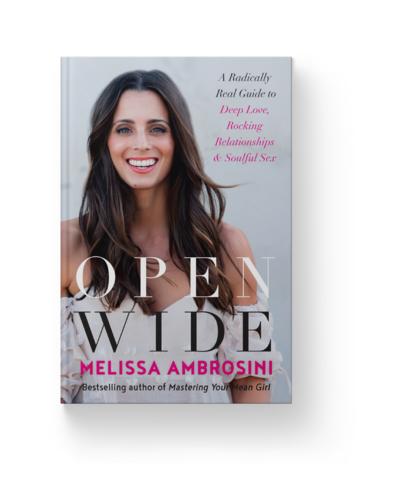
- Open Wide by Melissa Ambrosini (book)
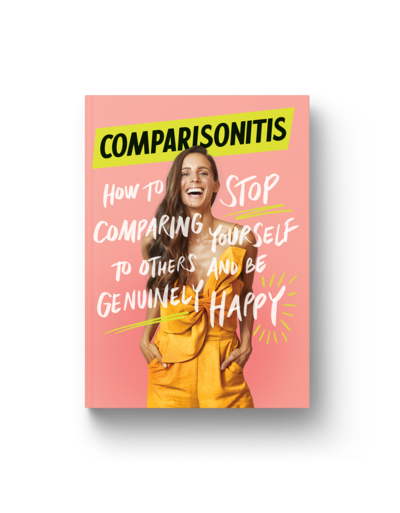
- Comparisonitis by Melissa Ambrosini (book)
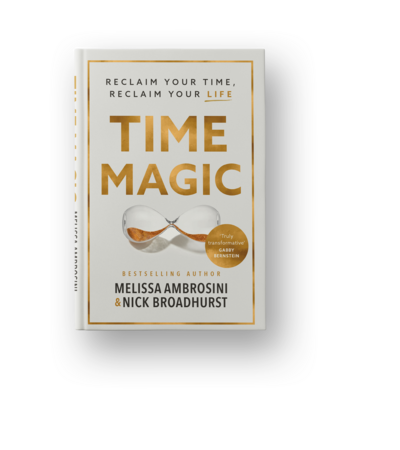
- Time Magic by Melissa Ambrosini and Nick Broadhurst (book)
- Jack Delosa (website)
- Jack Delosa (Instagram)
- Elevate (podcast)
- The Entourage (website)
- The Green School (website)
- MUSE school (website)
Prefer To Read?
The following transcript has been automatically generated and not checked for accuracy.
Melissa: [00:00:00] The Melissa Ambrosini Show. Welcome to the Melissa Ambrosini Show. I’m your host, Melissa
Jack: bestselling author of Mastering Your Mean Girl, open, wide, comparisonitis and Time Magic.
Melissa: And I’m here to remind you that love is sexy, healthy is liberating, and wealthy isn’t a dirty word. Each week I’ll be getting up close and personal with thought leaders from around the globe, as well as your weekly dose of motivation so that you can create epic change in your own life and become the best version of yourself possible.
Are you ready? Beautiful. Hello, and welcome back to the show. I am so excited about this episode because Jake and I have been friends for a really long time, and he is a genius when it comes to all things business. Scaling AI teams, leadership, and [00:01:00] anything to do with entrepreneurship, he is incredible. And for those of you that have never heard of him, he is an entrepreneur, investor, and bestselling author who builds category leading companies across ai, digital marketing, and media.
He’s the founder and CEO of the Entourage, Australia’s largest business growth agency. Leading a global community, approaching 1 million business owners and helping clients drive over a billion dollars in annual sales. And before that, he co-founded MBE Group, a capital raising firm that secured more than 300 million for clients and ranked among Australia’s fastest growing companies across the last decade.
Jack has founded, scaled, exited, and invested in businesses spanning biotech. Luxury real estate, finance, e-commerce, food, retail, recruitment and aviation, including backing a unicorn that reached a $1 billion valuation in under 10 [00:02:00] years. He’s coached and presented to over 500,000 entrepreneurs and leaders worldwide and has appeared on the A FR Young, rich List five times.
I told you he was incredible and you are going to wanna take notes. He is full of wisdom and knowledge, and for everything that we mention in today’s episode, you can check out in the show notes and that’s [email protected] forward slash 6 9 2. And now without further ado, let’s bring on the incredible Jack Osa.
Jack, welcome to the show. I cannot believe it’s been almost 700 episodes and you have not been on.
Jack: That is crazy.
Melissa: I know. Right. Before we dive in, I want you to tell me what you had for breakfast this morning.
Jack: That’s a very interesting question, Melissa. Ambrosini [00:03:00] scrambled eggs and that’s it.
Melissa: Right. Well, I am pumped that you are fueled and you are ready to go because you have so much to share.
This is going to be a power session and you and I have known each other for so long. I think it would probably be over 15 years or maybe 15 years.
Jack: Yeah, sounds about right.
Melissa: I cannot remember how we first met, but you interviewed me for one of your podcasts many, many years ago. Do you remember how we first met?
Who introduced us?
Jack: I’m not sure, but I, I believe a mutual friend of some sort, but yeah, I think I actually interviewed you back in our Harris Street office, so that was, that was like pre. That’s probably 2015, probably 10 years ago. So it’s only taken us a decade to get around to doing it again.
Melissa: Yeah, yeah.
Well, we’re here. We’re here.
Jack: We’re here. And look at you in all your glory with a 1-year-old and a four and a half year old, and this is amazing. Everything you’re doing and achieving is [00:04:00] just epic.
Melissa: Oh, right Back at you.
Jack: I feel like an underachiever sitting here talking to you right now.
Melissa: An underachiever coming from you.
Coming from you. Oh my goodness. I’m so excited to have you here. I love and adore all the work that you’re doing in the world and everything that you’ve created. You are an incredible human being. But I wanna take everyone back. Like if we were watching the origin story scene in the movie of your life, where does it all begin?
Like the very first moment that you realized that you saw business and the world differently to people around you, like what was happening in your life then? And what did you wake up to?
Jack: That’s such an amazing question. I think my whole journey started at a very, very young age. And so when I was probably about four years of age, my parents started a not-for-profit [00:05:00] organization called Breaking the Cycle.
And Breaking the Cycle would take youth at risk off the street, out of abusive homes, out of jail. They’d put them through a three month training and personal development program, and then they’d facilitate them into employment. And because they could only see, you know, a certain number of young adults each year, they’d deliberately choose those from the most challenged to backgrounds.
Even though they chose the kids from the most challenged to backgrounds, they were the most successful at what they did in the country. They were very, very good at it. And so that’s the world that I grew up in. You know, my mother was the head teacher, my dad was the managing director who was started.
Slightly, yeah. Shortly before they joined by another great man called Paul McKessie. And, you know, I, I would literally be skipping school to sit in mom’s classroom as she taught personal development and employability skills and communication skills and leadership skills to these young adults. And so I think at a very young age, I developed a deep [00:06:00] dissatisfaction for, and, and probably like frustration, maybe even a little bit of anger, if I’m honest, at like the traditional system and how it does not work for so many people.
And this is like, you know, I’m 38, so this is going back sort of 34, 30, 33 years. And so I, I think that’s only become more true in the last three decades. The system not working for most people. And so breaking the cycle taught me that people when surrounded with the right opportunities and the right people and the right support and the right coaching in the right direction can really step into a version of themselves that they previously thought unimaginable.
As I said, breaking the cycle was a not-for-profit. And so the Victorian government was reelected. They restructured the way they issued capital out to not-for-profits. Breaking the cycle was unsuccessful under the new regime. And so the organization collapsed and I was probably about 11 or 12 at this point.
And so I was highly pissed off at that point, you know, because it was our, it was our entire life. Like [00:07:00] I, I’d spend my weekends at like fun runs for fundraisers for breaking the cycle. And we had, you know, two of the kids that came through breaking the cycle, they were living with us and so they became like my big brother and sister.
Like it was a whole immers. It was just my life growing up. And then the whole thing shatters because somebody decides that money is better placed elsewhere, which I to this day disagree, disagree with. And so that’s where I get my kind of capitalist aside from, or commercial side from in that I’ve always wanted to build businesses that make a difference.
I’ve always wanted to help those who wanna be helped, but I’ve always wanted to do it through a commercial lens where I’m building, you know, things that are financially sustainable and scalable so that firstly, we’re not reliant on anybody like the government, and secondly, so that we can attract the best talent in the world so that we can get our message out there.
You know, there’s a lot of benefits to business being financially successful. You know, one of the things I say, Mel, which I know you are a very mission driven person. You’re probably one of the most mission driven people that I know. It’s like often I think there can be this [00:08:00] dichotomy in people where it’s like, you’re either mission driven or you’re financial driven.
I’m like, it’s really good if you’re both, because even if you’re in the business of making a difference, money is the fuel that will enable your vision to travel. Without it, everything’s harder and with it everything’s easier, faster, and can go bigger. And so, yeah, I, I, I suppose I view business as a vehicle to make a difference That is in no way, shape or form to say that money isn’t important.
Melissa: Yeah. Okay. So what happened from there? At 11 years old, you’re feeling frustrated. Then what happened? Did you finish school? Did you go to university? How was the entourage born?
Jack: Yeah, I mean, the entourage came a lot later, but yeah, if you had have asked me when I was a teenager, what I wanted to be, I would’ve told you a politician.
’cause all I wanted to do was, you know, kind of continue the work or break the cycle in a sense. But then, you know, you get a little bit older and you realize politicians don’t do anything. They don’t change anything. They don’t create anything. They don’t innovate anything. All they do is they regulate.
Things that other people innovate. And so the more I kind of, you [00:09:00] know, around 16, 17, 18, the more I learned about the world, the more I realized it’s entrepreneurs that actually shape the world. It’s entrepreneurs that build everything, create everything and their teams obviously, and, and, and take it to the world.
And so, yeah, I sort of, I started my first business when I was about 17. I had a few years of trial and error and false starts and failures.
Melissa: What was the first business?
Jack: It was a business to business call center. And so we’re essentially like a marketing agency? Yeah. It, it was a, it was a marketing agency based in South Air in Melbourne.
And, and then my, my first real kind of home run, I suppose was a, was a, was a business called MBE that I started with a guy called Ruben Buchanan, who, who was the founder of Wealth Creator Magazine. And at, at MBE, we would help businesses to raise money from investors. And so in a very. Fast period. We helped our clients raise about $300 million.
We became one of Australia’s fastest growing companies. I was like 22, doing a million dollars a year. And then on the back of that and on the back of kind of the, the profile and the credibility that that gave me, that’s when I started The Entourage. [00:10:00]
Melissa: Okay, amazing. And now the Entourage for people listening who have no idea what it is, it is like Australia’s largest business growth agency.
Like what you have created is incredible, and I hope you’re really proud of it. So tell us who the Entourage is for? What level of business acumen. Talk to us about that.
Jack: So the world is full of business owners who are incredible at what they do, meaning, you know, the accountant who’s a phenomenal accountant but, and, and is phenomenal at taking a business from zero to 10 or 15 or 20 people, but gets to a point where they feel too stretched.
They feel like they’re bursting at the seams. They feel like their business is bursting at the, or the personal trainer who’s taught everything about human anatomy and physiology, but not necessarily taught how to scale a business or a carpenter or a property developer. You know, the, the the, you think of any industry, usually the [00:11:00] people in that industry are trained in doing the thing.
They’re not trained and they don’t understand, understandably so, how to scale a financially successful business model around what they do. And so generally the people that find us, the people that have built a bit of a foundation, built a bit of infrastructure. You know, they’ve generally got anywhere from kind of five to 50 team members.
They’re generally doing between half a million and say $10 million. But they feel, you know, they’re working 50, 60, 70 hours a week, they’ve got a bit of a team, but the business is completely reliant on them. They want to grow, but they can’t work any more hours. And so it’s like, well, you know, I’ve kind of capped out the whole working harder approach.
I know there’s a smarter way, I just dunno what it is. That’s when they come into the entourage and we help them to turn what they have into a scalable business model so that they can make significantly more money, get their time back and, and live a life of freedom.
Melissa: Love it. Is that the original intent that you set out to solve with the entourage or has it evolved over the past [00:12:00] years?
Jack: It both. Both. It’s a really good question. So you, you gotta remember when I started the Entourage, I was 23. And so like at the time I was like, you know, been there, done that, thought I was this big business, hotshot, Heim, you know, now I’m 38 and so, you know, clearly I got a bit ahead of myself there, but, and so when we started, we were for young entrepreneurs because I was a young entrepreneur.
And so I think when we started, we were like for under thirties and then I got a bit older and for under 35, and then we eventually just got rid of, rid of that label. I mean, today most of our clients would be probably 40 to 60 and so, and so our clientele has matured as we have, but, but that’s, that’s been the evolution and, and I think there’s a lesson in that for a lot of service-based businesses, which is your brand and therefore your.
Audience and your clientele and even your team will mature and expand as you do.
Melissa: Mm. I love that so much. Okay, so for [00:13:00] someone listening who is wanting to grow their business, they are wanting to scale, but like you said, they cannot work anymore hours. Maybe someone like me, they wanna spend more time with their kids, but they still want the impact and they still want the income.
Where’s the first place they start?
Jack: Business owners think they have a sales problem or a lead gen problem, or a market size problem or a time problem. They don’t. They have an attention allocation problem. There’s thousands of things that we could be focused on in business, but only a few things that actually move the needle.
And so business owners spend their lives overwhelmed because we’re constantly trying to do a thousand things rather than focusing on the one, two, or three things that actually move the needle. And so it’s really interesting and kind of peculiar that, and I’m sure your clients are probably [00:14:00] the same, Mel, but you know, someone starts with us and three months later they’re like, this, this feels weird because I’m doing less, but the business is growing so much faster and, and, and that feels paradoxical to us.
That makes complete sense. It almost has to be that way because if all of the output is dependent on your input, well then of course your growth has gotta be capped. And so you have to ch you have to break that dynamic in order to be scalable. And so to us it makes sense, but to somebody that’s never experienced, it feels a little bit confusing.
And so fundamentally, this business is a game of growing from constraint to constraint. All you are ever doing is growing into bigger and better problems. And so, you know, when you start, the constraint is, I don’t have a product or a service. And then the constraint is not enough. People know about it. And so you start marketing and then the sales conversions drop.
And so at that point, the constraint is we need to get a sales conversions up. And then you fix that constraint and then you’re marketing well and you’re selling well. And the constraint is, well, we were set up to deliver to a small amount of customers. We’ve now got a large amount of customers and a lot of ’em are unhappy ’cause we haven’t scaled our [00:15:00] delivery model.
And so that’s the constraint. And then you spend three or six months and you solve that constraint, and then you’re marketing well, and you’re converting well, and you’re delivering well. And at that point, the constraint is, I’m doing all of these things, but everything’s reliant on me. So if I come into the office or come into the Zoom meeting and my team, everybody’s grabbing at me.
And so at that point, the constraint is management and leadership capacity inside of the organization. Then you solve that constraint, you move on to the next one. And so all we’re ever doing is moving from constraint to constraint. And so the first thing. Business owners, the, the biggest domino in the beginning that business owners need to get right is the ability to identify the core constraint, identify what they need to do to unlock the core constraint, which always involves a bit of coaching or training or learning from somewhere.
Because the reason it’s the constraints is because you lack the knowledge currently. And then the third skill is being patient enough and disciplined enough to work on that initiative to unlock that constraint until it is done before you move on to the next thing. And so we go from focusing on a hundred [00:16:00] or a thousand things to focusing on one or two things until they’re complete.
But if you unlock two or three, or four or five core constraints over a 12 month period, yes, you’ve let some other fires burn in the process, but you’ve got an entirely different business, an entirely different life, because we’re focusing on the things that make the biggest difference. And so to find the core constraints in your business, you just ask yourself one really simple question.
It’s the question I ask myself more than any other question in business, which is this. What is the biggest challenge that, if solved, would make the biggest difference? What’s the biggest challenge that if solved, would make the biggest difference? That’s your biggest constraint and it’s, and it’s, and it’s gonna fall within, it’s either gonna be lead generation or it’s gonna be sales conversions, or it’s going to be scaling your delivery and it, it’s gonna be like a micro subsection of one of those three things.
And then if we can get you laser focused on unlocking a core constraint in the right way, and then you do, and you, as I said, you do that four or five times a year, you’re in the top [00:17:00] 0.01% of business owners.
Melissa: I feel a lot of people exhaling as they listen to that because I think from the outside we can look at businesses like yours and be like, it’s perfect.
Jack has it all figured out. His business is just sailing along. Increasing revenue, but it’s like you just reach these new levels of constraints that we have to solve. And then there’s another one. And I just feel like, you know, a lot of people may have exhaled hearing you say that
Jack: 100%. Like I’ll give you an example on that, Mel personally, you know, so I came back in as entourage into the entourage of CEO in October of 2023.
And I, I, I knew for the first kind of 18 months, I knew exactly what I was gonna do. Like, like I was gonna get us out of some of the businesses that we’d entered into. I was gonna focus, I, I was, I was just gonna simplify everything and focus on the things that we do really well. And I knew the A players that were gonna survive.
I knew the people that weren’t like I, I just knew exactly what I was gonna do. But I asked myself a question about three to six months ago, which was, [00:18:00] it was six months ago actually. How do I double this business now? You know, because we’d gotten rid of the things that we shouldn’t be doing. We doubled down on things that we should be doing.
My whole intent and objective for the first 18 ounces, we need to become great at the fundamentals again. And we got to a point where that was true. And I said to myself, what would need to happen in order for me to double this business? And I didn’t have the answer. And so here’s the key thing. If you don’t know what the core constraint is in your business, then you are the core constraint.
Your lack of knowledge or your ignorance. And I don’t mean that in any harsh kind of a way because we’re all, we all get to points throughout Aria where we’re ignorant to what does the next stage look like? Your ignorance is the constraint. And so what did I do? I engage more coaches and mentors and do more bloody courses and masterminds than just about any, you know, probably you are the same.
But I, I do a lot of that stuff and I, and I scour the world for [00:19:00] people that have solved the challenges that I need to solve. And I spent about, you know, three months doing that in addition to everything else that I’m doing. And developed a better understanding of what are our core constraints. Developed a very granular and specific understanding in terms of how to unlock those constraints.
And then I bring it all back and I document it, and I talk to my team about it, and, and now we’re executing it. And so, yeah, it’s, it to your point around like we all come up against constraints. Even those that look like, you know, they’re, they’re kind of going really well in a book called Principles by Ray Dalio.
He makes a really good point, which is the Olympic athlete finds their sport every bit as challenging as the amateur. It’s not like the Olympic athlete is like, oh, you know, I, I, I, I can run fast now. Like, fuck, how, how good is this just enjoying running fun? Like, like it’s always hard work and it’s always, you know, finding the edges and because the game gets bigger and more difficult and more competitive, the higher you go.
Melissa: Mm-hmm. Absolutely. Why do you [00:20:00] think so many entrepreneurs, quote unquote fail?
Jack: They’re fundamentally focused on the wrong things.
Melissa: Yeah. And what do you see are some trends for 2026? Like, what do you see really going to take off? Or what do we need to be mindful of in our businesses?
Jack: So this, this is a really interesting one.
You know, even as you ask that question, what comes into the mind of everybody listening to this and watching this right now is like ai. And of course, right goes, goes without saying, but, but let, let’s kind of approach the question and the answer a little bit differently. When I started out in business, I thought that businesses who scaled must be doing something really complicated and really complex.
And, you know, something highfalutin that that, that I would, you know, my mer immortal, immortal brain doesn’t understand, you know, I just assumed that they must be doing all of this stuff that’s really fancy and complex. [00:21:00] And the further I’ve gone in business, the more I understand one thing, which is great.
Businesses are great because they do the basics well. Great businesses are great because they do the basics well. And I would go as far to say that the larger my kind of businesses and world in that sense has become, the more I find that to be true, and the more I find I have the luxury to focus on the basics.
And what most people would think is super simple as business owners we’re really good at overcomplicating shit. And as a great friend of yours and mine, Taki Moore says, is scale isn’t about adding more bricks. It’s about scissors. It’s about what can you cut, what can you simplify, not what can you add?
And, and that is just so fundamentally true. And so for 2026, yeah, ai, there’s gonna be some changes with AI and, and it and 20 26, 20 27, 20 28, 20 29. That’ll, that’ll continue. But what’s even more important than AI are the fundamentals in your [00:22:00] business and the fundamentals. There’s, there’s like four of them.
The first is. Are we generating qualified leads? Are we out there and, you know, generating interest and attention and inquiry from our ideal prospect, number one. Number two, do we have a systemized sales process that converts our ideal customers into, you know, our ideal leads into paid customers, paid clients?
It’s number two. And that’s just having a sales process that maximizes conversions and wins you more of the right customers. Number three is delivery. Delivering on the fundamental promises that we made through our sales process and through our offer. And so are we do, like how much attention are we paying to our customer journey and, and, and delivering on our fundamental promises.
And then number four is, do we have kind of the operations that can [00:23:00] grow? And so, you know, from a tech perspective and an admin perspective, is our backyard tidy? That’s all, that’s all that exists. And then, you know, they’re obviously counting and managing the money finance, but, but, but really from the entrepreneur CEO seat, it’s like generating leads, converting leads into sales, and developing a delivery engine that can deliver preferably without your involvement.
Eventually in 2026 and in 2027 and in 2028 and fucking every year that comes, doing a good job of those things is going to be significantly more important than AI is gonna be significantly more important than any other trend that’s going to come along. It’s just do the fundamentals. Do the basics. Well, that would be my biggest message for everybody in 2026.
Melissa: Mm-hmm. Amen. Love it. I think we can overcomplicate things so much and we can also look at other amazing businesses and think that they have some secret, [00:24:00] magic pill or something that we don’t know.
Jack: Yes, exactly, and, and it’s never that. What it is is that people that are building great businesses, they don’t know something.
You don’t, they are just doing what they know. That’s the difference. We all know that we should be generating leads, converting leads, and delivering to our customers. It’s just that sometimes it’s boring, sometimes it’s repetitive, it’s not shiny, it’s not new. And so we go looking for shiny and in and in.
So doing we overcomplicate.
Melissa: Yeah, absolutely. Us humans are really good at overcomplicating things.
Jack: We are so good at it, myself included.
Melissa: Which brings me to the mindset piece, like the mindset stuff is so crucial in all areas of life and business.
Jack: 100%.
Melissa: Let’s talk about this piece in determining your level of success in your business, and do you see a difference between males and females?
And [00:25:00] how do you coach your clients to upgrade their mindset, upgrade their limiting beliefs? Like do you have a process? Can you talk us through this? Because I always say 80% of success is mindset. 20% is the strategy. But if you don’t have this in place, then you won’t get to where you wanna get to.
Jack: I 1000000% agree.
The core thing for me is what needs to happen in order to develop an identity that serves you rather than hinders you? Because a lot of people are trying to create a life or create a business that their current self identity is too small for. Mm.
Melissa: Whoa.
Jack: Yeah. And you know that better than anybody and, and you help people transform that better than anybody.
Right? And so there’s a few really key things. The the first one is. Desire, which is I [00:26:00] think often some, you know, we can think to ourselves that I, I really want this, I really wanna create this business, or I really wanna create this family, or I really want this marriage to succeed. And when we really check in with ourselves, our desire is a four out of 10 rather than a nine out of 10, or a 10 out of 10.
And I think that in order to, anything in life worthwhile and anything in life that’s meaningful and fulfilling and enriching is challenging and does require consistency. And it’s not all rainbows and skittles, you know, being married is hard, being divorced is hard. Going to the gym every day and looking after your health is hard.
Being unhealthy is hard. Running a business is hard. Not running a business is hard. Making money is hard. Not making money is hard. Like, like everything’s difficult. And so because, because that is just a fundamental kind of truth of reality, I think it’s important that we’re selective around what we choose to say we [00:27:00] want and, and, and making sure that those things that we’re, you know, trying to create in our lives we’re like a nine or a 10 out of 10 when it comes to desire.
Because if you’re four out 10, your energy might be better directed elsewhere. Right? And so, and so, I think that’s the first thing is like, check in. How, how much do you want the thing you think you want? The second thing for me is do hard things. The number one thing that prevents people from achieving their goals is that people avoid hard.
We are wired. Our brain is not wired to make us make us successful or happy. It’s designed to keep us alive. It’s designed for survival and, and how it does that is it looks for threats. And so when we come up against anything that’s uncomfortable, when we’re outside of our comfort zone and we feel challenged, our brains natural and immediate instinct is to retreat back into old and familiar [00:28:00] pathways and old habitual ways of operating.
And so whenever you’re trying to do anything new. At some point, you will leave your comfort zone and at that point your brain will try to disprove the new way of operating and it will find, you know, it’ll find these really clever ways to rationalize why the new way is wrong, because it wants you to retreat back into your old way of operating because that’s familiar.
That’s what’s safe, that’s where it, it deems that survival is most likely. And so we need to, and this is an everyday conscious decision for everybody, we need to rewire our relationship with hard. Most people see hard as an excuse to retreat. You need to literally train yourself to see when something gets difficult.
Brilliant. That means I am on the right path. That means I’m growing. That means I’m expanding. It feels like fucking shit in the moment, and I’m gonna keep going because my highest self has told me that this is the direction that I want to go in. And so it’s that rewiring of the relationship with [00:29:00] heart.
The third thing around identity, I would say is be more weird. If you wanna be wealthier, you need to be, get weirder. And what I mean by that is, the other thing that our brain does, again as a survival mechanism, is it looks around at, uh, the people around us and it, we acclimatized to what we see in the herd.
And we do that because that’s where we are safest from a survival perspective. But if you want to be exceptional, you have to be the exception. And if you are using everybody else as the barometer to which you are acclimatizing to, then by definition you will be average. An average is not a good place to be.
Average is in debt, unhealthy, divorced twice, and maybe on, you know, like a average is. Average is not a happy place to be. And so be more weird is [00:30:00] about if I wanna be the, if I want to be exceptional, I need to be okay being the exception. And so it’s about going, where have I let the opinions of others? Or even it’s like the imagined future opinions of others that probably won’t even eventuate anyway.
Where am I letting the opinions of others keep me playing? You know, keeping me small, playing a game that isn’t really who I am, because I’m afraid of what people will think. And so you just need to understand that to be successful and to be exceptional, you need to be super weird according to other people.
And it’s like that whole, like you’ve changed thing. When somebody says to you, you’ve changed. That’s the biggest compliment. That’s the biggest green light you can get. Because if people aren’t saying that to you, you’re probably not growing fast enough.
Melissa: Mm-hmm. So much gold in this. Two things that I really wanna highlight here is like.
We have to stop caring what other people think of [00:31:00] us. And I feel like females, I’m speaking from my own perspective, I feel like we do this a lot more maybe than the masculine do, but I’m so bored of it. I’m so over it, I’m so exhausted from it, and I can see where it blocks me and like I’m done.
Jack: Yeah.
That’s a fucking good decision. Yeah. You, you, you asked me before Mel, the, the, any differences I see in males and females. There, there’s, there’s, there’s obviously hundreds, but, but the, the one fundamental one that I’ll, I’ll try to speak to with some degree of accuracy, obviously from the, you know, perspective of a male is with men, particularly ambitious men.
We often need reminding that there are other people in our world that require compassion and to be nurtured with women. What I find [00:32:00] is they need to be reminded to have compassion and to nurture themselves because they’re driving themselves into the ground, caring so much for other people and not enough for themselves.
I’ve literally, in goosebumps, I talk because I just see that in so many amazing women around me and, and really pandas my gorgeous wife that highlighted this to me a little while ago. I wrote an affirmation for myself and then I thought, oh, this would be cool. I should just give it to my inner circle members, my clients and Panda read it and she’s like, this bit here.
Because, because within my affirmation was around like being of service to others and you know, caring about your partner and, and your kids and, and like really caring about others. She said that bit for women, you should probably shift it to caring about themselves. I was like, that is smart. And and [00:33:00] she was 100% correct.
And so I ended up creating an affirmation for like a more masculine one that sure any woman would be welcome to use, but I also created a more feminine one. And the key difference was the feminine was like, please look after yourself. You cannot, you cannot pour from an empty cup. You cannot give what you do not have.
And the, the way, the other way I kind of think about that principle is this. I, I think it’s important we find selfishness. On the other side of selflessness. And what I mean by that is this. When we’re born, we’re obviously completely selfish. If we want something, we say it. If we’re upset, we scream. We don’t care how busy mom or dad is.
We don’t care what’s going on around. We, we, when we are born and we, you know, in that kind of stage of life, we’re 100% selfish. What then happens, and this is more common in women than men, is, is, is, is you can get to a point where you become completely [00:34:00] selfless. Meaning from a place of like compassionate absolute care for others.
We find ourselves giving so much to everybody else that at the end of the day, we don’t have a lot left for ourselves and we become completely selfless. But when you are there for five years, 10 years, 20 years, 30 years, you can find that your light starts dimm. And so when I, when I say selfish on the selfish selfishness, on the other side is selflessness.
What I mean is the realization that the more I have energetically, the more I can give, the more I have emotionally, the more I can give, the more I have financially, the more I can give and support those who I love. And so finding a little bit of selfishness so that you can be selfless to an even greater degree is a really important lesson, and often, often more so.
For women.
Melissa: [00:35:00] Mm-hmm. Yeah. And I feel like with men, and I’m generalizing here, but like I’m just thinking about my husband, like he kind of gets in his zone, whether it’s creating music or like in his entrepreneurial world, like he puts his blinders on and he’s just in his zone. Where women like me, I get in my zone like I’m creating and I’m still listening out for the children and I’m still thinking about, okay, I’ve gotta pick her up at two o’clock.
And that’s the beauty of women. Like we can literally do 15 things at once. I’m not saying that’s a good thing, but like I’m just saying like I’m still like on high alert, like, you know, that protector, someone once said to me. And I didn’t hear this at the time, but now reflecting back since having kids, I’m like, oh, I get what they mean now.
Someone said to me, when you have kids, you’ll never sleep deep again. And I remember being like, what do you even mean? And now I get [00:36:00] it. I’m like, oh, I get what she means. Like I’m asleep. But one ear is always listening out no matter what. You know what I mean? So I think this is what makes women so beautiful and men so beautiful too.
We have this polarity, this beautiful masculine and feminine polarity between us. And I love that you catered that affirmation to the masculine, to the feminine. ’cause it’s so important.
Jack: Yeah, it’s, yeah. And you know, credit goes to panda. Both are absolutely beautiful. And I think the other thing that goes on in our culture is that we often try to make everybody the same.
And that’s a really bad strategy on every level imaginable. A far better strategy is. Learn about and be aware of our differences, the masculine and the feminine and harness and appreciate that yin and the yang. But it’s all, it’s all beautiful and it all works.
Melissa: Yeah. What are your thoughts on here in Australia?
You and I do a lot of [00:37:00] work in America. You know, we go over there, although I haven’t been over there in a long time, I’ve been in baby making mode and raising my kitties. But you know, we would go over to LA and New York every year, and I know you spend a lot of time over there as well. Here in Australia, there’s that tall poppy syndrome when it comes to business, when it comes to everything.
And I, again, this is another thing I see very common in my Australian clients and audience. What are your, what are your thoughts? Like, how can we move. Through this. And also the other piece I wanna talk to is like you mentioned before, like we are the product of the people we surround ourselves with. So can you talk to those two pieces, like the importance of surrounding yourself with the right people and also that tall poppy syndrome and how to move past that?
Jack: Mm, yeah, that’s a very good point. Yeah, I mean, firstly on the American dynamic, [00:38:00] it truly is it, it still does not cease to amaze me. When you’re in America, you go to like an event or you’re at a mastermind or you just at like a dinner with, you know, a bunch of entrepreneurs that you haven’t yet met and they’re like, so what do you do?
And you tell ’em. And then they’re like, okay, I know this person. I’ve got this contact. Next time you’re in Miami, I want to tee up a dinner for this, this, what else do you need? And you kind of sit there and you’re like, wait. What, what, what, what are we doing? They’re so generous and so eager to help and enable and encourage, and it’s just such a, and you’re probably the same.
It gives me energy because there’s just this abundance mentality of support and encouragement. I think, honestly, I think the best way for Australians to improve how some Australians approach that sort of stuff is to experience the difference because you and I come back from [00:39:00] spending a lot of time in America, and we’re more wired that way because we’ve seen it and we’ve appreciated it and we’ve felt it.
You know what I mean? And so I think it’s exposure to the alternative and then having more of us operate from that paradigm here. I was doing a podcast yesterday with a, a couple of, one really good friend and, and a couple of other of his friends who I now consider to be my friends as well. And he, and he, he raised a really interesting state, but then I think it’s true, he was like, we were talking about tall poppy in Australia, and he is like, I think it is declining slowly.
And I was like, that’s interesting. Yeah, because I, I, I, when, when he said it, I’m like, you know what? I actually think that’s true. I hadn’t languaged it like that to myself. I hadn’t even thought about it. But, but I, but I do think it is improving. There’s a lot of discussion around the negative impacts of social media and I think a lot of that is justified and true.
However, I think one of the positive areas where social media is having a positive influence is it is [00:40:00] exposing everybody to what is possible in business and in life. If you choose to follow people that uplift you, I think that’s helping. Tall poppy come down in Australia. And I think, I think, yeah, I think the world becoming more global and more unified and you know, people like you and I getting exposure in America and, and, and bringing those seeds back to Australia, I think is also helping.
Melissa: Yeah. Beautiful. I love that. And, and it is, it’s so magnetic. Like when over there the energy of the people, it’s so enlivening and then yeah, you wanna come back and you do it and yeah, that’s why we love going over there so much.
Jack: It’s just a better way for everybody to operate, you know?
Melissa: A hundred percent.
Now I have been absolutely bursting to talk to you about this. I was going to voice message you prior to this interview and I was like, no, I’m gonna talk to him about it when I’ve got him on the show. So. You [00:41:00] recently went viral saying my daughter will never go to school. Not because we don’t value education, but because we value it too much.
Now I am sure that you got a ton of positive feedback from that, and I’m sure you probably got the complete opposite as well. Little
Jack: bit of feedback.
Melissa: Yeah. So, okay, because selfishly I wanna know the answer to this question because we are still. Thinking about Bambi schooling
Jack: such a cool name.
Melissa: Yeah, I know.
She’s so cool too. Okay, so next year she is technically meant to go into kindy, which is like the five day fortnight thing. So two days, one week, three days. The next week we’ve got the most beautiful Steiner school here that goes all the way up to year 12. It’s stunning. So we’re gonna send her there and it’s only two days a week, and then three days the next week.
And I might just do the two days. I’m just gonna see how [00:42:00] it goes. There’s still a part of me that is like, this is a system, even though it’s probably one of the better systems, but it’s still a system. There’s a part of me that I’m like, I wanna homeschool, but we’re gonna do this year because she is so ready for that socialization.
Like she says to me all the time, like, can we have a friend over? Like she’s ready for that. And then I’m gonna reassess after that and see where it’s at after that year. And if at any point next year it is not working, I will be pulling her out quick. Smart. But there are so many beautiful aspects of the Steiner philosophy that I personally love, and it’s still a system.
So let’s unpack your thinking behind this decision and like the ballsiness for like saying this, like when you said this, I was like, high fiving you. And I was like, oh my God. Like, you know, just the courage to say this. So let’s talk about this.
Jack: Yeah. Yeah. So there’s a lot there. [00:43:00] So let’s start with kind of the, the, the context of where my thinking is coming from and then I’ll, I’ll speak more directly to some of the things you just mentioned.
So our schooling system was literally designed in the 18 hundreds, and it was designed to produce factory workers. And there’s no exaggeration in saying that it was, there was literally very wealthy titans of industry that needed more people in factories. And the solution to that was to create an education model that would prepare people to work in production lines.
And it’s worth noting that the education system that we still have today was exceptionally good at preparing people to work in factories. It really, the fit for purpose was perfect, brilliant, and successful. The world started to change in, let’s say the eighties and, and then increasingly in the nineties, and then increasingly in the two [00:44:00] thousands.
And traditional education has not kept up. And so there’s a couple of disconnects. There’s a disconnect between what’s being taught at school and the skills and knowledge that are required in the real world. But then there’s a second deeper, more fundamental disconnect, which is the rate of change in the real world, which has only been accelerating for the last 50 years, and the rate of change that is possible within the bureaucracy and the government regulated education system that we have today.
The, and I’m somebody that, you know, 10 years ago I built a college, and so I’ve operated inside of the education system and so I am familiar firsthand with the just how. Bureaucratic it is and how unable it is to change. You know, I love teachers. My mother was a teacher, my uncle is a teacher, you know, my uncle’s 75.
He literally just [00:45:00] finished, retired I think a week ago. You know, coming into the end of the year. It’s not a teacher problem, it’s not a principal problem, it’s a system problem. And so my daughter is coming up to three. She’s born in 2023 if she went to school and then went to university. And, and the core objective of schooling today is to prepare people for university.
And so if she went to school and then she went to university, she will graduate university in 2045. School isn’t teaching what’s relevant in 2026. Less 2045. And I think that future pacing is something that is often missed. We think, oh, school’s kind of not relevant right now, but I’ll put in anyway. It’s like, no, no.
When they, when, when they graduate and come out the other side, it’s [00:46:00] 2045. And like there’s other paradigms around this. Like I hear parents often talk about, you know, when my kid learns to drive, it’s like, hold on a second. In five years time, less than five years time, cars will be self-driving. You’ll still be able to drive a car.
But it’ll be like, you know when, when, when cars came out, you could still. Ride a horse if you wanted to, but, but the primary mode of transport was you just drove your car. This, the same is going to be true for self-driving cars. And so like this is it just in terms of like future pacing the world that our children are actually going to live in.
Your child will probably never learn to drive unless they choose to. But it’ll be no different to somebody choosing to learn how to ride a horse. And so the future’s gonna look very different. Traditional education is not gonna keep up, and that’s a problem. It’s probably [00:47:00] one of our biggest, most fundamental problems.
To come back to a couple of things that you said. First thing is I think the Steiner model and like Montessori, which I think probably fits into the same category, is absolutely brilliant. And I take your point, like it’s still a system, but it’s just such a good model and, and like I, I almost find it hard to fault.
And so I think that’s a terrific route to go down. The other option is, you know, the homeschooling thing where either a, a, a parent is homeschooling or, or you’re bringing in a tutor to homeschool. The problem with that is obviously not everybody has that luxury. That’s still a, that’s still something that requires a lot of resource and a lot of time that the vast majority of people don’t have.
And then the third, the third option A, again, which is not an option that’s, you know, sort of tenable for a lot of people. But, but in, but in our instance, I may start a. [00:48:00] School, school, if I have capacity, and, and, and if I don’t, then I’ll just find a good one. I’ll invest in it. But that’s kind that, that’s kind of like the three avenues for us is there may be an aspect of Steiner Montessori, particularly at a very young age.
There may be an aspect of homeschooling and there may be an aspect of just building If we can’t find the model that we want our daughter to go through, then, then I say this with reluctance, just given how little capacity we have right now. But, you know, in a couple of years maybe we, maybe we sort of try and solve that problem ourselves.
Melissa: Yeah. Okay. Wow. So amazing. Have you heard of the Green School in Bali?
Jack: I don’t think I have, but I, I think I like it already.
Melissa: This is your homework. I want you to look up the Green School and I also want you to look up Muse, MUSE Muse School, which James Cameron and his wife, they created Muse School. I think it’s outside [00:49:00] of la.
It’s like all sustainable.
So like it’s more like the philosophy of what they teach there. So I want you to look those two up. That’s your homework actually. You can franchise Muse School ’cause we’ve looked into this.
You can franchise the Muse School and bring that to Australia. That would be really great if you could do that Jack. That would be wonderful for me. And just plant one near my house. That would be great.
Jack: Musa. Done. That’s my homework. Start a school. Bring to Noosa.
Melissa: Notes. Notes. Forget where you live. Just come to where I live if that’s okay with you.
Jack: Yeah, yeah. Yeah.
Melissa: It’s such an important decision and it’s not one that I take lightly. Like I have literally been thinking about this since [00:50:00] before I had children. You know, I always knew that my children would go to either a Montessori or a Steiner or they would homeschool. I want everyone listening to like really think about this decision.
Just, it’s not something that we just go, oh, we’ll just send them to the local, you know, school around the corner. Like why are you sending them there? Like have you looked into it? And like for me it’s like, I hear this so often. It’s like my kid changed when they went to school. Of course they changed.
They are being brought up for a lot of their day, five days a week for most of their day by someone else that you don’t know what that person is projecting onto your child, their belief systems. Their fears, their traumas. Like I had one teacher say something to me in year two, so that’s when I was six, turning seven.
I had one teacher say something to me [00:51:00] and it has stuck with me my entire life.
Jack: Hmm.
Melissa: You know what I mean?
Jack: I know exactly what you mean
Melissa: and I’m aware of it. I’ve got the awareness for it. I can see when I get, you know, triggered by that and you know, like I’ve had so many people like say that teacher said, I’d never amount to anything that teacher said I was this, that teacher.
You know? And I’ve just think like, we’ve gotta take this decision not lightly where we send our children.
Jack: Exactly. Exactly. Yeah. And, and it’s, yeah, I just echo all of that. And then the other, the other piece is, you know, some of the things I was outlining earlier aren’t kind of, you know, tenable for a lot of people.
And so I think if you’re watching this or listening to this. You know, you don’t have the luxury of kind of homeschooling. I I, for me, it’s not like homeschool or not, it’s like to what extent can you take ownership in your own children’s development? And so let’s say that, let’s [00:52:00] say they, they have to go to school because, you know, like, like in the house that I grew up in, my parents, like, I, I, I would’ve had to go to, they would, they didn’t have the option with my wife Amanda.
She just, they just wouldn’t have had the option. And so I, and so I know viscerally what that reality is like. And so I think the best approach in that situation is taking ownership in their own development. And so, and that’s questions like, what did you learn at school today? And even like, what values do we have as a family and what do we believe as a family?
And what is projection and what is limiting beliefs and why do some people have limiting beliefs? And, and, and it’s not about, you know, particularly if you’re talking to an 8-year-old about, it’s not about telling somebody that they’re wrong. It’s, you know, respect their beliefs. But, but, but be conscious about what you take on board.
And then I also think there’s stuff that, again, if, if, if your kids do need to go to school, there’s, there’s things that you can do at home that are really beneficial to childhood development. And this is what Steiner and Montessori do really well, [00:53:00] is it’s all project work. And so let’s say there’s, let’s say you’re gonna do a family holiday for a long weekend.
You know, you’re all gonna pack up the car and go somewhere for a long weekend, rather than mom and dad organizing that and telling the kids, involve the kids in that project. And depending on their age, give them that project. It needs to be within a a hundred or 200 kilometer radius. What does that mean?
Figure it out. We need to be able to drive. This is the total budget within those parameters. You guys spend a few weekends or a few afternoons and come back to us with some suggestions around what we should do for this family holiday. You know, and so, and so. That’s what I mean by being a bit more intentional around taking ownership of both what, what they’re absorbing and not absorbing at school, but also their broader life skills development in the home and outside of school.
Melissa: Yeah, love it. [00:54:00] I love it so much. It’s just such an important piece and I love that project idea. I think it’s such a, such a great idea. I also notice like Bambi’s four and a half and she’s started saying to me like, why? Why do they do that differently to us? You know, why do they do that? Like, and she’s starting to become aware.
Jack: I wonder where she gets that from.
Melissa: So I’m trying not to like go too much into detail with her, but like as she gets older, you know, I can give more information. But you know, something that I say to her is like, well that’s one of our core values as a family. Like health is one of our core values, or that’s what we do in our house.
You know, we choose to eat this way or we choose to do this. And I say, and they choose to do that. And maybe they don’t know that there’s a healthier option, or maybe they don’t know, but this is what we choose to do in our house. And she’s like, okay, yeah, yeah. You know? So yeah, I just love that [00:55:00] there’s so much we can do in our home to educate and to impart our family core values.
And this is another thing. Before we had Bambi, Nick and I sat down and we wrote down the Broadhurst principles, like what we want to impart onto our children. Like what are our core beliefs? And so we wrote them down and we’ll occasionally reread them, and it was just so important for us to get clear on what is our vision as parents together.
Oh,
Jack: yes, yes. Yeah. I just wanna underscore and highlight what is our vision as parents and what is our vision for the family and what is our vision for our children? That’s that’s the fundamental starting point, and then irrespective of whatever situation any family might be in, that’s the North Star, to do our best in service of that vision.
Melissa: Yeah, absolutely.
Jack: That’s amazing.
Melissa: What is your [00:56:00] definition of success, and what do you attribute your success to?
Jack: Ooh, my definition of success is living according to one’s values, which sounds. Beyond simple. It might almost sound a bit vanilla, but man, it’s so much easier said than done. And so, you know, my top three values are family, fitness, and finance.
And you know, I tend to think about, finance is kind of like, for me it’s like mission and business, but those words don’t start with F. And so I call it finance. Yeah,
Melissa: I like the alliteration.
Jack: Yeah, exactly. Exactly. And so what does that mean? It means the number one most important thing to me is to be the best husband I can be to Amanda.
Melissa: Mm-hmm.
Jack: Does that take energy and dedication and commitment? Yes. It’s so easy to say, [00:57:00] but show me how you’re showing up like that every day. It also means that the most important thing to me is being the best father that I can be. And that also requires. Discipline and commitment and patience and doing it even when you’re tired and making sure they’re not an afterthought.
Right? And, and so, and so that’s number one for me. And then fitness is, you know, your kind of the philosophy that you guys embody, Mel, which is, you know, trying to live as healthfully as I possibly can so that I’ve got the energy to do what I need to do predominantly be a great husband and be a great father.
And then thirdly is be as effectual and as effective in business. And, and part of that obligation is to do work that I love, so that I’m juiced, so that I’m alive. That’s the whole kind of selfishness. On the other side of selflessness thing, like I just know that if I’m doing stuff that I love and I’m doing it well, and you know, we’re making money, then I’m better for my family.
And so for me, success is [00:58:00] doing those things consistently and as well as I possibly can every single day, often to the exclusion of a lot of other things. And so when I say living according to your values, that’s what I mean. It’s not easy and it is challenging, but to me that that’s honestly, that’s, that’s how I define success.
What has, what has built my success, I think is, is probably living a way that’s always been aligned to my values that have been different, obviously at different stages of life, but always kind of putting more importance on living according to my personal values rather than living according to other people’s rules and expectations.
Melissa: Yeah, I love that For this season of your life, and I love that you highlighted that it’s different. You are a devoted father, a devoted husband. You’ve got your incredible business. If there is something, what is one thing that you are, I mean, I dunno if the right word is sacrificing right now in your life or that has [00:59:00] gone more to the bottom of your priorities list.
Jack: Mm. Definitely don’t feel like I’m sacrificing anything. I think if anything, and I, I, I, I was gonna say you’d be able to relate to this, Mel, but like, I, I, I, I think it’s just so more, more significantly true often for mothers than even it is fathers. But I think when you become a parent and you still wanna place value on your health and you still want to build a successful business, you know, you, you, you, you, you want to kind of be multidi dimensionally successful, let’s call it.
Sometimes it can feel like there’s always something to do. And so, you know, it’s that whole, like, it’s that whole like, you know, I thought I was busy before I had kids, and now I often wonder what the fuck I did with all of that free time. It’s, it’s kind of probably that in that. You know, I, I do feel like for me it’s not a sacrifice.
It’s not even something I [01:00:00] complain about or anything like that. It, it’s just, it’s just living intentionally. But it does feel like I need to live intentionally all the time. But again, that’s, that’s the practice, right? That’s the practice. And, and, and I would not have it any other way. And the other thing I would add to that is being that way for the last four or five years has made me a significantly better person than I was before.
And so I see the fruits of it as well. But it does, do you know what I mean? I mean, I’ve never really spoken about this. I might not be articulating it clearly, but Yeah. Can you relate to that?
Melissa: Yeah, yeah, yeah. Yeah. It’s so interesting. I think as well, like before I had kids, there was no real, you know, seasons of my life.
And now I’m like, I’m in it a season. It’s like really forced me to get so clear on what are my core values. Like for you it is the family fitness and the finance. Like for me, it’s the same. It’s, it’s my family, it’s my health, and in health, you know, my [01:01:00] self-care, all of that. And yet it’s my mission and slowly underneath that is like my social life, my socialization.
That’s something that I’ve, I guess it’s not as. At the forefront of my mind for this season of my life, would I love to go on a four hour lunch with my girlfriends in the middle of the day, in the middle of the week? Yes, of course I would. Yes. And I wanna be there for every moment of my children’s life.
Like I’m in that season two, you know? And I know that I will get my four hour lunches with my girlfriends. That will happen again. But like for this season of my life, I wanna be there for every wake up. I wanna be there for every put to sleep. I wanna be there as much as I physically can. So, yeah, that was where that question was coming from.
Jack: Yeah, that’s everything. I was at a, I think it was Taki’s conference a couple of years ago, and James Raco got on stage, and Ari must have [01:02:00] been, you know, six months or something at this point. But he said, I’ve done school drop off and school pickup every day of my child’s life. I sat down and I fucking cried.
I was like, oh, it’s just so, I mean, clearly it’s so important, but it’s, it’s such a powerful thing to prioritize and to achieve. And so, yeah. Hearing you say, you know, you wanna be there for every wake up and every time they go to sleep, I just think is like, that’s the most important thing. Like, it’s more important than business.
It’s more important than, you know, other things that we, you know, meaningful pursuits in life. But, but it, but it’s the most important thing.
Melissa: Yeah. Yeah. You know, that I, I’m not sure if you’ve seen that viral reel that goes around where there’s like the kid on stage at their, their school Christmas concert and they spot their mom or dad in the audience.
Yeah. And they expect, like, it makes me emotional to say.
Jack: And [01:03:00] then, you know, not to go too somber, but you can imagine that their kids scanning and not, not finding their parent and just how much that would, that would mean to them. But then when they do see their parent, just how much that means to them. And so, yeah, there’s, there’s nothing more important.
Melissa: I know, I know.
This is why I’ve built the business and I’ve built the life. I wanna work from home. Like that’s why I built the podcasting studio in my house. I wanna work from home. I wanna be as close to my children as I possibly can for this season of their life. And hopefully forever. If they’re like, I’m moving to London when I finished all my studies or whatever, I’ll be like, I’m coming with you.
Jack: Yeah,
Melissa: yeah. Um, I’ll be that mom.
Jack: I’m with you. I’m with you.
Melissa: But you know, I do see examples of like some of my friends who are so close with their parents. And they, you know, they travel together and they do retreats together and I’m just like, yes, that is the type of [01:04:00] relationship I want.
Jack: It’s amazing. That was the first experience I had that kind of got me onto the homeschooling thing.
I went to, do you know Mindvalley?
Melissa: Yes.
Jack: So Vish and I connected in like 2018 and he is like, and so at the time we were do, the Arch was doing really good things in terms of live events. Mine Valley was doing really good things in terms of online. He wanted to learn more about that, and I wanted to learn more about that.
So he was like, come and let’s spend 10 days together. And so I went out to Koala Lump and we spent a couple of weeks there and he had a, he had a lunch for what he calls the Mind Valley authors, which is just like the, the talent that they use for their programs. Have you done, have you been one of those, have you run your own Mindly program?
Melissa: Yes, actually I think I did. I’m like, did I do that? I think I did that. Oh my god, yes I did.
Jack: Yeah, I think you did that as well. Yeah. Yeah. We both forgotten about it. Just, yeah, I think you actually did do that. Anyway, so we go to this lunch and I’m sitting across the table from two, two [01:05:00] of the people that had run a program for them and next to, next to them were their two kids, and the daughter and a son, and their daughter was probably about 13 and the son was about 11.
So right in that age where, you know, and this is probably reveals part of my operating system at the time, it’s almost like you expect them to be a bit bratty, particularly towards one another, you know, 13-year-old daughter, 11-year-old son. So I’m, and we were at this table of, you know, really well accomplished adults.
And so I’m like, ah, fuck, I wonder how this is like, like, I wonder how this dynamic is gonna go with these two at the table, these two kids. I get emotional thinking about it. They were, they were the most developed people of that age I’ve ever seen in my entire life. The, the way they spoke to each other, the way they looked after one another, the way they offered to grab each other things, the way they spoke to their parents, the way they engaged with the rest of the table.
I was, I had never [01:06:00] seen a fucking 11-year-old and a 13-year-old operate in, and it’s not like they were putting on an ax to try and be mature for the lunch. They were just being themselves. But they would, it floored me literally. And what what had happened was, and they had done a, they had done a, a fair bit of schooling actually, but, but to compliment that they, when the, when the parents traveled, they would often travel with them.
And so what, what they had gotten was a, a sense of the world. They’d spent a lot of time with other adults. They’d spent a lot of time with their parents. They’d obviously had family values and a family vision that you spoke about earlier. And it was just like, wow. Like, like that’s what’s possible when we don’t delegate our child’s development to an outdated system.
Melissa: There’s some kids in my life that are like that too. And there’s a brother and sister that are local here. They’ve been homeschooled their whole life and they’ve actually [01:07:00] both just had children and one is 17. I’m not saying go have children at 17, but he’s 17 and his sister is 21. But when they told me their ages, I was like, no, you’re not.
I was like, no. I thought at least like 24, 25, the level of maturity, presence, groundedness, all of that. So yeah, I totally know what you mean. And yeah, it’s beautiful and that’s what happens when you are traveling and when you are in their life. And when they’re in your life too. So I love that so much.
Jack: Yeah, it’s a beautiful thing.
Melissa: Alright, I have three rapid fire questions for you now. Are you ready?
Jack: Love it.
Melissa: If you could do one thing for your health today, what would it be? Just one thing.
Jack: Eliminate alcohol.
Melissa: Yeah. Do you know I have not had a sip of alcohol in 15 years.
Jack: That’s freaking amazing. And so PRA and I, we drink very infrequently.
Like we, we had a dinner where we had some wine last week, but prior to that it had [01:08:00] been like eight or 10 weeks. So we drink very infrequently, but it knocks me around and I’ll get to a point soon where I don’t do it. Be because I see people like you and it’s just. So obvious, and it’s obviously such a dumb thing to do, but yeah, that’s my answer.
Melissa: And when I was younger, I drunk to get drunk. Like I never enjoyed the taste, you know, I was just like a teenager and I was like, well, you just drink to get drunk. And so I never had a great like relationship with it. So for me, when I got sick in 2010, I just stopped drinking when I started taking my health really seriously.
And I’ve never looked back and I’ve never, I never think about it and I feel the best I’ve ever felt.
Jack: Yeah. Yeah. That, that’s my problem is, is I’m not drinking for the alcohol. I love
Melissa: the experience
Jack: French wine.
Melissa: Yeah.
Jack: French, yeah. My, my and as do the rest of my family. And so
Melissa: yeah,
Jack: it’s, it’s part of our ritual.[01:09:00]
And then, you know, it becomes like a, a hobby, you know, like you like. If, if anybody, you know, if I’ve ever go to a restaurant with anybody and we order, they’re often very surprised by how much I like, like I actually know a lot about French wine. And so it’s this whole body of knowledge. It’s this whole experience.
It’s this whole ritual. But it, it, you know, the, the, the downsides outweigh the upsides. And so yeah, that’s, that’s the thing.
Melissa: Okay. I love that. What’s one thing we can do today for more wealth?
Jack: Be more weird.
Melissa: Yeah. Love that. And what I kind of translate that to is like, be your true self.
Jack: Exactly. Being weird is just having the discipline to do things that most people don’t want to do.
Melissa: Love it. And what is one thing we can do for more love in our life?
Jack: Do we mean with romantic partner or in general?
Melissa: You know, like, just, it could be in general, but like, you know, everyone wants to feel loved. Yeah. So what can [01:10:00] we do to feel more love,
Jack: resolve. The small T or Big T trauma from our childhoods because what I found is that the more that I was able to gain compassion for myself, the more I was able to effortlessly have more compassion for others.
Melissa: Yeah, absolutely. What is one book you would put in the school curriculum if you could choose one book and not your books, like let’s presume they’re in there, but if you just had to put one book in for both boys and girls around that 16-year-old, like what is one book you wish you could hand every single 16-year-old in the world?
Jack: It’s probably The Big Leap by Gay Hendrix.
Melissa: Yeah, it’s a goodie. It’s great. I have loved this conversation so much and I would love to keep going, but I have to go and breastfeed and this is my life, so I love it. Thank you so much for [01:11:00] being here, for sharing all of your wisdom. I truly love and adore you and the work that you’ve created in the world and any time I get to interact with you in person or online is truly such a joy and I am so happy for you and Amanda and your beautiful family and all the success like you deserve it.
You are not only incredibly brilliant at what you do. You have one of the biggest hearts I have ever met, and so I just am so grateful and I can’t believe it’s taken almost 700 episodes, but we did it.
Jack: We got there. And can I just say everything you just said to me straight back at you in Spade and I and I, and I know I speak on behalf of Amanda when I say that as well.
We absolutely adore you. Really, really appreciate you. So thank you so much.
Melissa: Mm. Thank you for being here. Blessings to you guys. And can you please start that school, if that’s okay with you?
Jack: Yeah, in Noosa. Will do. In Noosa. Yeah. I got it on my notes. [01:12:00]
Melissa: Just add it to your list.
Jack: I love it.
Melissa: Thank you so much. Lots of love.
Jack: Thanks, Mel. Tell
Melissa: I hope you took notes. I hope you got a lot out of this episode and I hope you feel inspired to take your business to the next level. And if you loved this conversation, please leave me a review on Apple Podcasts and send me a screenshot of your review to [email protected]. And I will send you my wildly wealthy guided meditation as a thank you for taking the time to leave that review now jump on over to Instagram at Melissa Ambrosini and tell me what you got from this episode.
I love when a new episode drops and you jump into my dms and you give me your biggest key takeaways. It is such a highlight for me. I love connecting with you, and I also love hearing your biggest key takeaways. So jump on over there and tell me. And before I go, I just wanted to say thank you so much for being here.
I truly am so grateful. I do not take this for [01:13:00] granted, and it brings me so much joy to serve you each week. And if there is someone in your life that you can think of that would really benefit from this episode, please share it with them right now. You can take a screenshot, share it on your social media, email it to them, text it to them, do whatever you’ve got to do to get this in their ears.
And until next time, don’t forget that love is sexy. Healthy is liberating, and wealthy isn’t a dirty word.
Thank you so much for listening. I’m so honored that you’re here and would be SO grateful if you could leave me a review on Apple podcasts, that way we can inspire and educate even more people together.
P.S. If you’re looking for a high-impact marketing opportunity for your business and are interested in becoming a sponsor for The Melissa Ambrosini Show podcast, please email [email protected] for more information.
P.P.S. Please seek advice from a qualified holistic practitioner before starting any new health practice.













show Comments /
hide comments
- Hide Comments