


(Listen & Subscribe on Apple Podcasts, Stitcher, Spotify, iHeart or TuneIn)
Your child’s brain is being shaped by a screen more than by you. And it’s happening in tiny moments you barely notice. The “just five minutes.” The quick reset. The quiet in the back seat. But those minutes add up. And they teach your child what comfort is. What connection is. And where to go when they feel bored, restless, lonely, or overwhelmed.
In this episode, we get brutally honest about technology, children, and self-worth. We unpack what constant stimulation can do to a child’s nervous system, identity, and sense of belonging. And we talk about what builds real connection instead. I also share what it’s been like raising my children without screens, why we chose that path, and what it has taught me about boredom, creativity, presence, and trust. This isn’t about demonising technology. It’s about awareness and intention. Because our children don’t need more stimulation. They need more presence. If you’re a parent, caregiver, or planning a family one day, press play now.
About Dr Shefali
Dr Shefali Tsabary is a world-renowned clinical psychologist, international speaker, and bestselling author of The Conscious Parent, The Awakened Family, and A Radical Awakening. She is widely regarded as a leading voice in conscious parenting and emotional wellness. Her work bridges Western psychology and Eastern philosophy, empowering parents to raise confident, emotionally aware children while healing themselves in the process. Dr Shefali has been featured on Oprah, TEDx, and stages around the world, and her teachings continue to transform families globally.
In this episode we chat about:
- Is technology rewiring children’s sense of self-worth? (3:01)
- Raising my kids without screens and why it matters (11:04)
- How to entertain your children when you need to work (15:43)
- Forming your villa and getting creative (21:36)
- Homeschool vs traditional school (24:26)
- Designing a conscious digital home (25:55)
- The age Dr Shefali recommends for technology (28:40)
- Creating quality time with your partner as parents (30:41)
- The most powerful ways to bond with your children (34:04)
Episode resources:
- See Dr Shefali live in Sydney (get tickets)
- See Dr Shefali live in Melbourne (get tickets)
- Mastering Your Mean Girl by Melissa Ambrosini (book)
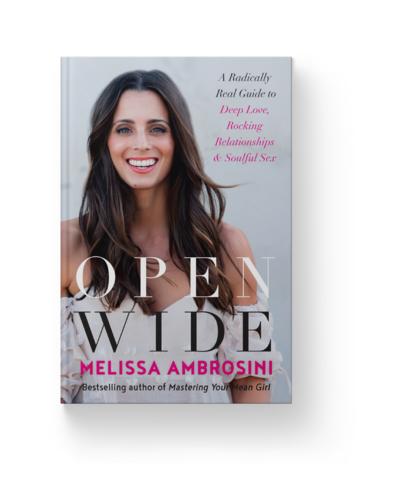
- Open Wide by Melissa Ambrosini (book)
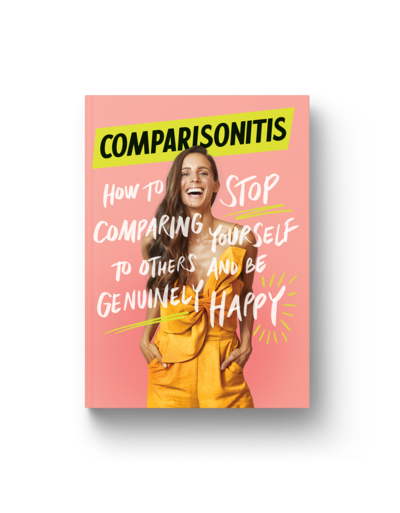
- Comparisonitis by Melissa Ambrosini (book)
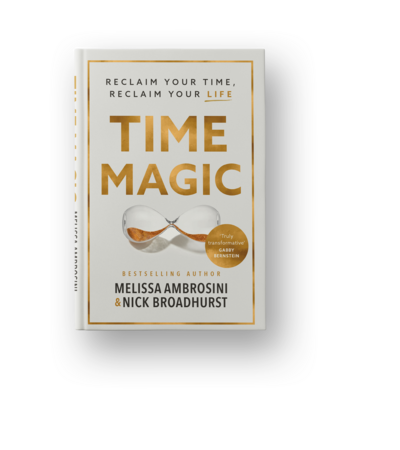
- Time Magic by Melissa Ambrosini and Nick Broadhurst (book)
- Dr Shefali (website)
- Dr Shefali (Instagram)
- The Conscious Parent: Transforming Ourselves, Empowering Our Children by Dr Shefali (book)
- The Parenting Map: Step-by-Step Solutions to Consciously Create the Ultimate Parent-Child Relationship by Dr Shefali (book)
- A Radical Awakening: Turn Pain into Power, Embrace Your Truth, Live Free by Dr Shefali (book)
- The Awakened Family: How to Raise Empowered, Resilient, and Conscious Children by Dr Shefali (book)
- Conscious Parenting & Healing Your Inner Child with Dr Shefali (podcast)
- Why Are We Raising Our Kids With No Screens, Sugar Or Dairy? & The A’s To All Your Q’s (podcast)
- The Conscious Circle Community (website)
- Become a Certified Conscious Parenting & Life Coach with Dr. Shefali (website)
Prefer To Read?
The following transcript has been automatically generated and not checked for accuracy.
Melissa: [00:00:00] The Melissa Ambrosini Show. Welcome to the Melissa Ambrosini Show. I’m your host, Melissa bestselling author of Mastering Your Mean Girl, open, wide, comparisonitis and Time Magic, and I’m here to remind you that love is sexy, healthy is liberating, and wealthy isn’t a dirty word. Each week I’ll be getting up close and personal with thought leaders from around the globe, as well as your weekly dose of motivation so that you can create epic change in.
Your own life and become the best version of yourself possible. Are you ready? Beautiful, beautiful. Hello and welcome back to the show. I’m so excited about this episode because I have one of my favorite parenting experts, Dr. Shefali, back with us now. She was first on the show in episode 1 8 1, conscious Parenting and Healing Your Inner Child.
I highly recommend going back and listening to that episode. But today [00:01:00] we are going even deeper. We are talking about screens, we are talking about our children’s nervous system, self-worth, and so much more. And for those of you that have never heard of Dr. Shefali, she is a world renowned clinical psychologist, international speaker, and bestselling author of the Conscious Parent.
The awakened family and a radical awakening. Her books are incredible and I highly recommend reading all of them. She’s widely regarded as a leading voice in conscious parenting and emotional wellness. Her work bridges, Western psychology and eastern philosophy, empowering parents to raise confident, emotionally aware children while healing themselves in the process.
She has been featured on Oprah TEDx and Stages around the world, and her teachings continue to transform families globally. And for everything that we mention in today’s episode, you can check out in the show notes and that’s [email protected] slash 6 8 6. [00:02:00] She’s also coming out to Australia very soon, so make sure you check the show notes for the cities that she’s speaking in and the dates.
She’s incredible and I highly recommend if you can get to see her in person, do it, and if not, read her books, devour Her Work because it will change your life. Now, without further ado, let’s bring on the incredible Dr.
Dr. Shefali, welcome back to the show. I’m so excited to have you here. You will last on the show at episode 1 8, 1, so a very long time ago, and we spoke all about conscious parenting and healing your inner child. It was such an incredible conversation. I will link to it in the show notes for anyone who wants to dive deeper and listen because it was a game changing episode for me.
So welcome back. I’m so excited to have you here. Thank you Melissa. So [00:03:00] great to be with you again. So I wanna talk about technology today, the digital world that our children are growing up in. It’s frightening, you know, when we haven’t really seen the effects that the social media and digital world and how it is shaping our children.
So do you see technology rewiring. Children’s sense of self worth. I wanna talk about that. And what can conscious parents do to help them stay really rooted in. Their sense of self and in the world and what’s really important.
Dr. Shefali: Yeah. Well, let me tell you, I’m actually writing books on this right now, and when I come to Sydney and Melbourne in March of 26, that is what parents are asking me to talk about.
So you just hit it on the nail just right off the bat. The reason why we are all so nervous is because it’s [00:04:00] really the blind leading the blind. We never grew up, you know, in this kind of digital, hyper exposed, overstimulated world. We grew up in the world of analog. Maybe you grew up a little bit in bridging both.
So it’s very new and what is scary about it is that. We wouldn’t let our children near a stranger, and yet we’re allowing a stranger in their bed. It’s not just a stranger. It is an algorithm that is designed to keep the child addicted. So if the algorithm notices that the child is. Is nervous or anxious and seems to, you know, stay on websites or on, you know, feeds that talk about anxiety, talk about depression.
The algorithm will send it more negative [00:05:00] disease-based, you know, depressive. Because it understands that this is a vulnerability, this is a pain point. The child doesn’t realize that the algorithm is doing this, so the child begins to think that everyone. Is that depressed or they should be depressed and their right to be depressed, and it keeps them on a spiral.
You know, eating disorders are on the rise. Self-harm is on the rise, and these are issues that are wildly spreading as if it’s an infection, like a contagion on social media. It becomes a trend. And things catch on very fast. Now the child is unsuspecting, so the child thinks that, oh look, I’m being endorsed in my way of thinking.
And it actually makes you [00:06:00] more embedded in that way of thinking, not less embedded, because the algorithm has realized that you are vulnerable and you keep staying. I mean, I’ve found this. Happening to me recently that my feed was getting more and more depressing because I was not happy with the state of the world.
And I kept looking for my next avatar. My next night in armor, I kept scrolling, scrolling, scrolling, like, where is he? Or she like, where’s my god? A goddess, right? And the algorithm figured out that I was staying out of anxiety and it kept feeding me. More negativity, which made me want to look for more positivity.
It was a weird, diseased, toxic relationship, at which point I took that account and I put it at on my last screen, on my phone, and I’ve not been going on the way I used to, because before it used to be just next to my text messages, so I would just [00:07:00] press. Yes. You know, I would just press it without realizing and get into the loop.
Children don’t have that wherewithal. Children are not even aware that the world is so capitalistic that the world is so manipulative. Do you know that Facebook has admitted to that they have an algorithm that’s fed into the system that. They can detect when a child takes too many selfies, a girl, and if it takes too many selfies and doesn’t post it or deletes it, it’ll then start sending it makeup videos, beauty videos, and before you know it.
The the girl’s mind is being abducted. Do you know that within moments of the algorithm figuring out that it’s a young teenage boy and then if it’s young, white, teenage boy. You know, it, it segregates the demographic like we do our mailing list and it begins to send that demographic, [00:08:00] that boy, this misogynistic spheric, you know, very, you know about toxic masculinity.
These messages start going to him and he starts getting these influences and he doesn’t even. Realize that the algorithm has figured out his demographic and is now testing what will bite his attention. So talk about self-esteem, right? In pre-teen or teenage years, those are the years where self-esteem develops.
How does it develop? It develops through trial and error through the pruning of your brain and a honing of your neural system, and a discovery of who you are. And you’re testing, you know, who am I? And you’re trying on different identities and you find yourself through relationships. Now, if a child is on their phone, a preteen teen child, when they’re supposed to be in relationships, figuring who they are [00:09:00] in the.
Cauldron of messy relationships. Now they’re isolating themselves in a two dimensional screen that is creating cult-like behaviors. They’re not practicing socialization, they’re not taking risks, so they’re not discovering who they are and they’re not pruning their their brains in a way that can teach them about themselves.
So they’re actually being robbed of a lot of opportunity too. To play trial and error and to figure out who they are and what a, what a great disservice because kids need relationships to figure out who they are. So what can parents do? Parents need to be on hyper alert that these are not innocent little TVs you’re giving them.
These are machines highly honed to abduct your child’s innocence, their childhood, and their attention. Right, and their [00:10:00] focus and their self-esteem. So be aware. Don’t be naive. Number two, you have to create the antidote to that. So you have to up your connection up the feeling of wellbeing that your child is getting from you.
So your child is not looking for it through the dopamine on the phone, and that really increase. Real life, human to human connection and then build a community, build a tribe, recruit the other parents, and you know, get them to understand that this is a dangerous phenomenon and enlist the support of teachers of professionals.
I’ve spoken to teenagers and trained them and taught them how they can create digital boundaries, how they can negotiate agreements with their parents. What are the consequences if they don’t? I’ve done the work for parents with teenagers because I’ve told parents, if you are the bad guy, then they’re not going to [00:11:00] listen.
So we need the vintage.
Melissa: Absolutely. And I always think if grown adults are addicted to this thing. Like grown adults are addicted. What do we expect for our children? It’s crazy. So I actually did a solo episode. It was episode 6 5 1. Why? We are Raising Our Kids with No Screens and this went viral, Shifa, like the real that I posted.
It’s still going viral and the episode has had one of the most downloads. So I’ll link to it in the show notes for everyone. But you know, we don’t have a TV in our house. We don’t have one tv. And she’s four and a half. And then I’ve got a baby who’s 11 months, but we have completely kept her away from screens.
She’s at an age now where she likes taking photos of herself and she likes taking videos of herself and watching them back, and we allow her to do that on airplane mode. There is a [00:12:00] couple of things that I allow her to watch. Like we’re teaching her how to swim at the moment, so she’s watching online swimming lessons and things like that.
But that’s literally, I mean, and we’ve done that three times and it is a game changer. And I think there’s a couple of things that people need to think about. I personally think you need to surround yourself with other families that are also on that same page. I feel for my friends who send their children to.
A school where. The 12 year olds, the 10 year olds, the nine year olds, the eight year olds have mobile phones and then their kid is coming home and they feel left out, I feel for them. So, you know, the school that we will be potentially sending our daughter to is very anti screens, very anti-tech in that way.
It’s a Steiner school and so I’m so grateful and I’ll just be kind of, I’ll surround myself with the mums who are going to delay it as long as possible. It is an issue. It really [00:13:00] is an issue, and like you said. All of these things are on the rise, anxiety, depression, eating disorders, suicide, all of these things.
So it’s alarming. It’s really alarming. It is affecting everything. And, and you know,
Dr. Shefali: parents are busy so you can understand that. You give your phone away, you like hear it’s a babysitter, it’s a surrogate. But this is too hard to manage. One sits out there. This is not a television. The television that we grew up with, bring that back if you need.
I grew up and there was
Melissa: like three channels on my tv.
Dr. Shefali: Yeah, I had, I had TV on Tuesday night. Right. That was it. But. It was controlled and the, there was no algorithm that was responding to you. So the TV was an autonomous sovereign being, and you either liked the show or you didn’t. So, and if you, if you didn’t like the show, but your mother liked it or your sister liked it, you had to groan and moon through it.
You [00:14:00] couldn’t just with the flick of your finger. Change the channel. Just in that, Melissa, there is such value of boredom, of stillness, of focus, of tolerating, you know, discomfort, presence. Presence that our children today do not have. Because today, and I know this, even when I’m on the phone, on my, on my feed, if I don’t like something and, and as our brain gets trained to have less and less attention, it has less and less attention.
And now we have very little tolerance for discomfort, boredom, sitting through a lecture, reading a book, handling, waiting. None of us know how to wait anymore. And. This lack of presence, lack of observing nature, lack of observing each other. Picking up cues is becoming a lost art, and we are forgetting what it means to be human.
And you are [00:15:00] doing such an amazing thing. It is the right thing to do because children do not thrive. In a 2D world, they thrive in a 10 D world. You know where they can touch and they can feel and they can run and they can smell. So imagine taking that beautiful sensorial world and reducing it to just eyes, just the senses of eyes.
That’s it. And nothing is looking back at them. They’re just looking into a blank screen. So you are doing the right thing for your children. Even though it’s harder for you and you have to be more present, but you’re at least keeping their brain unencumbered and intact.
Melissa: Yes. So I wanna share some of the things that I do because I don’t want anyone listening to think.
You know, like what if there’s a single mom who has three kids and she just needs to get dinner ready and you know, what does she do? So this is what I do when it’s four o’clock and I need [00:16:00] to get dinner ready and my two kids are like, need something to do. What I do is I set them up with an activity. Now this does not have to be fancy.
I used to get my daughter two cups and I would get her to put one thing in one cup to the next with little tiny tongs. I just set them up. Then as soon as I notice, okay, that 10 minutes of that one is over, I’ll set them up with something else. I will just put things from the kitchen and I just keep setting them up with little activities.
From whatever is in my kitchen. You know, it doesn’t have to be fancy. I’m not saying you even have to go out and buy things. It’s just about being creative yourself. Like parenting is all about being creative. So I just have to think and I tune into my daughter. I’m like, what does she want? Does she wanna do some drawing?
Okay. So I’ll like, you know, get her to draw or create something. Does she wanna make a card for her? Nana, you know. Something like that. So I just get really creative and that [00:17:00] buys me at least 10 minutes and then another 15 minutes, and then I just, that’s how I do it. And it’s not always smooth sailing.
I’m not saying, oh, my children just sit there and peacefully play for an entire hour. No, sometimes I have to like pick them up and move them to another location, but that is what works for me. I can see it would be so much easier if I just put them in front of a screen so much easier. I would get an entire uninterrupted hour to cook and clean, but I’m not doing it.
I will not do it because I have seen what it does to my daughter. Even just watching a swimming video on YouTube, I see her behavior shift. And it’s something so simple. And there was a time about a month ago where we all had influenza and I let her watch pepper Pig because everyone talked about this thing called pepper pig.
I had no idea about it. I could not believe [00:18:00] firstly how negative it is. And it’s talking about just, there was so many different things where I was like, oh my gosh. And I watched her behavior. She watched it about three times, and I watched her behavior change straight away. And I was like, no more. And even listening to stories like she wanted to listen to Pepper Pig’s story in the car.
And then I was listening to it and I was like, this is not the programming that I want my daughter to have. They were just negative, really negative, and talking about, I’m bored. Oh, I hate being bored. And I was like, oh no. Like this is not what I want to be programming my daughter with. And you have to remember that the phone, the tv, all of these things, they are conditioning our children.
So yes, it is so much easier to put a screen in front of them. I get it. And. Could you write a list in your phone or ask chat GBT of like 10 creative at home ideas that we could just like, quickly look at our phone and go, okay, cool, I’m gonna set them up with [00:19:00] this. That’s what I do. And, and that’s what has worked for me.
She’s, you know, four and a half and that’s what we’ve done. And yeah, I will be delaying. The phone situation until she’s like, 18. You’re gonna try,
Dr. Shefali: I’m gonna try. Yeah. And you know, you, it’s not about perfection, but it is about awareness and there’s no judgment. You know, my daughter watched TV when she was young and it, it’s okay.
That’s, but again, there’s a big difference between the TV to which you have the remote and the child is not in control. The child cannot carry it anywhere. To a tablet that the child can take everywhere they like. Yeah. And keep switching when they’re bored. And that is even more toxic than just the tv.
Right? So I’m, I’m, I’m not saying that, you know, now go and run to the tv, but, but if you have no choice and it’s between the tablet and the tv, please choose the tv. It’s much more sane because you are in [00:20:00] control. Right. But I’m not here advocating the TV either. I’m advocating. You know, having compassion with yourself.
This is very difficult. But like Melissa said, organize, you know, get a village, try to recruit other parents, try to trade taking care of children. You know, you do Tuesday, they do Thursday, even one evening a week where you can get a break. Recruit grandma. You know, grandma sometimes will give them too much candy and too much screen.
So, but getting the help, because it’s a lot for these mothers who are trying to find their purpose in a career. They’re trying to eat healthy, they’re trying to go to the gym now they have to keep the kid off all screens. So it’s a lot. But like Melissa said, this is about programming your child’s brain.
And if you can see it that way. Because let me tell you, it’ll come back to you. So all this negative energy that goes into your child, guess who it’s gonna come out on you? Mm-hmm. Mm-hmm. So it’s a boomerang effect. So yeah, you will win the one hour of [00:21:00] solitude, but you’re gonna get a lot of programming that is gonna be very hard to take away.
Melissa: And also the tantrum afterwards. The meltdown, the tantrum. I mean, I’ve seen it and I let her watch it three times and because we were all sick and I was like, no, I learned my lesson and I won’t do that again. So I love that you said it’s a boomerang effect because it will, it will come back. Yes. It’s like that quick fix, you know.
Yes, you get one hour to cook and clean, but then the meltdown at bedtime or what do you want? Do you want a peaceful, well-adjusted grounded child? Or like, what do you want? And this isn’t about shaming. And I think another thing that I do is I have a nanny and. That allows me to get more things done. I’m not saying you have to go out and get a nanny, but like you said, like doing swaps with your friends, getting aunties, getting grandparents tag teaming with your partner.
That’s what my husband and I do. We tag team so he can work out and [00:22:00] then I have the kids and then we swap. As a parent, the more creative that you can be, the better.
Dr. Shefali: And it’s very hard and it, you have to tell yourself, you know what, it’s the first seven years and then you tell yourself it’s another seven years.
Just do it seven years at a time. And the se first seven years are the most important because they’re the most vulnerable. Listen, once they go to school, they’re gonna talk to other kids. They’re gonna come home with an attitude, they’re gonna listen to something. Okay? But you’ve given them that foundation.
So you start with the first five years, then you do another two years, you know, just. Go. Wow. I did it for five years. And you, you congratulate yourself. You feel good about yourself, and then you’ve got another few. It is, it is, you know, earth shatteringly exhausting and mind numbingly, anxiety producing, but you signed up for this and you will be so much better for having.
Condition them. You know, there is always gonna be conditioning, but at least it’s the conditioning that you chose [00:23:00] versus the conditioning that you had no idea was infiltrating their brains and you didn’t even know.
Melissa: Mm-hmm. I have been biohacking for over a decade now, before biohacking was even cool. And one of my favorite biohacking devices that we have in our home and our car and we travel with is called the bio Pod by cell state.
So it generates a pulsed magnetic scaler earth frequency field, which supports coherent alpha waves for a range of up to 40 meters in diameter. So this supports the parasympathetic nervous system boosting biological communication in brain to cell and cell to cell pathways. Now with wifi everywhere, electromagnetic fields everywhere, this is necessary to maintain healthy homeostasis, balance, and [00:24:00] optimal circadian rhythm function.
So grab one for your home, one for your car. Take them wherever you go. Wherever you travel, you just plug them in while you’re on the airplane. Take them to your hotel, your Airbnb, everywhere you go. All you have to do is head to sell state.co. Protect yourself, protect your family, and use the code, Melissa to get 20% off.
This is one of the reasons why we’ve seriously contemplated homeschooling our daughter, because I’m like, I don’t want her to be programmed by anyone else. Not just the teacher, but like the other 20 kids in the classroom and all of their programming gets infiltrated onto your child. So it’s still something that we are open to discussion about, but it’s so important.
Those first seven years, they are pivotal. And I don’t want anyone listening to feel bad or to beat themselves up. This is just about awareness. And the more [00:25:00] that we know, the better decisions that we can make.
Dr. Shefali: And you know, I sent my kid to public school. I sent my kid to daycare. I sent my kid because I was a working, working mom.
I didn’t have resources. My husband back then was a pilot. There was no one around, no grandmother. Everyone in different countries. So. It’s okay if you have to send your kid away also, but it is about being aware and really then creating the antidote. So if you have let go of this kind of control, then you take back your power in another way.
And this is what I teach constantly it, it is a dance. There’s no two parent that’s the same. No two circumstance that’s the same, and there is no such thing as perfection. But there are tools and strategies that you must regularly implement to keep your kid feeling very connected, feeling whole, feeling close to you.
Feeling safe.
Melissa: Mm-hmm. Yes. We’ve mentioned a couple of things that we can do in the home. What else can we do to [00:26:00] design a conscious digital home? Like what are the simple daily practices or boundaries would you put in place to raise like awakened tech literate children? I really want everyone to walk away with strategies and tools that we can do.
Dr. Shefali: Yeah, well, just roughly if you have not yet given your child a device, then before you give it, treat it like you’re giving your child a call and, or a weapon. They have to take classes. They have to go through a certificate. They have to create a, a contract, they have to pass some exam. They have to agree with you, and then you have to test it out like a driver’s permit.
You have to test out how well you drive. Same thing when you’re getting this gun or this. This, this weapon. A car is a weapon too, if used badly. You have to prove, and you give them a one, one year probation and you test out the, the digital boundaries and the agreement and negotiation, and you put the consequences, you know, if you violate it, and now [00:27:00] we’re having tantrums.
You have to cook everybody dinner for the next week. You have to do everybody’s laundry for the next two weeks. Give them consequences. And as a family, you do it together. Anyone who. Pushes back and doesn’t follow the boundary, has to pick a consequence, and you have all these very difficult consequences.
You know, mow the lawn for the neighbors and you, you know, take the dog for the next 16 days and walk the dog. Things that you know your child will be reluctant to do, but they’re pro-social and you test it out and you let them know from the age of eight. Listen, this is going to come when you’re 13.
Let’s talk about it now because by 11 you’re going to be hounding me and just like you have the alcohol talk, just like you have the sex talk, you have the. This is a different kind of drug talk, and you get them very armored and prepared, and you test it, test it, test it, and you let them know as long as they live with you and you are paying for the wifi, you have every right to take away the wifi, and you will have every [00:28:00] right to check their phone and make sure that they are, you know, just like you wouldn’t let them go into the world alone because they’re too young.
This is the world, it’s the worldwide web. So you’re not going to let them just have. Access without passports, without, you know, checking if you want to buy them that ticket. So they have to agree to all this. Look, I didn’t do any of this because when I was growing, when I was a young parent, I was the first generation of parents who had access.
So we were so excited. I wrapped up the phone and put a bow on it. I thought I was giving her, you know, the world. I didn’t realize the world was getting her.
Melissa: Mm. From everything that you have researched. In terms of the development of the brain, what age do you feel is quote unquote safe or appropriate?
Yeah, I think you
Dr. Shefali: shouldn’t even think about it till 14, and then 14 is your test run year, so 13, 12, 13. You begin talking about it. [00:29:00] 10. You begin talking about it’s 11, 12, their friends will start pressuring them. They’ll be you. You’ll be really, so you want them already ready by the age of 10 to know what to say to their friends because their friends are gonna have phones by then.
Mm-hmm. So I would say 13, 14 is when you start testing them. And then if they prove themselves worthy, they by 15, I think you’re gonna have to give in because. It’s too, it’s everywhere. But you’re not giving in out of resignation. You’re giving in out of a sense of, okay, digital citizenry preparedness a passport.
You are going to allow them to see how they do in this W Worldwide web and then you can reign it back in. And the reason I say by 16. It’s inevitable because by 18, if they go to college, you’re gonna have a hard time monitoring them at college. But you know, I think the world is gonna change by then. And I think by then your generation of parents are going to lead a new movement [00:30:00] thanks to books like mine that completely censor social media for young children.
Melissa: I’m really hoping that my daughter’s generation, they get to their teens and they’re like, why were our parents always looking at this stupid thing? Like, why did they waste so much time? How boring. Like, I really hope they have that experience.
Dr. Shefali: And I think your, your generation of parents. Is going to wake up the world so I can’t wait
Melissa: a hundred percent.
It’s so important and I feel like the more that we have this conversation and we give each other tools, tips, tricks, what do you do? Like, ’cause I know a lot of people, they go out to dinner with their husband and they just want, you know, time to chat to their husband. And so they give a screen so you know, what do you do in that situation?
Like for me, whenever we do that, I always take coloring in book or I take something that she hasn’t played with in a [00:31:00] really long time that she’s exci. I haven’t seen this coloring in book in so long. So like I will take something that’s new and exciting and she loves it. She’s perfect. She doesn’t even care.
Dr. Shefali: Is your next child? Uh, the, the younger one? A boy or a girl? He’s a boy. Okay. That is so, you’ve been so used to your little girl. You can sit in a chair. So get ready for Yes. Chasing this little boy all around.
Melissa: Yes. Another thing that I do that really works is I always have backup toys in my bag, like backup things.
So three or four options of things that I can just whip out that she’s like, what? You know, or something new or something that, yeah, like I said, that she hasn’t seen before. Like that works for us if you go out to dinner. You just wanna have a conversation with your partner. I get it. I get it.
Dr. Shefali: Yeah. It’s a lot of preparation.
It’s a lot of, you know, pre-planning for thinking [00:32:00] preempting, you know, you have to carry a huge backpack or suitcase with you everywhere you go. That’s the job these days if you want to have some privacy, you see, because we’re not living in a village, we’re not living with our aunties and our sisters. So we are the only adults and that’s why we feel so much pressure.
Melissa: Absolutely. It is a lot and. Use chat GBT to come up with 20 at home activity ideas for you using kitchen utensils or something like that.
Dr. Shefali: I, this, my daughter loved it. She was like, nine or 10 is a bathtub, you know, fill it up with soap bubbles and then. I used to put a table across with all her toys and combs and brushes and dolls, and she would give everybody a bath over and over and over again.
Oh, that it two hours in the bathtub, you know, she loved it so much. So these are the things, you know, children are easy to please. They just need a lot of activities, so they, they [00:33:00] lose interest fast, but they’re also easy to please like little things, make them very happy.
Melissa: Yes, absolutely. And I think it’s also a great exercise in stretching our own creativity, and that’s one of the beautiful things about being a parent is you get to relive.
Your childhood and you get to express yourself creatively. You get to crawl around on the floor pretending you’re a dog, and you get to uncover that playfulness and that silliness. And otherwise, if you don’t have children, you don’t necessarily do that as much. And I think embrace it. You know, because they’ll get to a point where they’ll be like, mom, get off the floor.
But while they’re young, like, I just embrace it and enjoy it because it’s not gonna be forever.
Dr. Shefali: No, no, it does. You know, the moments take forever, but the years do pass by fast. But the moments I excruciating long, my daughter’s now almost 23. I began writing books [00:34:00] when she was three, you know?
Melissa: Wow. Wow. And what do you feel like has been some of the most powerful things to help your bond?
Dr. Shefali: Saying, sorry, repairing. Understanding how sensitive they are, especially if you’re boys and girls and just keeping your ego in check less control every day I tell myself, stop asking so many questions. Stop getting suggestions. No one asks for your opinion. I’m always straining myself to speak less.
Connect more. Where are they at? What’s going on with them? Meet them where they are. And in our busyness, in our ego ness, in our agendas, we just impose our own pace, our own values. And in doing that, our children only have two choices. [00:35:00] Either they capitulate and become the good one, or they rebel and shut down in some way.
So if you want your child to be connected, that means you have to be very open to who it is they are and allow them to express, you know, the other day, my daughter. I kept going on and on and on about her cat and then her dog, and wanted me to touch them and play with them and talk about them and look at them and look at them.
And in my head I was like, oh my God, I’m so bored. I wanna run. I wanna go to work. This is so unproductive. Like how long do we need to talk about the cat and the dog? You’re 22. I had only judgements. Yes. And I wanted to run away, but I kept, that was my ego, but my wise self kept me there saying, this is how she’s connecting.
This is how she’s talk. Wanting to bond, meet her where she’s at, and even though my pants were on fire and I wanted to run out of the room, I just [00:36:00] stayed and I was like, this is how she’s connecting. Right. Children are connecting their way and we want them to connect our way. Right? I want her to talk about Buddhism and my book because that’s my ego agenda, but where is she?
And we have to meet them where they are at. We can’t expect them to meet us where we are.
Melissa: Yeah, absolutely. Absolutely. I’m sure so many parents could relate to that story in their own way, so I love that so much. And. All of your books, they’re incredible. All the work that you do, everything that you put out into the world is so helpful, so supportive.
I’ve read your books. I love your work so much. It’s changed my life. Like your book, the Conscious Parent was a game changer for me. I read it so. So many years ago, oh my gosh, I think maybe when it first came out, I can’t even remember, but I would love to actually revisit it because I’m sure there’s even more [00:37:00] little nuggets that I could implement that I’ve probably forgotten.
Dr. Shefali: And my latest one is called Parenting Map, which is really simple and gorgeous as well. And then I’m writing two more books that are gonna come out next year. But I’m coming to Australia, so I hope I see you in Melbourne and Sydney, and I hope your listeners come. Because we are gonna be really connected as mothers and fathers who are all confused, all looking for the map.
And we are gonna realize that no one has it down pat. But we are all struggling and we are all trying. And I’m gonna teach parents just like you did today. I’m gonna give parents strategies and techniques. So I hope many of your listeners come and visit when I come in March.
Melissa: Yes. So you’re coming to Melbourne.
And you’re coming to Sydney in March, 2026. I’m gonna link to where we can get tickets. Everyone, if you are in those cities, even if you’re not in those cities, fly to those cities and see Dr. Shefali. [00:38:00] It is a game changer. So get there. I will hopefully be at one of those events. I’m not sure which one I’m gonna go to yet, but I’ll link to that in the show notes.
I wanna thank you again so much for all the work that you do in the world for coming back on the show again and sharing. Is there anything else that you’d like to share or any last parting words of wisdom,
Dr. Shefali: you know, go easy on yourself. Parents, it’s not easy. It’s a jungle out there, it’s chaotic, have compassion.
This is a beautiful learning laboratory, and if you take every moment, especially the difficult ones as a mirror to your own awakening as I teach. Then every moment is going to evolve you, and you’re going to be constantly growing with your child. That’s why I call it conscious parenting, because it’s about raising yourself.
So thank you, Melissa. Thank you to your listeners for having and embracing me and my message in this way.
Melissa: You’re amazing. Like I said, all of your work is [00:39:00] incredible. So what can we do to give back and help you and serve you besides coming to your event? Is there anything else that we can do?
Dr. Shefali: You know, I have a coaching institute if parents want to become coaches and learn how to really be in the Bentley School of Parenting, right?
I call my institute the Bentley of Parenting because there are no parenting institutes and I created one to really help parents. Up their game, be the best parent they can be. It’s a five month online immersive program so they can explore that. But just sharing this work, coming to the events, sharing this work, it’s one mother to the next, and that’s the best homage you can give.
To this beautiful message. You know that, that I’m just lucky to be the vessel of.
Melissa: Yeah. Well, thank you for everything that you do. I wanna encourage everyone to go to the show notes, get your books, get tickets to the events, and check out everything that you share. You’re amazing, and you are such a [00:40:00] pioneer in this space.
So thank you for coming back on. Thank
Dr. Shefali: you so
Melissa: much.
I hope you got so much out of this conversation. I absolutely love her teachings. I love her philosophy, her energy, and I got so much out of it and I took so many notes that I’m gonna be implementing into my own world. So if you did love this conversation and you got a lot out of it, please subscribe to the show and leave me a review on Apple Podcasts and send me a screenshot of your review to [email protected] and I will send you my wildly wealthy guided meditation.
Totally free. Just as a thank you for taking the time to leave me a review and come and tell me on Instagram at Melissa and Bini, what you got from this episode. I love connecting with you and I love hearing your biggest key takeaways. So jump on over there and share them with me. And before I go, I just wanted to say thank you so much for being here.
For wanting to be the best, the healthiest, and the [00:41:00] happiest version of yourself, and for showing up today for you. You are amazing. Honor yourself. Put your hand on your heart and just give yourself an acknowledgement for showing up and doing the work. Now, if there is someone in your life that you can think of that would really benefit from this episode, please share it with them right now.
You can take a screenshot, share it on your social media, email it to them, text it to them, do whatever you’ve got to do to get this in their ears. Until next time, don’t forget that love is sexy. Healthy is liberating, and wealthy isn’t a dirty word.
Thank you so much for listening. I’m so honored that you’re here and would be SO grateful if you could leave me a review on Apple podcasts, that way we can inspire and educate even more people together.
P.S. If you’re looking for a high-impact marketing opportunity for your business and are interested in becoming a sponsor for The Melissa Ambrosini Show podcast, please email [email protected] for more information.
P.P.S. Please seek advice from a qualified holistic practitioner before starting any new health practice.














show Comments /
hide comments
- Hide Comments